Introduction
“I wasn’t planning on freezing peaches that afternoon,” I said to myself as I stared at the basket of perfectly ripe fruit I’d just picked up at the farmer’s market. It was late August, and peaches were everywhere—juicy, fragrant, and begging to be saved for later. But honestly, every time I tried freezing peaches before, they ended up looking like sad, brown blobs after thawing. I mean, who wants mushy, discolored peaches in their smoothies or pies?
That day, while chatting with an old vendor named Clara, she casually mentioned using something called ascorbic acid to keep peaches looking fresh and vibrant in the freezer. I was skeptical at first—ascorbic acid? Like vitamin C? But she swore by it, saying it was a kitchen secret passed down from her grandmother, who canned and froze fruits like a pro back in the day.
So, with a cracked bowl in hand and a bit of peach juice dripping on the counter (because, of course, I forgot the cutting board), I gave it a shot. And let me tell you, the result blew me away. The peaches stayed their gorgeous golden-pink color, and when I thawed them weeks later, they tasted just like fresh-picked. Maybe you’ve been there, too—freezing fruit with high hopes only to be disappointed. Well, this simple trick might just change how you stash summer’s sweetest treat for the months ahead.
This method of fresh frozen peaches without browning using ascorbic acid isn’t just about looks; it’s about preserving that sweet, sun-ripened flavor in a way that feels effortless. Let me tell you why it stuck with me and why you might want to keep reading.
Why You’ll Love This Recipe
- Quick & Easy: Comes together in under 20 minutes, perfect for those spontaneous peach hauls from the market or orchard.
- Simple Ingredients: You only need peaches, water, and ascorbic acid powder—no fancy preservatives or additives.
- Perfect for: Smoothies, baking, or snacking all year round without worrying about ugly browning.
- Crowd-Pleaser: Kids adore the bright color and fresh taste, and adults appreciate the convenience.
- Unbelievably Delicious: The peaches retain that juicy, tender texture and vibrant flavor that often gets lost in freezing.
- This recipe stands out because it uses a natural antioxidant—ascorbic acid—to prevent browning without altering the peach’s natural sweetness.
- Unlike syrup-packed freezer peaches, this method keeps the fruit light and ready for any recipe, whether you’re making a quick peach cobbler or a refreshing smoothie bowl.
- This isn’t just freezing peaches; it’s preserving a moment of summer’s magic in your freezer.
What Ingredients You Will Need
This recipe uses simple, wholesome ingredients that work together to keep your peaches fresh and colorful in the freezer. Most are pantry staples or easy to find at your local grocery store.
- Fresh peaches: Ripe but firm peaches work best—look for ones that give slightly to gentle pressure but aren’t overly soft.
- Ascorbic acid powder: Also known as vitamin C powder, this is the key ingredient to prevent browning. Brands like NOW Foods or PureBulk are reliable choices.
- Cold water: Used to dissolve the ascorbic acid and create a dipping solution for the peaches.
If you want to add a little extra flavor, you can toss the peaches with a splash of lemon juice, but it’s optional since ascorbic acid does the heavy lifting. For those who might not find ascorbic acid powder easily, crushed vitamin C tablets (make sure they’re pure and additive-free) can be a last-minute substitute, though the powder is best for even coverage.
Equipment Needed
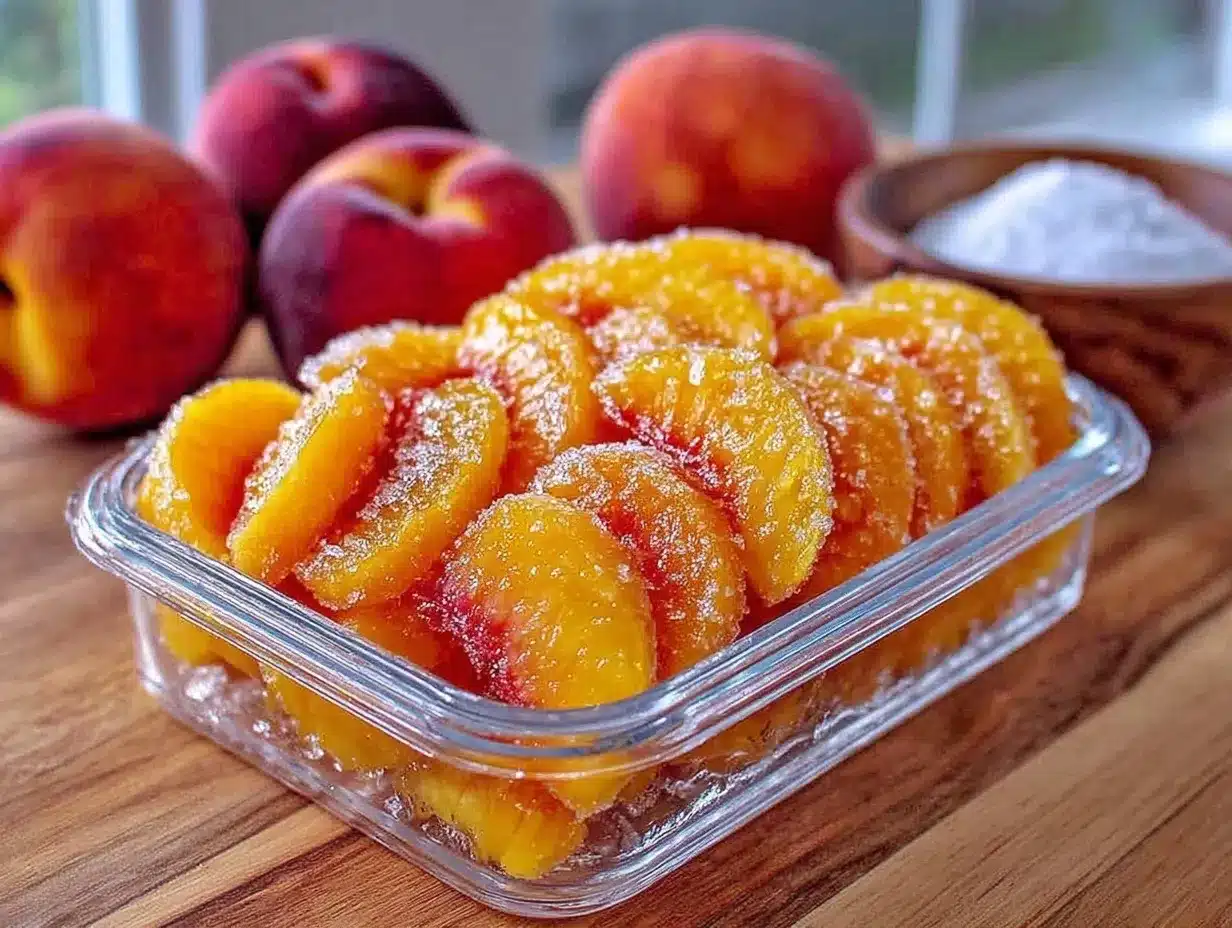
- Sharp paring knife: Essential for peeling and slicing peaches cleanly without bruising.
- Large mixing bowl: For preparing the ascorbic acid solution and soaking the peach slices.
- Measuring spoons: To measure the precise amount of ascorbic acid powder (usually about 1 teaspoon per 2 cups of water).
- Baking sheet or tray: For flash freezing the peach slices in a single layer before bagging.
- Freezer bags or airtight containers: Proper storage is key to preventing freezer burn and preserving texture.
If you don’t have a paring knife, a small chef’s knife works fine, but be careful to avoid crushing the peach flesh. For budget-friendly options, standard freezer-safe plastic bags do the job, though reusable silicone bags are better for the environment and keep the peaches fresher longer.
Preparation Method
- Wash and peel the peaches (10 minutes): Rinse the peaches under cool water. Using your paring knife, carefully peel off the skin. If you prefer, blanching the peaches for 30 seconds in boiling water then plunging into ice water makes peeling easier, but it’s optional.
- Slice the peaches (5 minutes): Cut the peaches in half and remove the pits. Then slice into wedges about 1/2 inch (1.3 cm) thick. Try to keep slices uniform for even freezing.
- Prepare the ascorbic acid solution (2 minutes): In your large mixing bowl, dissolve 1 teaspoon (5 grams) of ascorbic acid powder into 2 cups (480 ml) of cold water. Stir until fully dissolved.
- Soak the peach slices (5 minutes): Submerge the peach slices in the ascorbic acid solution for about 3 to 5 minutes. This step prevents oxidation, which causes browning.
- Drain and dry (2 minutes): Using a slotted spoon or your hands, remove the peach slices from the solution and spread them out on a clean kitchen towel or paper towels to absorb excess moisture. Pat gently.
- Flash freeze (30-60 minutes): Arrange the peach slices in a single layer on a baking sheet lined with parchment paper. Place in the freezer until the slices are firm, about 30 to 60 minutes. This prevents them from sticking together later.
- Package for storage: Transfer the frozen peach slices into labeled freezer bags or airtight containers. Squeeze out as much air as possible before sealing to avoid freezer burn.
- Freeze and enjoy: Store the peaches in the freezer for up to 12 months. When ready to use, thaw in the refrigerator or add directly to smoothies or baked goods.
Pro tip: If you notice any slices sticking together during thawing, separate them gently with a butter knife. And honestly, don’t skip the drying step—it makes a big difference in texture!
Cooking Tips & Techniques
One trick I learned the hard way is that peaches must be dry before freezing. Water left on the surface turns into ice crystals, which ruins the texture. If you’re short on time, use a salad spinner lined with a clean kitchen towel to dry the slices faster.
Another tip: always flash freeze the peach slices before bagging. I once skipped this step and ended up with one giant frozen peach block—definitely not what I wanted when I just needed a handful for a smoothie.
When picking peaches, try to avoid ones that are too soft or overripe. They brown and get mushy quicker, no matter what method you use. I usually pick peaches that smell sweet but still have a little firmness.
Timing-wise, soaking the peaches in the ascorbic acid solution for 3 to 5 minutes is enough. Longer soaking doesn’t help and can make the peaches taste slightly tart.
Lastly, keep your freezer at 0°F (-18°C) or lower to preserve the peaches’ quality longer. A deep freezer works best if you’re freezing large batches.
Variations & Adaptations
- For a natural citrus twist: Add a tablespoon of fresh lemon juice to the ascorbic acid solution. It amps up freshness without overpowering the peach flavor.
- Gluten-free or paleo-friendly: This recipe is naturally free from gluten and grains. Pair your frozen peaches with almond flour pancakes or coconut yogurt for a wholesome treat.
- Spiced peaches: Before freezing, toss the slices with a pinch of cinnamon or ground ginger for a warm, cozy flavor perfect for winter desserts.
- Using frozen peach cubes: If you prefer smaller pieces for smoothies, cut the peaches into 1-inch (2.5 cm) cubes instead of wedges and follow the same process.
- Dairy-free option: Enjoy your peaches straight or blend with coconut milk for a creamy smoothie without dairy.
Personally, I once tried freezing peaches with a splash of honey before soaking them in the ascorbic acid solution—it added a subtle sweetness that worked well in summer salads.
Serving & Storage Suggestions
Frozen peaches are incredibly versatile. Serve them thawed as a fresh snack, or toss them frozen into your morning smoothie for a chilly boost. They’re also fantastic baked into crisps, pies, or peach banana bread without the mess and fuss of peeling fresh fruit every time.
To store, keep the peaches in airtight freezer bags or containers for up to 12 months. Labeling with the freezing date helps with rotation. When thawing, place the peaches in the fridge overnight to retain texture. Avoid microwaving to prevent mushiness.
Over time, the flavor deepens, making frozen peaches great for cooking or baking recipes where the fresh texture matters less. Just be sure to keep them sealed tight to avoid freezer burn, which dulls both taste and texture.
Nutritional Information & Benefits
Peaches are a low-calorie fruit packed with vitamins A and C—both great for skin and immune health. Using ascorbic acid in this recipe actually helps preserve the vitamin C content, so you’re not just freezing fruit, you’re locking in nutrients.
Each serving (about 100 g) contains roughly 39 calories, 1 g fiber, and 9 g natural sugars. Plus, peaches provide antioxidants and potassium, which supports heart health. This recipe is naturally gluten-free, vegan, and dairy-free, making it a friendly option for many diets.
Because this method avoids added sugars or syrups, it’s a healthier way to enjoy frozen fruit compared to store-bought versions loaded with preservatives.
Conclusion
If you’ve ever felt frustrated by mushy, brown frozen peaches, this easy method using ascorbic acid might just be your new best friend in the kitchen. It’s quick, uses minimal ingredients, and keeps your peaches looking and tasting fresh well beyond summer’s peak.
Feel free to tweak the soaking time or add your favorite spices to make it your own. Honestly, I keep a batch in my freezer year-round—it’s like having a little piece of late summer whenever I want.
Give this recipe a try and share how you use your fresh frozen peaches! I’m always curious to hear about your favorite peach recipes or any clever twists you come up with.
Happy freezing and even happier tasting!
FAQs
How long can I store peaches frozen using this method?
Up to 12 months if stored properly in airtight containers or freezer bags at 0°F (-18°C) or below.
Can I use lemon juice instead of ascorbic acid?
Lemon juice helps prevent browning but isn’t as effective as pure ascorbic acid powder. For best results, use ascorbic acid or combine both.
Do I need to peel the peaches before freezing?
Peeling is recommended for better texture and to avoid bitterness from the skin after freezing, but you can freeze unpeeled if preferred.
Will soaking peaches in ascorbic acid affect their flavor?
Not significantly. The slight tartness is usually unnoticeable, especially if peaches are ripe and sweet.
Can I freeze other fruits using the same ascorbic acid method?
Yes! This technique works well with apples, pears, and other fruits prone to browning.
Pin This Recipe!
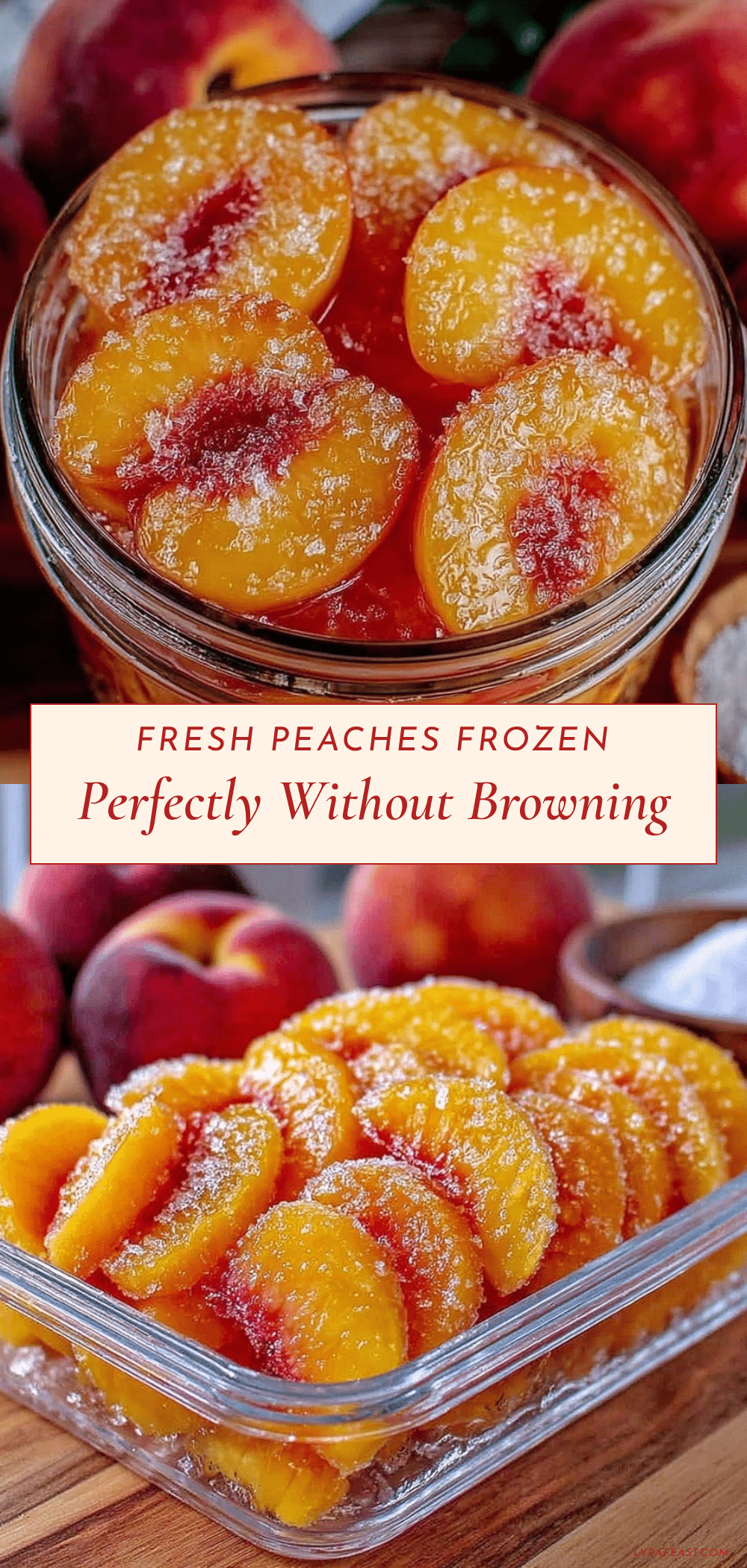
Fresh Frozen Peaches Without Browning Easy Method Using Ascorbic Acid
A simple and effective method to freeze peaches without browning using ascorbic acid powder, preserving their fresh color and flavor for up to 12 months.
- Prep Time: 17 minutes
- Cook Time: 30 to 60 minutes (flash freezing)
- Total Time: 47 to 77 minutes
- Yield: About 4 servings (based on 100 g per serving) 1x
- Category: Preserved Fruit / Freezing
- Cuisine: American
Ingredients
- Fresh peaches (ripe but firm)
- 1 teaspoon ascorbic acid powder (vitamin C powder)
- 2 cups cold water
- Optional: splash of lemon juice
Instructions
- Wash and peel the peaches (10 minutes): Rinse the peaches under cool water. Using a paring knife, carefully peel off the skin. Blanching for 30 seconds in boiling water then plunging into ice water is optional to ease peeling.
- Slice the peaches (5 minutes): Cut peaches in half, remove pits, then slice into 1/2 inch thick wedges, keeping slices uniform.
- Prepare the ascorbic acid solution (2 minutes): Dissolve 1 teaspoon (5 grams) of ascorbic acid powder into 2 cups (480 ml) of cold water and stir until fully dissolved.
- Soak the peach slices (5 minutes): Submerge peach slices in the ascorbic acid solution for 3 to 5 minutes to prevent browning.
- Drain and dry (2 minutes): Remove peach slices from solution and spread on a clean towel or paper towels to absorb excess moisture. Pat gently.
- Flash freeze (30-60 minutes): Arrange peach slices in a single layer on a parchment-lined baking sheet. Freeze until firm, about 30 to 60 minutes.
- Package for storage: Transfer frozen peach slices into labeled freezer bags or airtight containers. Remove as much air as possible before sealing.
- Freeze and enjoy: Store peaches in the freezer for up to 12 months. Thaw in refrigerator or use directly in smoothies or baking.
Notes
Peaches must be dry before freezing to avoid ice crystals and mushy texture. Flash freeze slices before bagging to prevent sticking. Soak peaches in ascorbic acid solution for 3-5 minutes only to avoid tartness. Keep freezer at 0°F (-18°C) or lower for best preservation.
Nutrition
- Serving Size: 100 grams (about 3.5
- Calories: 39
- Sugar: 9
- Fat: 0.25
- Carbohydrates: 10
- Fiber: 1
- Protein: 0.9
Keywords: frozen peaches, freezing peaches, ascorbic acid, vitamin C, prevent browning, peach preservation, freezer fruit, healthy frozen fruit