Introduction
“You won’t believe what happened last Thursday,” my neighbor Jenna said, leaning over the fence as her son eagerly peeled open his snack box. Jenna was always juggling her two little tornadoes while trying to keep snack time both quick and healthy. That day, she confessed to me between bites of crunchy apple slices and creamy hummus, “I ran out of the usual granola bars, and honestly, I panicked for a second. So, I grabbed whatever was fresh and made these snack boxes on the spot.”
What struck me wasn’t just the ease with which she put it all together, but the bright smiles on her boys’ faces and how they dove into the little containers like it was a treat. I mean, let’s face it — we’ve all been there, staring into the pantry, wondering how to toss something nutritious yet exciting into a lunchbox or afternoon break. Maybe you’ve been there too, scrambling for a quick fix that isn’t just another sugary snack or pre-packaged option.
That spontaneous snack box Jenna whipped up became a bit of a game-changer for me. It reminded me that snack time doesn’t have to be complicated or stressful. With a few simple, fresh ingredients, you can create wholesome little meals that kids actually want to eat — no fuss, no mess, just good stuff in bite-sized portions. So, I thought, why not share some easy DIY snack box ideas that bring a little freshness and fun into the mix? Let me tell you, these ideas stuck with me because they’re perfect for busy days, picky eaters, and anyone who appreciates a little homemade love in a box.
Why You’ll Love This Recipe
After testing these easy DIY snack boxes for kids countless times (including some “oops” moments where I forgot the dip or grabbed the wrong container), here’s why I trust and recommend these ideas:
- Quick & Easy: All five snack boxes come together in under 15 minutes, making them perfect for busy mornings or last-minute after-school hunger pangs.
- Simple Ingredients: You likely have most of these wholesome ingredients already, no fancy or hard-to-find items needed.
- Perfect for Any Occasion: Whether it’s a picnic, a school lunch, or a cozy movie night at home, these snack boxes fit right in.
- Crowd-Pleaser: Tested by kids (and adults, honestly), these combos always get smiles and requests for seconds.
- Unbelievably Delicious: Think crunchy, creamy, sweet, and savory all rolled into one balanced snack experience.
What sets these snack boxes apart? It’s the thoughtful pairing of flavors and textures — like crisp veggies paired with creamy dips or fresh fruit balanced by nutty bites. And the best part? You can customize each box to suit your child’s tastes without reinventing the wheel. This isn’t just another generic snack list; it’s a practical, tasty, and nourishing approach that makes snack time something to look forward to (for both kids and grown-ups!).
What Ingredients You Will Need
These easy DIY snack boxes rely on fresh, wholesome ingredients that bring natural flavor and texture without a lot of prep. Most are pantry staples or everyday fresh finds you can grab without a second thought.
- Fresh Fruits: Apple slices (tossed in a bit of lemon juice to keep them from browning), seedless grapes, berries (blueberries or strawberries), or clementine wedges. Seasonal fruit swaps work great here!
- Fresh Vegetables: Baby carrots, cucumber rounds, cherry tomatoes, snap peas, or bell pepper strips. Crunchy and colorful veggies are a must.
- Dips & Spreads: Hummus (I recommend Sabra for a smooth texture), Greek yogurt dip, or natural peanut butter (or almond butter for nut-free homes). These add creaminess and protein.
- Crunchy Snacks: Whole-grain crackers, mini rice cakes, or air-popped popcorn. Look for low-sodium and minimal ingredient options.
- Protein Bites: Cheese cubes (like cheddar or mozzarella), hard-boiled eggs (peeled and sliced), or roasted chickpeas for a crispy twist.
- Sweet Treats: A small handful of dried fruit like apricots or raisins, or a couple of dark chocolate chips for a little indulgence.
You can easily swap out any ingredient to fit dietary needs — for example, use sunflower seed butter instead of peanut butter for nut allergies, or gluten-free crackers if needed. The key is fresh, simple, and balanced components that work together for a wholesome snack.
Equipment Needed
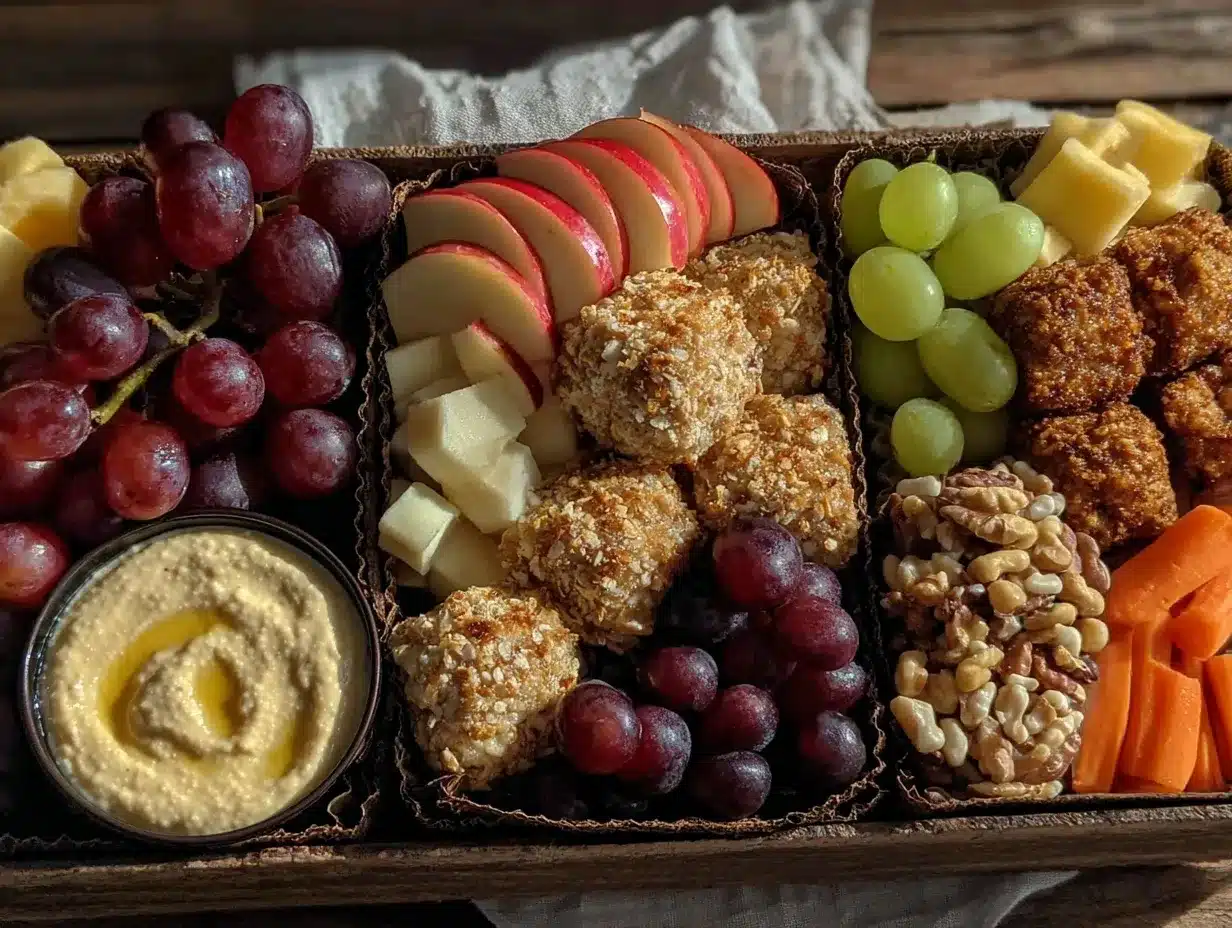
Building these DIY snack boxes is all about simplicity, so you don’t need a kitchen full of gadgets. Here’s what comes in handy:
- Snack Containers: I prefer compartmentalized lunch boxes or small reusable containers with lids. Bento-style boxes work beautifully here.
- Small Bowls or Ramekins: For dips and spreads to keep things neat and avoid sogginess.
- Sharp Knife: For slicing fruit and veggies safely and efficiently.
- Cutting Board: A sturdy board keeps prep tidy and fast.
- Measuring Spoons: Helpful for portioning dips or peanut butter, especially if you’re watching serving sizes.
If you don’t have compartmentalized containers, no worries! Just use small silicone muffin cups inside a regular lunchbox to separate items. I’ve also found that simple glass containers with snap lids are great for prepping snack boxes ahead and keeping everything fresh.
Preparation Method
- Wash and Prep Fresh Produce (5-7 minutes): Rinse all fruits and vegetables thoroughly. Slice apples into thin wedges and toss them immediately in a little lemon juice to prevent browning. Cut cucumbers into rounds or sticks, halve cherry tomatoes, and peel clementines if using. Keep everything bite-sized for easy eating.
- Prepare Protein Elements (5 minutes): Hard boil eggs in advance and peel them, then slice or quarter. Cube cheese into small blocks. If using roasted chickpeas, ensure they’re cooled to maintain crunch.
- Assemble Snack Boxes (3-5 minutes): Start by placing dips or spreads in small ramekins or silicone cups inside the container. Arrange fruit and veggies around the dips, balancing colors and textures. Add crunchy crackers or rice cakes in a separate compartment to keep them crisp. Finally, tuck in protein bites and a small sweet treat.
- Final Touches: Close the lids securely and store in the fridge if not serving immediately. For school or outings, pack an ice pack to keep everything fresh and cool.
Tip: When slicing vegetables, aim for uniform pieces so kids can easily grab and dip without frustration. Also, if your kids prefer certain textures, swap accordingly. For example, if they dislike crunchy carrots, try softer cucumber slices instead.
Cooking Tips & Techniques
Honestly, the magic of these snack boxes is in the prep and pairing, not any fancy cooking. But a few tips make the process smoother and the snack boxes tastier:
- Keep It Fresh: Prep fruits and veggies just before packing to avoid sogginess. If prepping the night before, store cut produce in airtight containers with a damp paper towel to maintain moisture.
- Balance Flavors and Textures: Include something crunchy, creamy, sweet, and savory in each box to keep kids interested with every bite.
- Use Portion Control: Small containers prevent overfilling and food waste. Plus, it helps kids focus on enjoying a variety rather than overwhelming amounts.
- Watch for Allergens: If nut allergies are a concern, swap nut butters for seed butters and avoid cross-contamination.
- Test Dips Separately: Some kids prefer their dips thicker or thinner; feel free to adjust consistency with a bit of water or olive oil.
One time, I mistakenly forgot the dip and the snack box felt incomplete — lesson learned: even a small container of hummus or yogurt dip makes all the difference in enjoyment.
Variations & Adaptations
These DIY snack boxes can easily be switched up to meet different dietary needs or flavor preferences. Here are some ideas you might want to try:
- Gluten-Free: Use gluten-free crackers or rice cakes and check all labels to avoid hidden gluten.
- Vegan: Swap cheese cubes for cubed firm tofu or roasted nuts, and use plant-based dips like guacamole or cashew cream.
- Seasonal Twist: In summer, add fresh berries or watermelon cubes; in fall, try apple slices with cinnamon or roasted pumpkin seeds.
- Protein Boost: Add turkey or chicken meatballs, or include a small container of nut butter for dipping.
- Flavor Fun: Sprinkle everything with a pinch of cinnamon or a drizzle of honey to add a little excitement to simple ingredients.
Personally, I once swapped the usual crackers for tiny pita chips and added a bit of tzatziki — my kids couldn’t get enough of the creamy tang! Feel free to make it your own and keep snack time fresh.
Serving & Storage Suggestions
Snack boxes are best served fresh and cool, but they hold up well for several hours if packed properly. Here’s how I handle serving and storing:
- Serving Temperature: Most components taste best chilled — especially dips and fresh produce. Serve straight from the fridge or with a small ice pack when on the go.
- Presentation: Bright colors and neat compartments make snack boxes visually appealing. Use fun containers or add little notes for an extra smile.
- Storage: Assemble snack boxes the night before and store them covered in the fridge. Avoid putting crackers or crunchy items in until right before serving to keep them crisp.
- Reheating: These snack boxes are mostly cold snacks, but if you include something like mini meatballs or hard-boiled eggs, they can be warmed slightly in the microwave (remove dips first).
- Flavor Development: Some flavors, like roasted chickpeas or certain cheeses, intensify when chilled. If your kids like bold tastes, packing ahead can be a bonus.
Nutritional Information & Benefits
These snack boxes provide a balanced mix of macronutrients and micronutrients, perfect for growing kids:
- Protein: From cheese, eggs, hummus, or nut butters supports muscle growth and satiety.
- Fiber: Fresh fruits and veggies aid digestion and keep energy steady.
- Healthy Fats: Found in nut butters and seeds support brain development and skin health.
- Vitamins & Minerals: Colorful produce delivers a range of antioxidants and essential nutrients.
These snack boxes can be tailored for gluten-free, dairy-free, or vegan diets with simple ingredient swaps. As a parent and food lover, I appreciate how they help kids develop healthy eating patterns without feeling deprived or bored.
Conclusion
Easy DIY snack boxes for kids are a lifesaver when you want wholesome, fresh, and fuss-free snacks ready to go. The combination of simple ingredients, quick assembly, and customizable options makes them a hit in my home — and I bet yours too. Honestly, these snack boxes have saved many rushed mornings and turned “what’s for snack?” grumbles into excited chatter.
Feel free to experiment, adjust according to your child’s taste buds, and make snack time a moment of joy rather than a chore. And hey, if you try these ideas, don’t forget to share how you put your own spin on them — I love hearing your stories and tips!
Now, grab those fresh ingredients and start packing your very own snack boxes. Your kids (and you) will thank you!
FAQs
What are some easy-to-pack fruits for snack boxes that won’t get mushy?
Firm fruits like apples (sliced and tossed with lemon juice), grapes, and berries work great. Avoid overly ripe fruits like bananas that bruise easily.
How long can I store assembled snack boxes in the fridge?
They’re best eaten within 24 hours. Keep dips separate and add crunchy items like crackers just before serving to maintain texture.
Can I prepare these snack boxes ahead for school lunches?
Yes! Prep fruit and veggies the night before and store them properly. Pack crackers and dips separately if possible to keep everything fresh.
What if my child has a nut allergy?
Swap nut butters for seed butters like sunflower or pumpkin seed butter, and avoid nuts in other components. Always check labels for hidden allergens.
How do I keep veggies from getting soggy in the snack boxes?
Store cut veggies in airtight containers with a damp paper towel to maintain crispness. Avoid placing wet dips directly on veggies until serving.
Pin This Recipe!
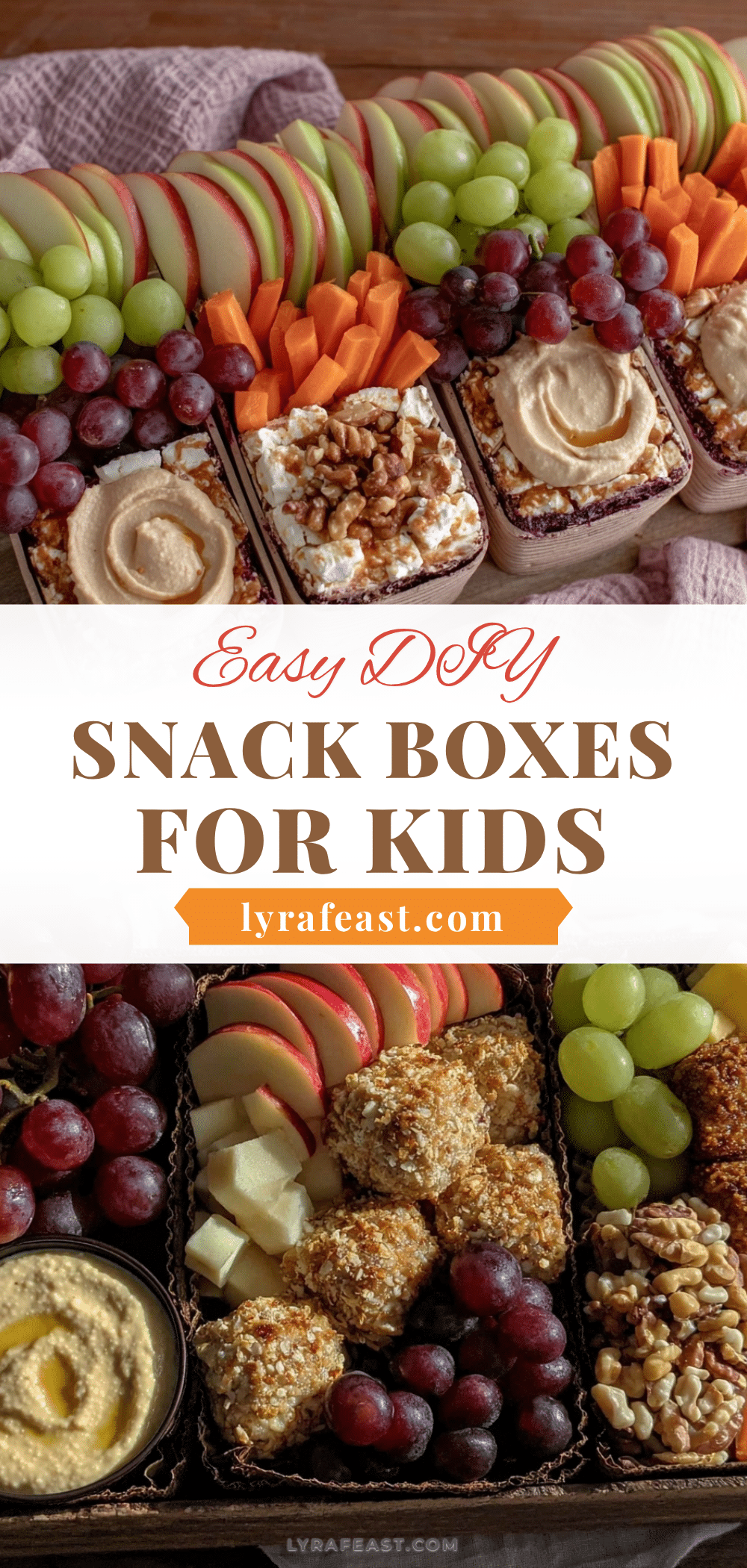
Easy DIY Snack Boxes for Kids: 5 Fresh Wholesome Ideas to Try Today
Quick and wholesome snack box ideas perfect for kids, featuring fresh fruits, veggies, dips, crunchy snacks, and protein bites. These easy-to-assemble snack boxes are customizable, nutritious, and great for busy days.
- Prep Time: 10 minutes
- Cook Time: 5 minutes
- Total Time: 15 minutes
- Yield: 1 snack box (serving size varies)
- Category: Snack
- Cuisine: American
Ingredients
- Apple slices (tossed in lemon juice to prevent browning)
- Seedless grapes
- Berries (blueberries or strawberries)
- Clementine wedges
- Baby carrots
- Cucumber rounds
- Cherry tomatoes
- Snap peas
- Bell pepper strips
- Hummus (Sabra recommended)
- Greek yogurt dip
- Natural peanut butter or almond butter
- Whole-grain crackers
- Mini rice cakes
- Air-popped popcorn
- Cheese cubes (cheddar or mozzarella)
- Hard-boiled eggs (peeled and sliced)
- Roasted chickpeas
- Dried fruit (apricots or raisins)
- Dark chocolate chips
Instructions
- Wash and prep fresh produce: rinse all fruits and vegetables thoroughly. Slice apples into thin wedges and toss in lemon juice to prevent browning. Cut cucumbers into rounds or sticks, halve cherry tomatoes, and peel clementines if using. Keep everything bite-sized.
- Prepare protein elements: hard boil eggs in advance, peel and slice or quarter them. Cube cheese into small blocks. Ensure roasted chickpeas are cooled to maintain crunch.
- Assemble snack boxes: place dips or spreads in small ramekins or silicone cups inside the container. Arrange fruit and veggies around the dips, balancing colors and textures. Add crunchy crackers or rice cakes in a separate compartment to keep them crisp. Finally, add protein bites and a small sweet treat.
- Close lids securely and store in the fridge if not serving immediately. For school or outings, pack an ice pack to keep everything fresh and cool.
Notes
Prep fruits and veggies just before packing to avoid sogginess. Store cut produce in airtight containers with a damp paper towel if prepping the night before. Use portion control with small containers to prevent overfilling. Swap ingredients to accommodate allergies or dietary preferences. Add dips separately to avoid sogginess. Serve chilled or with an ice pack for freshness.
Nutrition
- Serving Size: One snack box contai
- Calories: 25030
- Sugar: 12
- Sodium: 150
- Fat: 10
- Saturated Fat: 2
- Carbohydrates: 35
- Fiber: 5
- Protein: 8
Keywords: snack box, kids snack, healthy snack, easy snack, DIY snack, fresh snack, wholesome snack, lunchbox ideas, quick snack