My neighbor Karl wasn’t trying to impress anyone. I’d stopped by to borrow a lug wrench—my car had made a concerning noise on the way home from the grocery store—and the smell hit me before I even got to his garage door. It was rich, slightly sour, deeply savory, and completely unexpected for a Tuesday afternoon. Karl, a retired tool-and-die maker with a thick mustache and an even thicker accent, just shrugged when I asked what he was cooking. “Just supper,” he said, like it was nothing. But let me tell you, that “just supper” was one of the best things I’d ever smelled.
He let me peek into his kitchen, and there it was: a single cast-iron skillet bubbling away on the stove, filled with browned bratwurst and strands of sauerkraut that were caramelizing at the edges. It looked simple, almost too simple. But the aroma? That was something else entirely. I stood there, probably looking like a hungry dog, while he stirred it once, completely nonchalant. Honestly, I think he forgot I was even there for a minute. He was just making dinner, the way he’d probably done a thousand times before.
I ended up staying for dinner—he insisted, and I wasn’t about to argue. That first bite was a revelation. The bratwurst was juicy, the sauerkraut had mellowed into something tangy and sweet, and the whole thing came together in a way that felt both rustic and perfect. Maybe you’ve had a moment like that, where a simple dish stops you cold and makes you wonder why you’ve been overcomplicating things. That’s this recipe. It’s the one that made me realize the best meals don’t need a lot of fuss. They just need the right ingredients and a little patience. I’ve been making it ever since, and every time, I think of Karl’s garage and that incredible smell.
Why You’ll Love This Recipe
This isn’t just another weeknight dinner—it’s the kind of meal that feels like a warm hug after a long day. I’ve made this skillet more times than I can count, and it never fails to deliver. Here is why it has earned a permanent spot in my rotation:
- Quick & Easy: From start to finish, this dish is on the table in under 30 minutes. Perfect for those nights when you need something hearty but don’t have hours to spend in the kitchen.
- Simple Ingredients: You likely have most of these items in your pantry or fridge already. No trips to a specialty store required—just good, honest food.
- Perfect for a Cozy Dinner: Whether it’s a chilly autumn evening or a rainy spring night, this skillet brings comfort. It’s also fantastic for game day or a casual get-together with friends.
- Crowd-Pleaser: I have served this to picky eaters, meat-and-potatoes folks, and even friends who claimed they didn’t like sauerkraut. It gets rave reviews every single time. The caramelization process changes everything.
- Unbelievably Delicious: The magic is in the browning. Getting a good sear on the bratwurst and letting the sauerkraut caramelize creates layers of flavor that taste anything but simple. It’s comfort food at its finest.
What sets this recipe apart is the technique. Most versions just dump everything in a pan and heat it through. Not this one. By browning the bratwurst first and then letting the sauerkraut caramelize in the rendered fat, you build a depth of flavor that tastes like you spent all day cooking. It’s a small extra step that makes a world of difference. This recipe is the one that made me stop buying pre-made bratwurst dinners—it is that good.
What Ingredients You Will Need
This recipe relies on a handful of simple, high-quality ingredients to create something truly satisfying. Each component plays a specific role, from the savory richness of the bratwurst to the bright tang of the sauerkraut. Here is what you will need:
- Bratwurst: 4 links (about 1 pound / 450g). I prefer fresh bratwurst from a local butcher or a brand like Johnsonville for consistent quality. If you can find it, look for bratwurst that is not pre-cooked for the best texture.
- Sauerkraut: 1 (14-ounce / 400g) bag or jar, drained but not rinsed. The brine is where the flavor is. I like the brand Bubbies for its crisp texture and tangy flavor, but any good quality sauerkraut will work.
- Yellow Onion: 1 medium, thinly sliced. The onion adds sweetness as it caramelizes, balancing the sourness of the sauerkraut.
- Apple: 1 medium, peeled, cored, and grated. This is my secret ingredient. A grated apple adds a subtle sweetness and helps mellow the sauerkraut’s bite without making the dish sweet. A Granny Smith or Honeycrisp works well.
- Caraway Seeds: 1 teaspoon. These are classic in German cooking and add a warm, slightly anise-like flavor that pairs perfectly with the bratwurst and sauerkraut. Don’t skip them!
- Brown Sugar: 1 tablespoon. Just a touch helps with caramelization and balances the acidity. You can use coconut sugar or omit it for a sugar-free version.
- Chicken Broth: 1/2 cup (120ml). This deglazes the pan and creates a little steam to help everything meld together. Use low-sodium broth to control the salt level.
- Butter or Oil: 1 tablespoon of butter or a neutral oil like avocado oil for browning. Butter adds richness, but oil has a higher smoke point.
- Salt and Pepper: To taste. Go easy on the salt, as the bratwurst and sauerkraut are already salty. Freshly ground black pepper is a must.
- Optional Garnish: Fresh parsley, chopped. It adds a pop of color and freshness at the end.
Equipment Needed
You don’t need a lot of fancy gear for this one, which is part of its charm. Here is what I use:
- A Large Cast-Iron Skillet or Heavy-Bottomed Pan: This is key. A 12-inch skillet gives you enough room to brown the bratwurst without crowding them. Cast iron holds heat beautifully and helps with caramelization. If you don’t have one, a heavy stainless steel or non-stick pan will work, but cast iron is my go-to.
- Sharp Knife and Cutting Board: For slicing the onion and prepping the apple.
- A Box Grater or Microplane: For grating the apple. You can also finely dice it, but grating ensures it melts into the sauerkraut.
- Tongs: For turning the bratwurst. They give you better control than a fork, which can pierce the sausage and let the juices escape.
- A Wooden Spoon or Spatula: For stirring the sauerkraut and scraping up the browned bits from the bottom of the pan.
If you don’t have a cast-iron skillet, don’t sweat it. I’ve made this in a stainless steel pan and it turned out great. The main thing is to use a pan that’s wide enough to hold everything in a single layer. And honestly, a good cast-iron skillet is a worthwhile investment—it lasts forever and gets better with age. I found mine at a thrift store for ten bucks, and it is one of my favorite kitchen tools.
Preparation Method
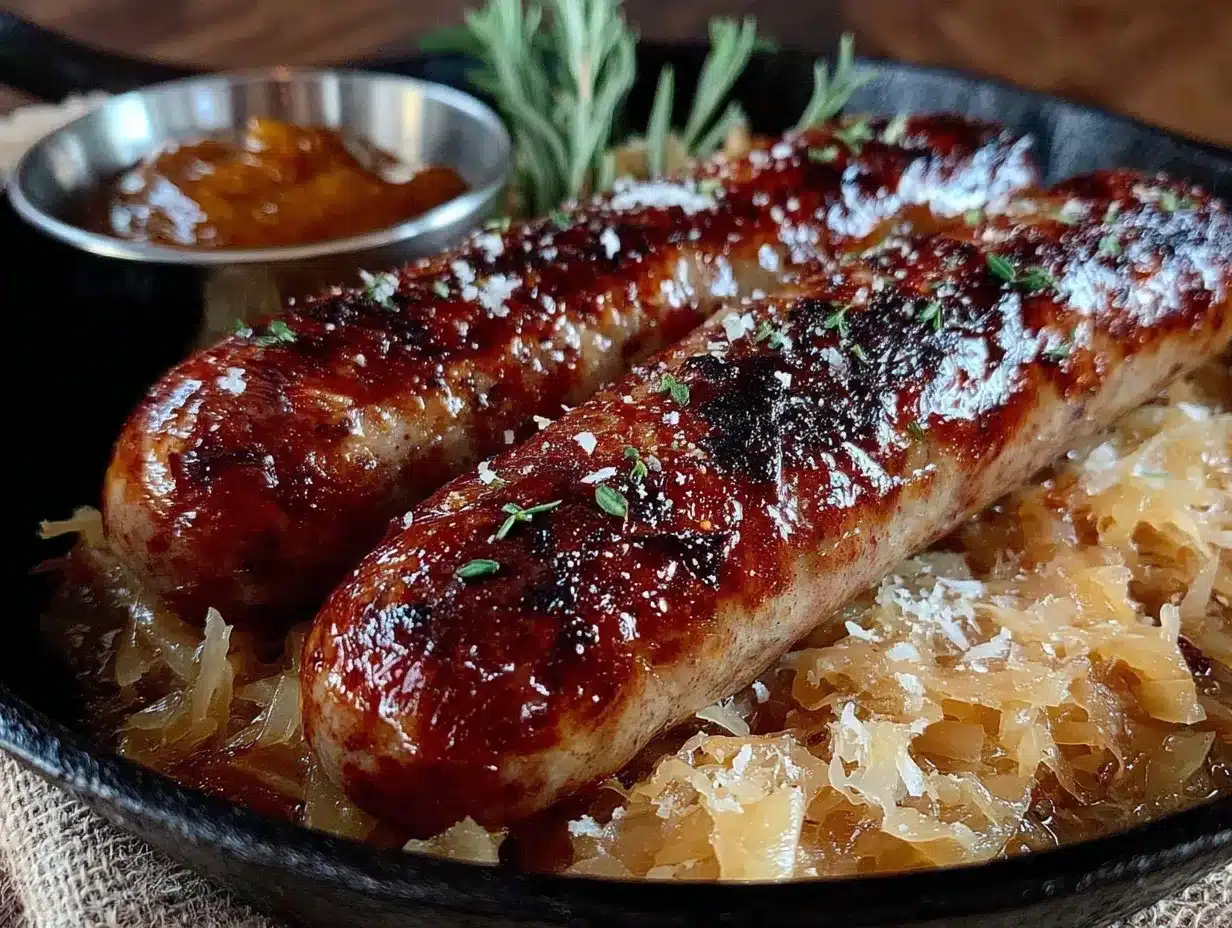
This comes together faster than you might think. The key is to not rush the browning steps—that is where all the flavor lives. Let’s get cooking.
- Prep Your Ingredients: Before you turn on the heat, get everything ready. Thinly slice the onion. Peel and grate the apple. Drain the sauerkraut (don’t rinse it). Have your caraway seeds, brown sugar, and chicken broth measured out and within reach. This makes the process smooth and stress-free.
- Brown the Bratwurst: Place your skillet over medium-high heat and add the butter or oil. Once it’s hot and shimmering, add the bratwurst links. Cook them for about 4-5 minutes per side, until they are deeply browned all over. Don’t move them around too much—let them get a good sear. The goal is a nice, dark crust. The internal temperature should reach about 160°F (71°C) if they are fully cooked, but since they will cook more later, a good sear is the priority. Remove the bratwurst to a plate and set them aside. They don’t need to be cooked through yet.
- Sauté the Onion: Reduce the heat to medium. In the same skillet, with all those lovely browned bits from the bratwurst, add the sliced onion. Cook, stirring occasionally, for about 4-5 minutes, until the onion is softened and starting to turn golden. If the pan looks dry, add a tiny splash of broth or water.
- Add the Aromatics: Stir in the caraway seeds and cook for another 30 seconds until fragrant. This wakes up the spices and fills your kitchen with that classic German-cooking smell.
- Cook the Sauerkraut: Add the drained sauerkraut, grated apple, and brown sugar to the skillet. Stir everything together to combine. Let it cook, undisturbed, for about 3-4 minutes. You want the sauerkraut to start caramelizing on the bottom—this is where the magic happens. It should look a little browned in spots.
- Deglaze and Simmer: Pour in the chicken broth and stir, scraping up any browned bits from the bottom of the pan. This is called deglazing, and it incorporates all that flavor into the sauce. Nestle the browned bratwurst back into the skillet, pushing them down into the sauerkraut mixture.
- Simmer to Finish: Bring the liquid to a gentle simmer, then reduce the heat to low. Cover the skillet and let everything cook together for about 10-12 minutes. The bratwurst will finish cooking through, and the flavors will meld beautifully. The sauerkraut will soften and absorb the broth and juices. The internal temperature of the bratwurst should reach 160°F (71°C).
- Rest and Serve: Remove the skillet from the heat. Let it rest, uncovered, for about 5 minutes. This allows the juices to redistribute. Slice the bratwurst on a bias into thick pieces, or serve them whole. Spoon the sauerkraut over the top and garnish with fresh parsley if you like. Serve hot.
Cooking Tips & Techniques
I’ve made this skillet more times than I can count, and I have learned a few things along the way. Here are my best tips to make sure yours turns out perfect every time.
- Don’t Crowd the Pan: When browning the bratwurst, make sure they have space. If they are touching, they will steam instead of sear. If your skillet is small, brown them in two batches. That deep brown crust is non-negotiable for the best flavor.
- Let the Sauerkraut Caramelize: This is the step most people skip, and it makes all the difference. After you add the sauerkraut to the pan, let it sit without stirring for a few minutes. You want to see some browning on the bottom. This caramelization adds a sweet, nutty flavor that tames the sourness of the kraut. I once got distracted by my phone and let it go a little too long—it was still delicious, just a bit darker. No harm done.
- Use a Granny Smith Apple: The tartness of a Granny Smith apple holds up well against the sauerkraut. A sweeter apple like Gala or Fuji will work, but it will make the dish slightly sweeter. I’ve used both, and I prefer the balance a tart apple provides.
- Don’t Rinse the Sauerkraut: I know it can be tempting to rinse it to reduce the saltiness, but you lose a lot of flavor and the beneficial probiotics. If you are worried about salt, look for a low-sodium brand. The browning and the apple will help balance the tang.
- Make it Ahead: This dish actually tastes better the next day. The flavors have time to meld and deepen. Make a double batch and enjoy it for lunch or dinner the following day. Just reheat it gently on the stovetop or in the microwave.
Variations & Adaptations
This recipe is a fantastic base, and I love playing around with it. Here are a few ways you can make it your own:
- Make it a One-Pot Meal: After the bratwurst has simmered, add some halved baby potatoes or sliced apples to the skillet. Cover and cook for another 15-20 minutes until the potatoes are tender. It turns the skillet into a complete meal with almost no extra effort.
- Swap the Protein: Not a fan of bratwurst? This works beautifully with smoked kielbasa, Italian sausage, or even thick-cut pork chops. Adjust the cooking time based on the protein you choose. For chicken sausage, reduce the browning time slightly.
- Add Some Heat: If you like a little spice, add a pinch of red pepper flakes along with the caraway seeds. Or, serve the finished dish with a drizzle of spicy mustard or a dollop of horseradish. The heat cuts through the richness beautifully.
- Go Low-Carb or Keto: This recipe is naturally low in carbs, especially if you skip the brown sugar. You can use a sugar substitute like monk fruit or erythritol, or just leave it out entirely. The apple adds a touch of sweetness, but you can omit it for a stricter keto version.
- Vegetarian Version: Use plant-based bratwurst or smoked tofu. Sear it the same way you would the meat version. The sauerkraut and onion mixture is already vegetarian, so you are just swapping the protein. I’ve tried this with a few brands, and it works surprisingly well.
Serving & Storage Suggestions
This skillet is a meal in itself, but it pairs wonderfully with a few simple sides. Here is how I like to serve and store it.
Serving: Serve the bratwurst and sauerkraut hot, straight from the skillet. I love spooning it over a bed of creamy mashed potatoes or egg noodles to soak up all the juices. A side of crusty rye bread with butter is also a fantastic choice for dipping. For a lighter option, serve it with a simple green salad dressed with a tangy vinaigrette. A dollop of whole-grain mustard or a spoonful of applesauce on the side is a classic German touch.
Storage: Leftovers keep beautifully. Store the cooled bratwurst and sauerkraut in an airtight container in the refrigerator for up to 4 days. The flavors actually deepen and get better after a day or two. I often make this on a Sunday and enjoy it for lunch during the week.
Reheating: The best way to reheat is in a skillet over medium-low heat. Add a splash of broth or water to prevent it from drying out, and warm it through for about 5-7 minutes. You can also microwave it in 30-second bursts, but the stovetop gives you a better texture. I don’t recommend freezing this dish, as the texture of the sauerkraut and bratwurst can become a bit mushy upon thawing. It is best enjoyed fresh or within a few days.
Nutritional Information & Benefits
This dish is hearty and satisfying, and it also offers some surprising nutritional benefits. Here is a rough estimate per serving (one bratwurst with sauerkraut, based on 4 servings):
- Calories: Approximately 450-500
- Protein: 25-30g
- Fat: 30-35g
- Carbohydrates: 15-20g
- Fiber: 4-6g
- Sugar: 8-10g (naturally occurring from the apple and a touch of brown sugar)
- Sodium: 1200-1500mg (varies greatly by brand of bratwurst and sauerkraut)
Health Benefits: Sauerkraut is a fermented food, which means it is packed with probiotics that are great for gut health. It is also a good source of vitamin C and vitamin K. The bratwurst provides a good amount of protein and iron. The apple adds fiber and antioxidants. If you are watching your sodium, look for low-sodium bratwurst and sauerkraut, and be mindful of added salt. This dish is naturally gluten-free (always check your bratwurst labels) and can be made dairy-free by using oil instead of butter.
Conclusion
This savory German bratwurst and sauerkraut skillet is more than just a recipe—it is a reminder that the best meals often come from the simplest places. It is the kind of dish that fills your home with an incredible aroma and brings people together around the table. I love how forgiving it is, how it welcomes little tweaks and substitutions, and how it tastes even better the next day.
I really hope you give this one a try. Whether you are a seasoned cook or just starting out, this skillet is a foolproof way to create something truly memorable. Don’t be afraid to make it your own—throw in some potatoes, swap the sausage, or add a little extra mustard. The beauty of this dish is in its adaptability. When you make it, I would love to hear how it turned out. Drop a comment below and let me know what variations you tried, or tag me in your photos on social media. Until next time, happy cooking!
Frequently Asked Questions
Can I use pre-cooked bratwurst for this recipe?
Yes, you can! Pre-cooked bratwurst will work, but you will need to adjust the cooking time. Brown them as directed, but reduce the simmering time to about 5-7 minutes, just until they are heated through. Fresh bratwurst will have a better texture and flavor, but pre-cooked is a fine shortcut.
My sauerkraut is too sour. How can I fix it?
If your sauerkraut is particularly tangy, you can mellow it out a few ways. The grated apple and brown sugar in the recipe already help. You can also add a splash of apple cider vinegar or a pinch more brown sugar to balance the acidity. Letting it cook longer also helps the flavors mellow.
Can I make this in a slow cooker?
Absolutely. Brown the bratwurst and sauté the onion in a skillet first, then transfer everything to a slow cooker. Cook on low for 4-6 hours or on high for 2-3 hours. The texture will be softer, but the flavor will be just as good. It is a great hands-off option for a busy day.
What is the best way to serve this for a crowd?
This is perfect for a buffet or potluck. Keep the skillet warm on a low burner or in a slow cooker on the “warm” setting. Set out bowls of mustard, horseradish, and pickles so guests can customize their plates. Serve with sliced rye bread or soft pretzels for dipping.
Can I use red cabbage instead of sauerkraut?
You can, but it will be a different dish. Use shredded red cabbage and increase the apple cider vinegar and brown sugar to mimic the tangy flavor of sauerkraut. You will also need to cook it longer to soften the cabbage. It is a tasty variation, just not the same as the classic recipe.
Pin This Recipe!
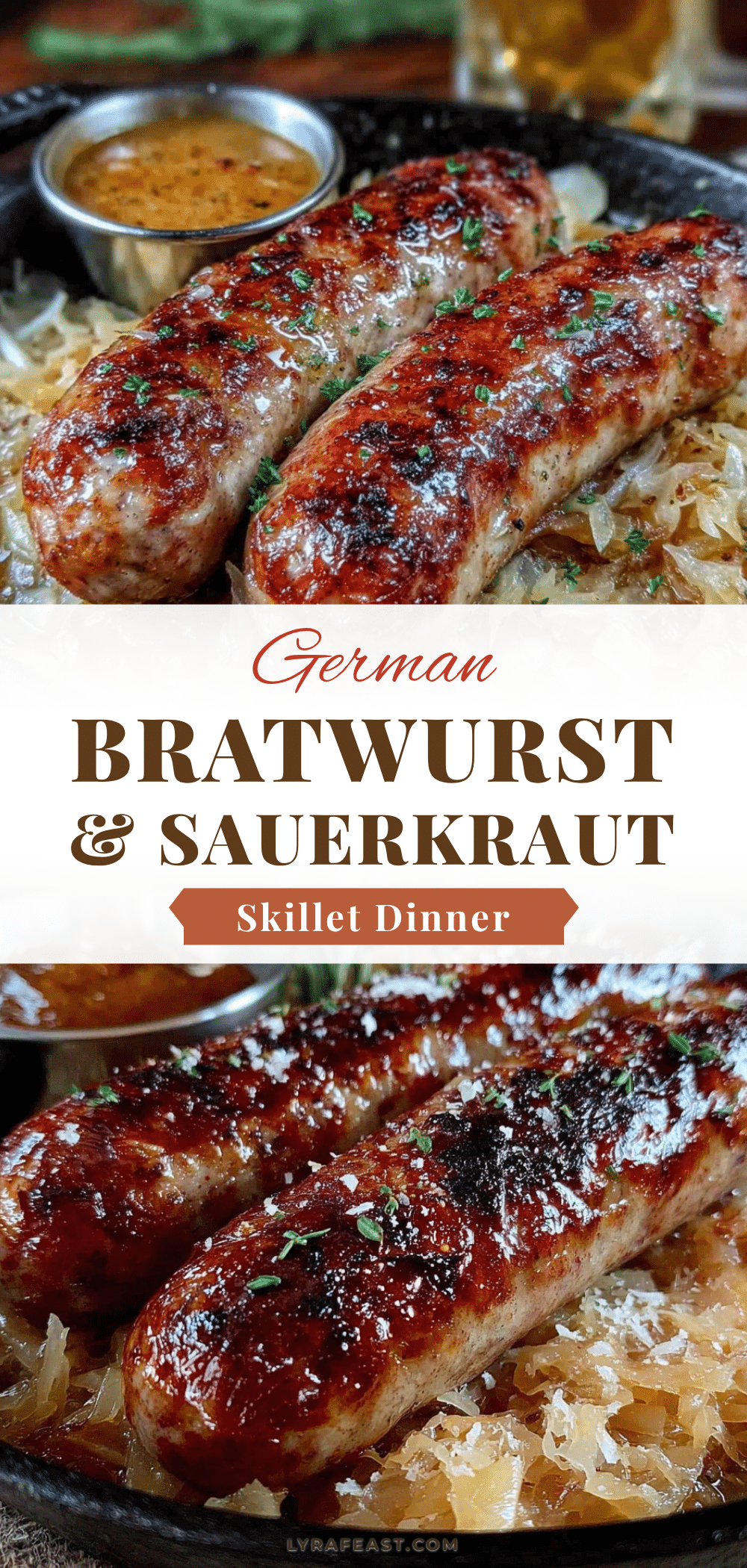
Best Easy German Bratwurst and Sauerkraut Skillet

This savory German bratwurst and sauerkraut skillet is a quick and easy one-pan meal that delivers deep, caramelized flavor in under 30 minutes. It’s the perfect cozy dinner for busy weeknights, made with simple ingredients and guaranteed to impress.
- Prep Time: 10 minutes
- Cook Time: 20 minutes
- Total Time: 30 minutes
- Yield: 4 servings 1x
- Category: Main Course
- Cuisine: German
Ingredients
- 4 links bratwurst (about 1 pound / 450g), fresh or pre-cooked
- 1 (14-ounce / 400g) bag or jar sauerkraut, drained but not rinsed
- 1 medium yellow onion, thinly sliced
- 1 medium apple (Granny Smith or Honeycrisp), peeled, cored, and grated
- 1 teaspoon caraway seeds
- 1 tablespoon brown sugar (or coconut sugar, optional)
- 1/2 cup (120ml) low-sodium chicken broth
- 1 tablespoon butter or neutral oil (like avocado oil)
- Salt and freshly ground black pepper, to taste
- Fresh parsley, chopped (for garnish, optional)
Instructions
- Prep your ingredients: Thinly slice the onion, peel and grate the apple, drain the sauerkraut (do not rinse), and measure out the caraway seeds, brown sugar, and chicken broth.
- Brown the bratwurst: Place a large cast-iron skillet or heavy-bottomed pan over medium-high heat and add the butter or oil. Once hot and shimmering, add the bratwurst links. Cook for 4-5 minutes per side until deeply browned all over. Remove to a plate and set aside.
- Sauté the onion: Reduce heat to medium. In the same skillet, add the sliced onion. Cook, stirring occasionally, for 4-5 minutes until softened and starting to turn golden. Add a splash of broth or water if the pan looks dry.
- Add the aromatics: Stir in the caraway seeds and cook for 30 seconds until fragrant.
- Cook the sauerkraut: Add the drained sauerkraut, grated apple, and brown sugar to the skillet. Stir to combine. Let cook undisturbed for 3-4 minutes until the sauerkraut starts to caramelize and brown in spots.
- Deglaze and simmer: Pour in the chicken broth and stir, scraping up any browned bits from the bottom of the pan. Nestle the browned bratwurst back into the skillet, pushing them into the sauerkraut mixture.
- Simmer to finish: Bring the liquid to a gentle simmer, then reduce heat to low. Cover the skillet and cook for 10-12 minutes until the bratwurst is cooked through (internal temperature of 160°F / 71°C) and flavors have melded.
- Rest and serve: Remove from heat and let rest, uncovered, for 5 minutes. Slice bratwurst on a bias into thick pieces or serve whole. Spoon sauerkraut over the top and garnish with fresh parsley if desired. Serve hot.
Notes
For best flavor, don’t skip the caramelization steps. The dish tastes even better the next day. To make it a one-pot meal, add halved baby potatoes during the simmering step. For a low-carb version, omit the brown sugar or use a sugar substitute.
Nutrition
- Serving Size: 1 bratwurst with sau
- Calories: 475
- Sugar: 9
- Sodium: 1350
- Fat: 33
- Saturated Fat: 11
- Carbohydrates: 18
- Fiber: 5
- Protein: 28
Keywords: bratwurst, sauerkraut, German skillet, one-pan meal, quick dinner, comfort food, easy weeknight dinner