My neighbor Dave asked why I couldn’t just bake the stuffing in muffin tins instead of that big casserole dish. I started to explain why that wouldn’t work—something about moisture distribution and the need for that soft, custardy center. Then I stopped. Honestly, I had no good reason. I just assumed it wouldn’t work because that’s not how anyone does it. So I tried it. And let me tell you, that single moment of being wrong changed my entire Thanksgiving game plan forever.
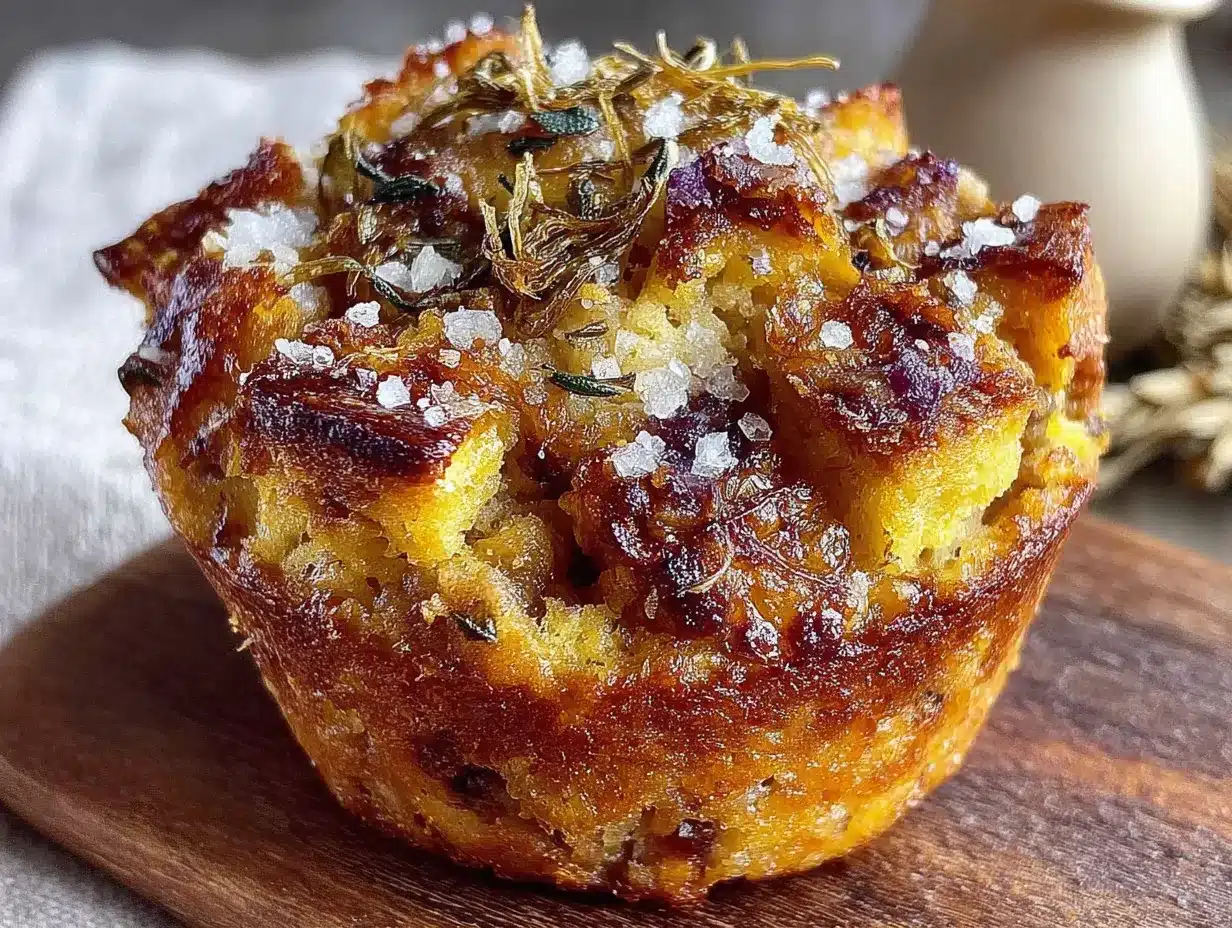
The first batch came out of the oven looking like golden little crowns—each one perfectly domed with crispy edges and a tender, buttery center. I pulled one out too early (burned my fingers, of course) and bit into it right there in the kitchen. The brown butter hit me first—that nutty, almost caramelized depth—followed by the earthy warmth of sage. I stood there eating three of them before anyone else even knew they were done. Maybe you’ve been there, discovering something so unexpectedly perfect that you feel a little silly for not thinking of it sooner.
These Best Brown Butter Sage Stuffing Muffins changed how I think about holiday sides. They’re not just easier to serve—they’re actually better. Every muffin gets those coveted crispy edges all around, not just on top. The brown butter adds a richness that regular butter just can’t match, and the sage ties everything together like a warm, savory hug. I’ve made them for Friendsgiving, Christmas dinner, and even random Tuesday nights when I wanted something cozy. They never last long.
Why You’ll Love This Recipe
I’ve tested this recipe more times than I care to admit—through dry batches, soggy disasters, and one particularly memorable incident where I forgot the eggs entirely. What I landed on is a stuffing muffin that delivers every single time, with minimal fuss and maximum flavor. Here’s what makes these stand out:
- Quick & Easy: Ready in about 45 minutes, with only 10 minutes of active prep. Perfect for busy holiday mornings or last-minute dinner additions.
- Simple Ingredients: Nothing fancy here. Day-old bread, butter, sage, onions, celery, and broth—all pantry staples you probably already have.
- Perfect for Gatherings: Individual portions mean no fighting over the corner pieces. Everyone gets crispy edges and a tender center.
- Crowd-Pleaser: I’ve served these to picky eaters, stuffing purists, and gluten-free friends (with a simple bread swap), and they disappear every time.
- Unbelievably Delicious: The brown butter brings a nutty, toasty richness that regular stuffing just doesn’t have. Paired with fresh sage, it’s next-level comfort food.
What makes this recipe different from every other stuffing out there is the technique. Browning the butter first unlocks a depth of flavor that transforms the whole dish. Plus, baking in muffin tins means every single bite has that perfect crispy-to-soft ratio. It’s not just another stuffing—it’s the best version you’ll ever make.
This is the kind of recipe that makes you close your eyes after the first bite. It’s comfort food reimagined—faster, easier, and somehow even more satisfying than the original. Perfect for impressing guests without stress, or turning a simple Tuesday dinner into something memorable.
What Ingredients You Will Need
This recipe uses simple, wholesome ingredients to deliver bold flavor and satisfying texture without the fuss. Most of these are pantry staples, and I’ve included notes on substitutions so you can adapt based on what you have on hand.
For the Brown Butter Base
- 1 cup unsalted butter (2 sticks)—I prefer Kerrygold for its rich flavor, but any good-quality unsalted butter works. Salted butter can be used if you reduce the added salt.
- 2 tablespoons fresh sage leaves, finely chopped—dried sage works too (use 1 tablespoon), but fresh gives a brighter, more aromatic flavor.
For the Stuffing Muffins
- 12 cups day-old bread cubes (about 1 pound)—use a sturdy loaf like sourdough, French bread, or a good country white. Stale bread absorbs the broth without turning mushy. If your bread is fresh, toast it in a 300°F oven for 10 minutes.
- 1 large yellow onion, diced (about 1½ cups)—sweet onions or shallots work well too.
- 3 celery stalks, diced (about 1 cup)—adds that classic crunch and savory note.
- 3 cloves garlic, minced—fresh is best, but 1 teaspoon garlic powder works in a pinch.
- 2 cups low-sodium chicken or vegetable broth—homemade is wonderful, but store-bought works perfectly. Low-sodium lets you control the salt.
- 2 large eggs, lightly beaten—these bind everything together. For an egg-free version, try ¼ cup unsweetened applesauce or a flax egg.
- 1 teaspoon salt—adjust based on your broth and butter.
- ½ teaspoon black pepper—freshly ground if possible.
- ½ teaspoon dried thyme—or 1½ teaspoons fresh thyme leaves.
- ¼ teaspoon dried rosemary—crush it between your fingers to release the oils.
Optional Add-ins
- ½ cup dried cranberries—adds a sweet pop that pairs beautifully with brown butter.
- ½ cup chopped pecans or walnuts—toasted for extra crunch.
- ½ cup cooked sausage or bacon—for a heartier, meatier version.
I recommend using a high-quality bread for the best texture. Sourdough is my go-to because it holds its shape and adds a slight tang that balances the richness. If you’re gluten-free, swap in your favorite gluten-free bread—just make sure it’s sturdy and day-old.
Equipment Needed
- 12-cup standard muffin tin—nonstick or well-seasoned. If using a dark pan, reduce oven temperature by 25°F to prevent over-browning.
- Large skillet—for browning the butter. A light-colored pan helps you see the color change.
- Large mixing bowl—big enough to toss the bread cubes without spilling.
- Whisk—for beating the eggs and mixing the broth.
- Sharp knife and cutting board—for dicing the onion, celery, and sage.
- Measuring cups and spoons—accuracy matters here, especially with the broth and butter.
- Cooling rack—lets the muffins cool evenly and keeps the bottoms crisp.
If you don’t have a muffin tin, you can bake this in a standard 9×13 casserole dish—just add 10-15 minutes to the baking time. I’ve also used silicone muffin pans with great results; they release the muffins easily and clean up in seconds.
Preparation Method
- Preheat your oven to 375°F (190°C). Position the rack in the center. Lightly grease your muffin tin with butter or nonstick spray—don’t skip this, even if it’s nonstick.
- Brown the butter. Place the 1 cup of butter in a large skillet over medium heat. Let it melt completely, then swirl the pan occasionally. After about 5-7 minutes, the butter will start to foam and turn golden. Watch closely—small brown specks will appear at the bottom, and it will smell nutty and toasty. The moment it turns amber and smells like toasted hazelnuts, remove it from the heat. Stir in the chopped fresh sage—it will sizzle and release its aroma immediately. Set aside to cool slightly while you prep the vegetables.
- Sauté the aromatics. In the same skillet (don’t wipe it out—you want every bit of that brown butter goodness), add the diced onion and celery. Cook over medium heat for 5-7 minutes until softened and translucent. Add the minced garlic and cook for 1 more minute until fragrant. Remove from heat.
- Prepare the bread. Place the day-old bread cubes in your large mixing bowl. If your bread is still a bit soft, spread it on a baking sheet and toast at 300°F for 5-10 minutes until slightly dry but not browned.
- Make the custard mixture. In a separate bowl or measuring cup, whisk together the chicken broth, beaten eggs, salt, pepper, thyme, and rosemary. Pour in the brown butter mixture (including the sage) and the sautéed vegetables. Whisk until everything is well combined.
- Combine everything. Pour the liquid mixture over the bread cubes. Use a large spatula or your hands (clean ones!) to gently toss and fold until every cube is evenly moistened. Don’t overmix—you want some texture, not mush. Let it sit for 5-10 minutes so the bread can absorb the liquid. If the mixture seems dry, add a splash more broth. If it seems soupy, add a few more bread cubes.
- Fill the muffin tin. Divide the stuffing mixture evenly among the 12 muffin cups. Use a spoon or your fingers to gently press the mixture down—don’t pack it too tight, just enough to hold its shape. Each cup should be slightly mounded on top.
- Bake. Place the muffin tin on the center rack and bake for 25-30 minutes, until the tops are golden brown and crispy, and the edges are pulling away from the sides of the pan slightly. A toothpick inserted into the center should come out clean or with a few moist crumbs.
- Cool and serve. Let the muffins cool in the pan for 5 minutes. Run a knife around the edges to loosen them, then transfer to a cooling rack. Serve warm—those crispy edges are best fresh from the oven.
Pro tip: If you’re making these ahead, underbake by 5 minutes, cool completely, then refrigerate. Reheat at 350°F for 10-15 minutes to restore the crispiness.
Cooking Tips & Techniques
I’ve learned a few things the hard way so you don’t have to. Here are my best tips for perfect brown butter sage stuffing muffins every time:
Don’t rush the brown butter. This is the most important step. Keep the heat at medium—too high and the butter will burn before it browns. Watch for the foam to subside and the color to turn a deep amber. The smell is your best clue; it should smell nutty and rich, not burnt. If you see black specks, you’ve gone too far—start over.
Use day-old bread. Fresh bread turns into paste. Stale bread holds its shape and absorbs the broth evenly. If you only have fresh bread, cube it and spread it on a baking sheet overnight, or toast it in a low oven for 10 minutes. Sourdough is my favorite because it stays sturdy and adds a slight tang.
Let the mixture rest. After you combine the bread and liquid, let it sit for 5-10 minutes. This gives the bread time to absorb the broth without becoming mushy. If you bake it immediately, the centers might be dry while the edges are overdone.
Don’t overpack the muffin cups. Press the mixture gently—just enough to hold its shape. Packing it too tight creates dense, heavy muffins instead of light, fluffy ones with crispy edges.
Watch the baking time. Ovens vary, so start checking at 22 minutes. The tops should be golden and crispy, and a toothpick should come out clean. If the tops are browning too fast, tent loosely with foil for the last 5 minutes.
I once forgot to add the eggs entirely—the muffins came out crumbly and fell apart. Don’t skip the eggs; they’re the glue that holds everything together.
Variations & Adaptations
One of the best things about this recipe is how flexible it is. Here are some of my favorite variations:
Herb Swap: Not a fan of sage? Try fresh rosemary, thyme, or a mix of parsley and dill. Each brings a different personality—rosemary is bold and piney, while dill is lighter and brighter.
Meat Lover’s Version: Cook ½ pound of breakfast sausage or diced bacon until crispy, then crumble it into the bread mixture. Reduce the salt slightly since sausage is already salty.
Vegetarian/Vegan Option: Use vegetable broth and replace the eggs with ¼ cup unsweetened applesauce or a flax egg (1 tablespoon ground flaxseed mixed with 3 tablespoons water, let sit for 5 minutes). The texture will be slightly less firm but still delicious.
Gluten-Free: Swap the bread for your favorite gluten-free loaf. I’ve used both store-bought and homemade gluten-free sourdough with great results. Just make sure it’s day-old and sturdy.
Sweet & Savory: Add ½ cup dried cranberries and ½ cup toasted pecans or walnuts. The sweetness of the cranberries pairs beautifully with the nutty brown butter and earthy sage.
Cheesy Stuffing Muffins: Fold in ½ cup grated Parmesan or sharp cheddar cheese before baking. The cheese melts into the bread and creates an extra-crispy crust.
I once made a batch with leftover cornbread instead of white bread—it was incredible. The sweetness of the cornbread balanced the savory brown butter perfectly. If you try this, reduce the sugar in the cornbread recipe slightly to avoid overpowering the sage.
Serving & Storage Suggestions
These stuffing muffins are best served warm, straight from the oven, when the edges are still crispy and the centers are tender. Arrange them on a platter for a beautiful presentation—they look like individual golden crowns. Garnish with a few fresh sage leaves or a sprinkle of flaky sea salt for a finishing touch.
What to serve with them: These muffins are the perfect side for roasted turkey, chicken, or pork. They also pair beautifully with roasted vegetables, a simple green salad, or creamy mashed potatoes. For a holiday spread, serve alongside cranberry sauce and gravy.
Storage: Leftover muffins can be stored in an airtight container in the refrigerator for up to 4 days. To reheat, place them on a baking sheet and warm in a 350°F oven for 10-12 minutes until heated through and crispy again. Avoid the microwave—it makes them soggy.
Freezer instructions: These muffins freeze beautifully. Cool them completely, then wrap each one individually in plastic wrap and place in a freezer-safe bag. They’ll keep for up to 3 months. To reheat from frozen, bake at 350°F for 15-20 minutes until hot and crispy.
Make-ahead tip: Assemble the muffins completely (through step 7), cover the muffin tin with plastic wrap, and refrigerate for up to 24 hours. Bake straight from the fridge, adding 5-7 minutes to the baking time. This is a lifesaver for busy holiday mornings.
The flavors actually deepen after a day in the fridge—the brown butter and sage meld together even more. So don’t be afraid to make these a day ahead. Just reheat and serve.
Nutritional Information & Benefits
Per serving (1 muffin, based on 12 servings):
- Calories: 245
- Total Fat: 16g
- Saturated Fat: 9g
- Cholesterol: 65mg
- Sodium: 420mg
- Total Carbohydrates: 20g
- Dietary Fiber: 1g
- Sugars: 2g
- Protein: 5g
Health benefits: Sage is packed with antioxidants and has anti-inflammatory properties. It’s also been traditionally used to support digestion and brain health. Brown butter, while indulgent, provides fat-soluble vitamins A, D, and E. Using whole-grain or sourdough bread adds fiber and prebiotics that support gut health.
Dietary considerations: This recipe can easily be adapted for gluten-free (use gluten-free bread), vegetarian (use vegetable broth), or dairy-free (use vegan butter) diets. It’s naturally nut-free unless you add nuts.
I love that this recipe feels indulgent but uses real, whole ingredients. It’s the kind of side dish that makes you feel good about what you’re eating—even when you go back for seconds.
Conclusion
These Best Brown Butter Sage Stuffing Muffins are everything you want in a holiday side dish—crispy, tender, rich, and deeply flavorful. They’re easier to serve than traditional stuffing, faster to make, and somehow even more delicious. The brown butter brings a nutty warmth that regular butter just can’t match, and the sage ties it all together with its earthy, aromatic magic.
I hope you make these your own—add your favorite herbs, toss in some cranberries or nuts, or keep them classic. That’s the beauty of this recipe; it’s forgiving and adaptable. Whether you’re hosting a big Thanksgiving dinner or just want something cozy on a Tuesday night, these muffins deliver.
I’d love to hear how they turn out for you! Drop a comment below and let me know what variations you tried, or share a photo of your muffins. And if you loved them, don’t forget to pin this recipe for later. Happy cooking, friend—you’ve got this!
Frequently Asked Questions
Can I make these stuffing muffins ahead of time?
Absolutely! You can assemble them completely (through step 7), cover, and refrigerate for up to 24 hours. Bake straight from the fridge, adding 5-7 minutes to the baking time. Or bake them fully, cool, and reheat at 350°F for 10-12 minutes.
Can I use dried sage instead of fresh?
Yes, you can substitute 1 tablespoon of dried sage for the 2 tablespoons of fresh. Dried sage is more concentrated, so you need less. Add it to the brown butter after removing from heat and let it bloom for 1 minute before proceeding.
Why did my stuffing muffins turn out soggy?
Soggy muffins usually mean too much liquid or bread that’s too fresh. Make sure your bread is day-old and slightly dry. Also, don’t over-soak the bread—let it rest for 5-10 minutes, then check the consistency. It should be moist but not swimming in liquid.
Can I freeze these stuffing muffins?
Yes, they freeze beautifully! Cool completely, wrap each muffin individually in plastic wrap, and store in a freezer-safe bag for up to 3 months. Reheat from frozen at 350°F for 15-20 minutes until hot and crispy.
What’s the best bread to use for stuffing muffins?
Sourdough is my top choice because it’s sturdy and adds a slight tang. French bread, country white, or even cornbread work well. Avoid soft sandwich bread—it turns mushy. Whatever you use, make sure it’s day-old or lightly toasted.
Pin This Recipe!
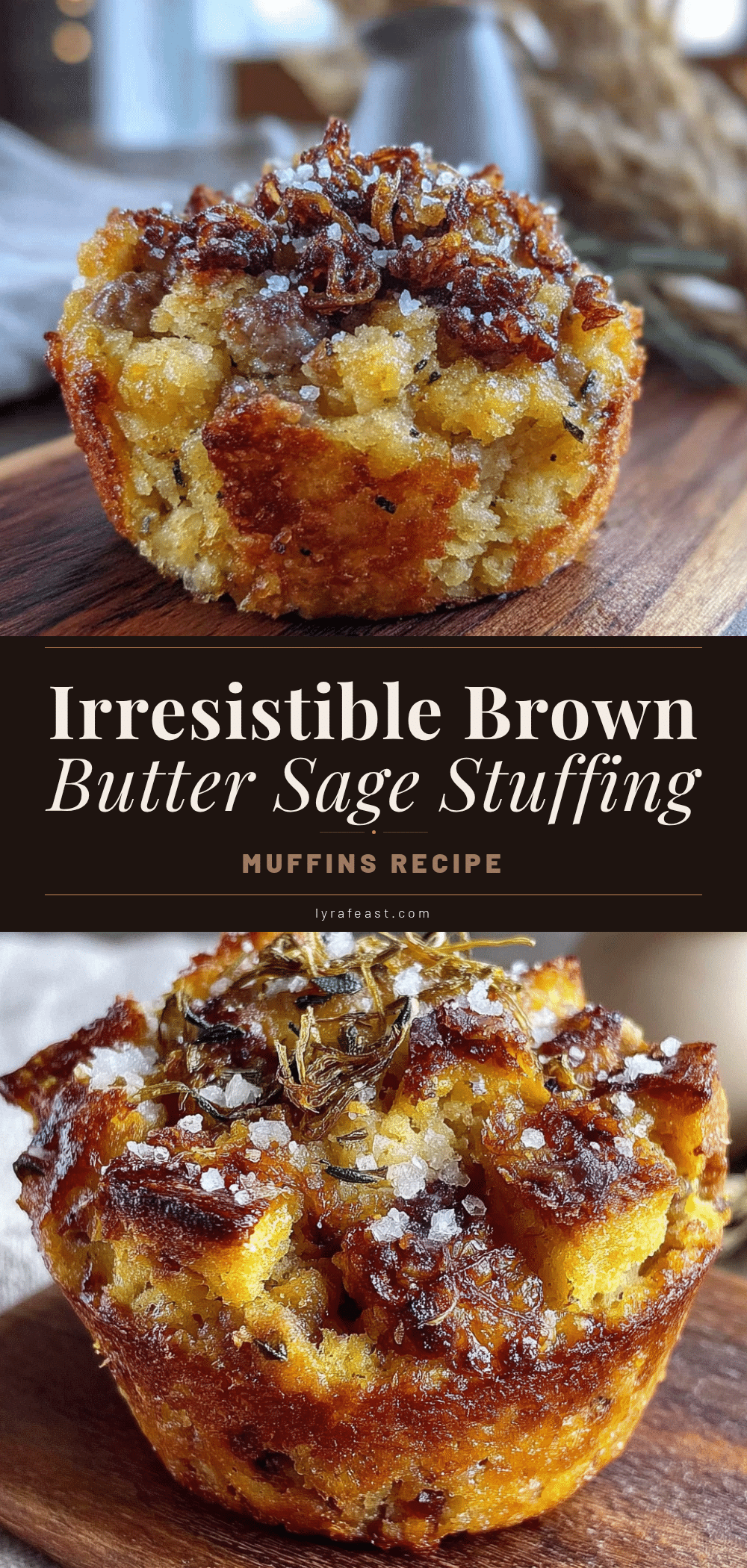
Best Brown Butter Sage Stuffing Muffins: Easy Holiday Side
These individual stuffing muffins feature crispy edges, a tender center, and rich brown butter and sage flavor. They’re easier to serve than traditional stuffing and perfect for holiday gatherings.
- Prep Time: 10 minutes
- Cook Time: 30 minutes
- Total Time: 45 minutes
- Yield: 12 servings 1x
- Category: Side Dish
- Cuisine: American
Ingredients
- 1 cup unsalted butter (2 sticks)
- 2 tablespoons fresh sage leaves, finely chopped
- 12 cups day-old bread cubes (about 1 pound)
- 1 large yellow onion, diced (about 1½ cups)
- 3 celery stalks, diced (about 1 cup)
- 3 cloves garlic, minced
- 2 cups low-sodium chicken or vegetable broth
- 2 large eggs, lightly beaten
- 1 teaspoon salt
- ½ teaspoon black pepper
- ½ teaspoon dried thyme
- ¼ teaspoon dried rosemary
- ½ cup dried cranberries (optional)
- ½ cup chopped pecans or walnuts (optional)
- ½ cup cooked sausage or bacon (optional)
Instructions
- Preheat your oven to 375°F (190°C). Position the rack in the center. Lightly grease your muffin tin with butter or nonstick spray.
- Brown the butter: Place the 1 cup of butter in a large skillet over medium heat. Let it melt completely, then swirl the pan occasionally. After about 5-7 minutes, the butter will start to foam and turn golden. Watch closely—small brown specks will appear at the bottom, and it will smell nutty and toasty. The moment it turns amber and smells like toasted hazelnuts, remove it from the heat. Stir in the chopped fresh sage—it will sizzle and release its aroma immediately. Set aside to cool slightly.
- Sauté the aromatics: In the same skillet (don’t wipe it out), add the diced onion and celery. Cook over medium heat for 5-7 minutes until softened and translucent. Add the minced garlic and cook for 1 more minute until fragrant. Remove from heat.
- Prepare the bread: Place the day-old bread cubes in your large mixing bowl. If your bread is still a bit soft, spread it on a baking sheet and toast at 300°F for 5-10 minutes until slightly dry but not browned.
- Make the custard mixture: In a separate bowl or measuring cup, whisk together the chicken broth, beaten eggs, salt, pepper, thyme, and rosemary. Pour in the brown butter mixture (including the sage) and the sautéed vegetables. Whisk until everything is well combined.
- Combine everything: Pour the liquid mixture over the bread cubes. Use a large spatula or your hands to gently toss and fold until every cube is evenly moistened. Don’t overmix—you want some texture, not mush. Let it sit for 5-10 minutes so the bread can absorb the liquid. If the mixture seems dry, add a splash more broth. If it seems soupy, add a few more bread cubes.
- Fill the muffin tin: Divide the stuffing mixture evenly among the 12 muffin cups. Use a spoon or your fingers to gently press the mixture down—don’t pack it too tight, just enough to hold its shape. Each cup should be slightly mounded on top.
- Bake: Place the muffin tin on the center rack and bake for 25-30 minutes, until the tops are golden brown and crispy, and the edges are pulling away from the sides of the pan slightly. A toothpick inserted into the center should come out clean or with a few moist crumbs.
- Cool and serve: Let the muffins cool in the pan for 5 minutes. Run a knife around the edges to loosen them, then transfer to a cooling rack. Serve warm.
Notes
For make-ahead: Assemble muffins completely (through step 7), cover, and refrigerate for up to 24 hours. Bake straight from the fridge, adding 5-7 minutes to the baking time. To freeze: Cool completely, wrap each muffin individually in plastic wrap, and store in a freezer-safe bag for up to 3 months. Reheat from frozen at 350°F for 15-20 minutes. If using a dark muffin pan, reduce oven temperature by 25°F to prevent over-browning.
Nutrition
- Serving Size: 1 muffin
- Calories: 245
- Sugar: 2
- Sodium: 420
- Fat: 16
- Saturated Fat: 9
- Carbohydrates: 20
- Fiber: 1
- Protein: 5
Keywords: stuffing muffins, brown butter sage stuffing, holiday side dish, Thanksgiving stuffing, individual stuffing, crispy stuffing muffins