Introduction
“You know that moment when you open a slightly cracked, flour-dusted cookbook and find a recipe that just pulls you in?” That’s exactly what happened last spring at my neighborhood book swap. I was flipping through an old, worn-out collection when a scribbled note caught my eye — a recipe for sour cream pound cake with a lemon butter glaze, written in a hurried, looping hand. It felt like a secret passed down from someone who knew a thing or two about comforting desserts.
Honestly, I wasn’t planning to bake that afternoon — the kitchen was a mess from earlier attempts, and I was still juggling a dozen things. But something about that recipe stuck with me. Maybe it was the tangy promise of sour cream or the zingy allure of lemon butter glaze that sounded like the perfect springtime treat. So, I gave it a shot, even though I forgot to preheat the oven at first (classic me!).
That first bite was something else — dense yet tender, with a moist crumb that almost melted in my mouth. The lemon butter glaze added just the right brightness without overpowering the cake’s rich, buttery backbone. I mean, maybe you’ve been there: craving something simple but memorable. That’s why this classic homemade sour cream pound cake with lemon butter glaze stayed on my must-bake list ever since. It’s one of those recipes that feels like a hug from the inside out.
Why You’ll Love This Recipe
After testing this classic homemade sour cream pound cake recipe multiple times (and trust me, I’ve learned a bunch along the way), I can say it’s a real keeper. It’s not just any pound cake — it’s one that balances simplicity and indulgence, making it a star in any dessert lineup.
- Quick & Easy: You can whip this up in under an hour, perfect for those moments when you want a homemade dessert without fuss.
- Simple Ingredients: No need for fancy or hard-to-find items. Most of these are pantry staples you probably have already.
- Perfect for Gatherings: Whether it’s a weekend brunch, a casual potluck, or just a cozy family dinner, this cake fits right in.
- Crowd-Pleaser: Kids and adults alike go back for seconds. The lemon butter glaze adds a refreshing twist that keeps it from feeling too heavy.
- Unbelievably Delicious: The sour cream makes the crumb moist and tender, while the lemon glaze adds a subtle brightness that sets it apart from other pound cakes.
What makes this cake different? It’s the way the sour cream keeps the texture moist without weighing it down and the glaze’s buttery lemon punch that feels both nostalgic and fresh. This isn’t just another pound cake recipe — it’s the one I turn to when I want something reliably delicious, no matter what.
What Ingredients You Will Need
This classic homemade sour cream pound cake recipe uses straightforward ingredients that come together beautifully to create a rich, tender cake with a luscious lemon butter glaze. You’ll find most of these in your kitchen already, making it an easy, no-stress bake.
- Unsalted butter, softened (I prefer Land O Lakes for a creamy texture and flavor)
- Granulated sugar — adds sweetness and helps with that perfect crust
- Large eggs, room temperature (helps with even mixing and rise)
- All-purpose flour — sifted for a lighter crumb
- Baking powder — just a touch to give a subtle lift
- Sour cream, full-fat (this is the secret for moistness and tang; Greek yogurt can be a substitute if needed)
- Pure vanilla extract — quality matters here; I use Nielsen-Massey for its rich aroma
- Salt — balances sweetness and enhances flavor
For the lemon butter glaze:
- Unsalted butter, melted
- Powdered sugar — for that smooth, sweet finish
- Fresh lemon juice — freshly squeezed is key, gives the glaze its bright zing
- Lemon zest — adds texture and intensified lemon flavor
- Pinch of salt — cuts through the sweetness and makes the glaze sing
Pro tip: If you’re baking in summer, try swapping the lemon zest for orange zest for a subtle twist. Also, for a dairy-free version, swap butter for a plant-based spread and use coconut yogurt instead of sour cream.
Equipment Needed

- 9×5-inch loaf pan — standard size for pound cakes; I recommend greasing it well and lining with parchment paper for easy removal.
- Electric mixer or stand mixer — helps achieve the perfect creamy butter and sugar texture.
- Mixing bowls — a couple for dry and wet ingredients.
- Sifter or fine mesh sieve — to aerate the flour and baking powder.
- Zester or microplane — for fresh lemon zest.
- Measuring cups and spoons — accurate measurements matter here.
- Spatula — for folding ingredients gently.
If you don’t have a stand mixer, no worries! A handheld electric mixer or even some serious arm power with a whisk and elbow grease can do the trick. For the loaf pan, I’ve found that a heavy-duty metal pan bakes more evenly than glass.
Preparation Method
- Preheat your oven to 350°F (175°C). Grease your 9×5-inch loaf pan thoroughly, then line it with parchment paper, leaving an overhang on the sides for easy cake removal later. This step saves you from a sticky situation, trust me.
- Cream the butter and sugar: In a large bowl, use your electric mixer to beat 1 cup (227g) of softened unsalted butter with 2 cups (400g) of granulated sugar. This should take about 4-5 minutes on medium-high speed until it’s pale, fluffy, and smells heavenly.
- Add the eggs: Crack in 4 large eggs one at a time, beating well after each addition. This keeps the batter smooth and prevents curdling. If your eggs are cold, pop them in warm water for a few minutes first — room temperature eggs mix better.
- Mix in the vanilla and sour cream: Stir in 1 teaspoon of pure vanilla extract and 1 cup (240g) of full-fat sour cream. The batter will start to look thick and creamy now.
- Combine dry ingredients: In a separate bowl, sift together 3 cups (360g) all-purpose flour, 1 teaspoon baking powder, and ½ teaspoon salt. This ensures even distribution and a lighter crumb.
- Fold dry ingredients into wet: Gradually add the flour mixture to the wet batter in three parts, folding gently with a spatula each time. Don’t overmix — just enough to combine. The batter should be thick but smooth.
- Pour and smooth: Transfer the batter into your prepared loaf pan, smoothing the top with a spatula. Tap the pan lightly on the counter to release any air bubbles.
- Bake: Pop it in the oven for 60-70 minutes. Start checking at 60 minutes by inserting a toothpick in the center; it should come out clean or with just a few moist crumbs attached. If the top browns too quickly, tent it loosely with foil.
- Cool: Let the cake cool in the pan for about 15 minutes, then use the parchment overhang to lift it out onto a wire rack. Cool completely before glazing.
- Prepare the lemon butter glaze: Whisk together ½ cup (113g) melted unsalted butter, 1 ½ cups (180g) powdered sugar, 3 tablespoons fresh lemon juice, 1 teaspoon lemon zest, and a pinch of salt until smooth. Adjust consistency with more lemon juice or powdered sugar if needed.
- Glaze the cake: Drizzle the lemon butter glaze over the cooled cake and let it set for 20 minutes before slicing. The glaze will firm up slightly while staying glossy and luscious.
If you notice the cake sinking a bit in the middle, it usually means the oven temperature was too low or the batter was overmixed. I’ve been there — next time, I double-check my oven thermometer and keep mixing gentle!
Cooking Tips & Techniques
Honestly, pound cake can be tricky if you rush it or skip key steps, but here are some tips I’ve picked up along the way to nail this classic homemade sour cream pound cake every time:
- Butter temperature is critical: Too cold, and it won’t cream properly; too warm, and the batter can get greasy. Aim for soft but not melting.
- Don’t overmix the batter: Fold in the flour gently. Overworking gluten makes the cake tough, and you want tender, delicate crumb here.
- Use an oven thermometer: Ovens can vary, and pound cakes like steady heat. Keeping it spot-on 350°F (175°C) avoids overbaking or underbaking.
- Check doneness with a toothpick: If it comes out clean or with a few moist crumbs, it’s perfect. If wet batter sticks, keep baking but watch closely.
- Let the cake cool before glazing: If the cake is warm, the glaze will melt and run right off.
- Multitasking tip: While the cake bakes, prep your glaze to save time and keep everything fresh.
Early on, I tried pouring the glaze on hot cake — lesson learned (sticky mess!). Now, patience pays off with that perfect glossy finish.
Variations & Adaptations
This classic homemade sour cream pound cake is a fantastic base that welcomes some fun variations depending on your mood or dietary needs.
- Berry Swirl: Fold fresh or frozen blueberries or raspberries into the batter before baking. The fruit adds bursts of juiciness and color. Reduce sugar slightly if your berries are sweet.
- Gluten-Free Version: Swap all-purpose flour with a gluten-free blend like Bob’s Red Mill 1-to-1. Add 1/2 teaspoon xanthan gum if your blend lacks it for better texture.
- Dairy-Free Adaptation: Use coconut yogurt instead of sour cream and plant-based butter for the glaze. The cake stays moist and flavorful without dairy.
- Herb-Infused: Add 1 teaspoon finely chopped fresh thyme or rosemary to the batter for a subtle savory note that pairs beautifully with the lemon glaze.
- Personal Twist: One time, I swapped lemon zest for a teaspoon of orange blossom water in the glaze — unexpected but honestly delicious!
Serving & Storage Suggestions
This classic homemade sour cream pound cake with lemon butter glaze is best served at room temperature. The texture softens just right, and the glaze shines with that buttery lemon kick.
For a simple presentation, slice it thick and serve with fresh berries or a dollop of whipped cream. It pairs beautifully with a cup of tea or a glass of sparkling lemonade on a sunny afternoon.
Store leftover cake wrapped tightly in plastic wrap or an airtight container at room temperature for up to 3 days. For longer storage, freeze the cake (without glaze) wrapped in foil and plastic wrap for up to 3 months. Thaw overnight in the fridge and add glaze fresh before serving.
Reheating slices in a low oven (300°F / 150°C) for about 10 minutes revives moistness and brings back that fresh-baked aroma. The flavors actually deepen after a day, so sometimes I bake it ahead on purpose!
Nutritional Information & Benefits
Each slice (about 1/12th of the loaf) of this classic homemade sour cream pound cake provides roughly 320 calories, with 18 grams of fat, 38 grams of carbohydrates, and 5 grams of protein. The sour cream adds calcium and probiotics if using cultured varieties.
The fresh lemon juice and zest offer a small boost of vitamin C, brightening the flavor and adding antioxidant benefits. Using real butter provides vitamin A and a rich mouthfeel.
This recipe is naturally gluten-containing but easy to adapt for gluten-free diets. Also, it’s free from nuts, making it suitable for many allergy-conscious eaters.
From a wellness perspective, this cake feels like a treat that balances indulgence and wholesomeness — the sour cream adds moisture without extra sugar, and the lemon glaze keeps things fresh without being overly sweet.
Conclusion
If you’re looking for a classic homemade sour cream pound cake recipe that’s both straightforward and irresistible, this one’s for you. It’s the kind of cake that makes you pause and savor each bite, whether it’s a quiet afternoon snack or the star of your next gathering.
Feel free to play around with the glaze or add your favorite mix-ins — the recipe is forgiving and welcoming to creativity. I keep coming back to this cake because it reminds me of that little scribbled note I found and the joy of simple, honest baking.
Try it out, and don’t be shy to share how you made it your own — I’d love to hear your twists or tips in the comments below. Happy baking!
FAQs
Can I make this pound cake ahead of time?
Yes! The cake keeps well for a few days at room temperature and actually tastes better the next day. Just add the lemon butter glaze right before serving for the best texture.
What if I don’t have sour cream?
You can substitute Greek yogurt or even buttermilk, though the texture and tang might be slightly different. Greek yogurt is the closest in moisture and tang.
How do I store leftover cake?
Wrap it tightly in plastic wrap or place in an airtight container at room temperature for up to 3 days. For longer storage, freeze the unglazed cake wrapped well for up to 3 months.
Can I use fresh lemon juice from a bottle?
Freshly squeezed lemon juice is best for the glaze to get that bright, natural flavor. Bottled lemon juice tends to be less vibrant and can affect the glaze’s taste.
What’s the best way to get a smooth lemon butter glaze?
Make sure your melted butter is warm but not hot, and sift the powdered sugar to avoid lumps. Whisk the ingredients thoroughly until smooth and glossy.
By the way, if you love the idea of classic cakes, you might enjoy my classic vanilla cupcakes recipe or the rich moistness of my chocolate bundt cake for your next baking adventure.
Pin This Recipe!
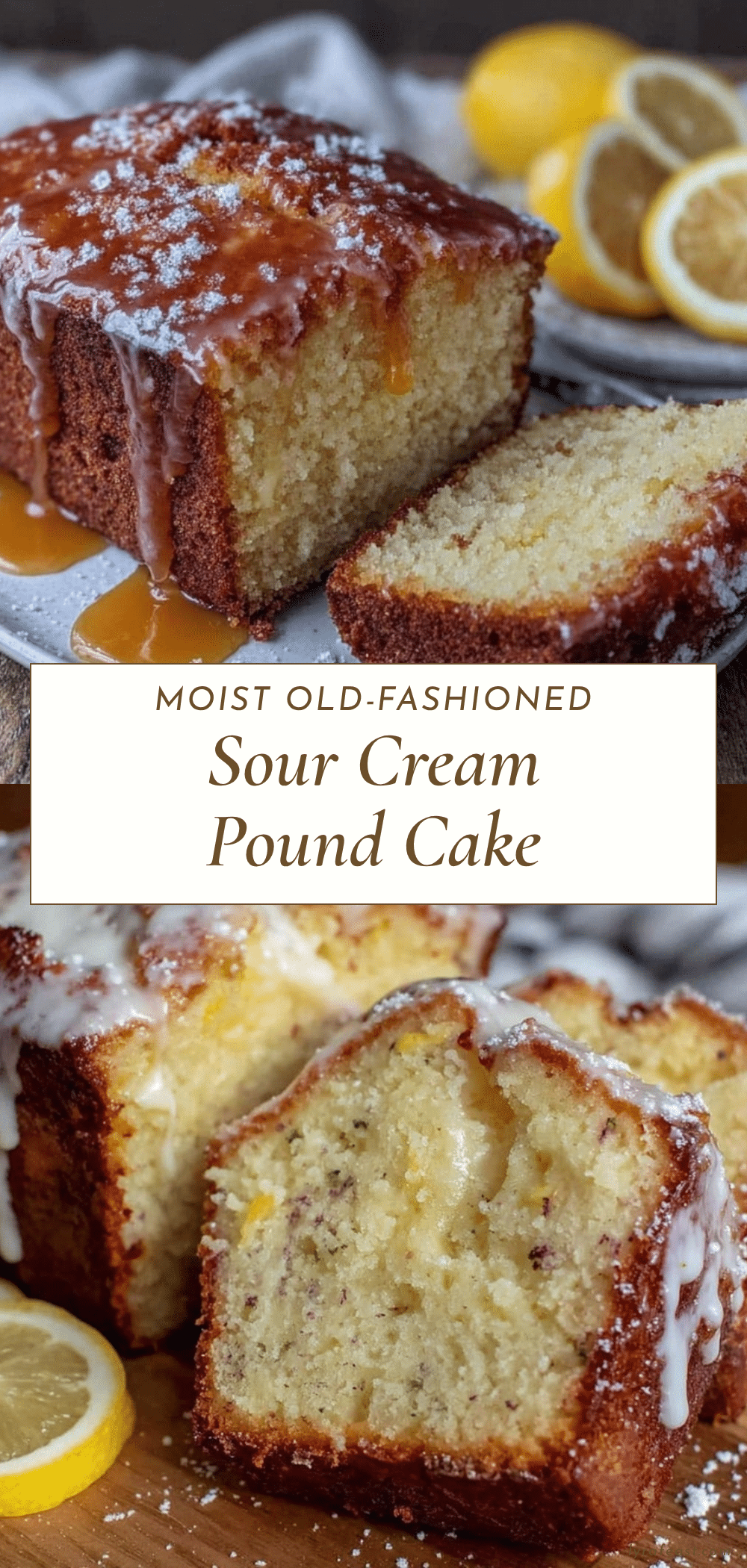
Classic Homemade Sour Cream Pound Cake Recipe with Easy Lemon Butter Glaze

A dense yet tender sour cream pound cake with a moist crumb and a bright, buttery lemon glaze that adds a refreshing twist to this classic dessert.
- Prep Time: 15 minutes
- Cook Time: 60-70 minutes
- Total Time: 1 hour 15 minutes
- Yield: 12 servings 1x
- Category: Dessert
- Cuisine: American
Ingredients
- 1 cup (227g) unsalted butter, softened
- 2 cups (400g) granulated sugar
- 4 large eggs, room temperature
- 3 cups (360g) all-purpose flour, sifted
- 1 teaspoon baking powder
- ½ teaspoon salt
- 1 cup (240g) full-fat sour cream
- 1 teaspoon pure vanilla extract
- For the lemon butter glaze:
- ½ cup (113g) unsalted butter, melted
- 1 ½ cups (180g) powdered sugar
- 3 tablespoons fresh lemon juice
- 1 teaspoon lemon zest
- Pinch of salt
Instructions
- Preheat your oven to 350°F (175°C). Grease a 9×5-inch loaf pan thoroughly, then line it with parchment paper, leaving an overhang on the sides for easy cake removal.
- In a large bowl, use an electric mixer to beat 1 cup (227g) of softened unsalted butter with 2 cups (400g) of granulated sugar for 4-5 minutes on medium-high speed until pale and fluffy.
- Add 4 large eggs one at a time, beating well after each addition to keep the batter smooth.
- Stir in 1 teaspoon of pure vanilla extract and 1 cup (240g) of full-fat sour cream until the batter is thick and creamy.
- In a separate bowl, sift together 3 cups (360g) all-purpose flour, 1 teaspoon baking powder, and ½ teaspoon salt.
- Gradually fold the dry ingredients into the wet batter in three parts using a spatula, mixing gently until just combined.
- Pour the batter into the prepared loaf pan and smooth the top. Tap the pan lightly on the counter to release air bubbles.
- Bake for 60-70 minutes, starting to check at 60 minutes by inserting a toothpick in the center; it should come out clean or with a few moist crumbs. Tent with foil if the top browns too quickly.
- Let the cake cool in the pan for 15 minutes, then lift it out onto a wire rack using the parchment overhang. Cool completely before glazing.
- To prepare the lemon butter glaze, whisk together ½ cup (113g) melted unsalted butter, 1 ½ cups (180g) powdered sugar, 3 tablespoons fresh lemon juice, 1 teaspoon lemon zest, and a pinch of salt until smooth. Adjust consistency if needed.
- Drizzle the glaze over the cooled cake and let it set for 20 minutes before slicing.
Notes
Use room temperature eggs for better mixing and rise. Avoid overmixing the batter to keep the crumb tender. Use an oven thermometer to maintain steady 350°F heat. Let the cake cool completely before glazing to prevent the glaze from melting and running off. For a dairy-free version, substitute butter with plant-based spread and sour cream with coconut yogurt. For a summer twist, swap lemon zest with orange zest.
Nutrition
- Serving Size: 1 slice (1/12th of t
- Calories: 320
- Fat: 18
- Carbohydrates: 38
- Protein: 5
Keywords: sour cream pound cake, lemon butter glaze, classic pound cake, homemade dessert, easy pound cake recipe, moist pound cake, lemon glaze