It was 10:47 PM on a random Tuesday, and I was hit with the most absurd craving for a creamy, velvety soup. Not just any soup, but that deep, sweet, and savory kind that warms you from the inside out. The problem? I had a single, sad kabocha squash sitting in my fruit bowl, a can of coconut milk that was probably past its “best by” date, and absolutely no energy to follow a complicated recipe. I didn’t have the patience for roasting the squash for an hour, or the desire to chop onions into a million tiny pieces. But I had a microwave, a stubborn streak, and a crazy idea. What if I just nuked the squash until it was soft, threw everything into a pot, and hoped for the best?
Honestly, I was ready to call it a night and just eat cereal. But that squash kept staring at me from the counter. You know that feeling when your stomach and your brain are having a full-blown argument? My stomach was screaming for soup, and my brain was saying, “Just go to bed.” But I grabbed a knife, cut that kabocha in half (which, let me tell you, is a workout in itself), scooped out the seeds, and tossed it into the microwave. I didn’t even peel it. I was too tired. And that, my friends, turned out to be the best decision I ever made. The microwave softened it perfectly, the skin became tender and edible, and in less than 20 minutes, I had a pot of the most ridiculously creamy, flavorful soup I’d ever made. I stood there in my pajamas, eating it straight from the pan, and I knew I had stumbled onto something special. This wasn’t just a quick fix—it was a keeper. It’s the recipe I now make when I’m tired, when I’m busy, and when I just need a bowl of something that feels like a hug.
Why You’ll Love This Recipe
Let me tell you why this soup has become a non-negotiable part of my weeknight rotation. It’s not just good—it’s the kind of soup that makes you forget you were ever tired or stressed. Here’s what makes it a winner:
- Quick & Easy: This soup comes together in under 30 minutes, from start to finish. No roasting, no fussing, no long simmering. It’s perfect for those nights when you need dinner on the table yesterday.
- Simple Ingredients: You probably have most of these things in your kitchen right now. Kabocha squash, coconut milk, onion, garlic, and broth. No fancy trips to a specialty store required.
- Perfect for Busy Weeknights: This is the definition of a low-effort, high-reward meal. It’s the kind of recipe you can make after a long day at work, when you have zero energy but still want something homemade and nourishing.
- Crowd-Pleaser: I have served this to picky eaters, to kids, to adults who “don’t like squash,” and every single person has asked for seconds. It’s that good.
- Unbelievably Delicious: The texture is like velvet. The flavor is sweet, savory, and slightly nutty from the coconut milk. It’s comfort food that feels a little bit fancy, even if you made it in your pajamas.
What makes this recipe different from all the other squash soups out there? It’s the method. By microwaving the squash instead of roasting it, you save a ton of time and energy. And by leaving the skin on, you get all the fiber and nutrients without any extra work. Plus, the coconut milk adds a richness that makes it taste like it simmered for hours. It’s my best version of a classic, and I’m so excited to share it with you.
This soup is the kind that makes you close your eyes after the first bite. It’s comfort food reimagined—faster, healthier, but with the same soul-soothing satisfaction. Perfect for impressing guests without stress, or turning a simple Tuesday night into something memorable.
What Ingredients You Will Need
This recipe uses simple, wholesome ingredients to deliver bold flavor and satisfying texture without the fuss. Most of these are pantry staples, which makes this soup a lifesaver on busy nights.
- Kabocha Squash (1 medium, about 2-3 pounds) — Also known as Japanese pumpkin, this squash has a sweet, nutty flavor and a creamy texture when cooked. The skin is edible once tender, so no peeling required! Just wash it well and cut it into chunks. Look for one that feels heavy for its size with a dull, hard skin.
- Coconut Milk (1 can, 13.5 oz or 400 ml) — Use full-fat coconut milk for the creamiest, richest soup. I prefer Thai Kitchen or Native Forest brands for their consistent quality. For a lighter version, you can use “lite” coconut milk, but the soup won’t be as velvety.
- Yellow Onion (1 medium) — Adds a savory, slightly sweet base to the soup. You can substitute with a white onion or even a leek if you have one on hand.
- Garlic (3-4 cloves) — Because everything is better with garlic. It adds depth and warmth to the soup.
- Vegetable Broth (2 cups or 480 ml) — Use a good-quality broth for the best flavor. I like Better Than Bouillon paste for its rich taste. You can also use chicken broth if you’re not keeping it vegetarian.
- Fresh Ginger (1-inch piece, peeled and grated) — This is my secret ingredient. It adds a subtle warmth and brightness that pairs beautifully with the sweet squash and creamy coconut milk. Don’t skip it!
- Salt (1 teaspoon, or to taste) — I use fine sea salt. Start with less and adjust at the end.
- Black Pepper (½ teaspoon, freshly ground) — For a little kick. Freshly ground is always better.
- Optional Toppings: Toasted pumpkin seeds, a drizzle of coconut cream, fresh cilantro, or a pinch of red pepper flakes for heat.
Substitution Guidance: If you can’t find kabocha squash, you can use butternut squash or even a sugar pumpkin. Just note that the cooking time and sweetness level might vary slightly. For a nut-free version, this recipe is already nut-free as written. To make it oil-free, simply sauté the onion and garlic in a splash of broth instead of oil.
Equipment Needed
You don’t need a fancy kitchen to make this soup. Here’s what you’ll need:
- Microwave-Safe Bowl — For cooking the squash. A large glass bowl works perfectly.
- Large Pot or Dutch Oven — For sautéing the aromatics and simmering the soup. A 4-5 quart pot is ideal.
- Immersion Blender — This is my favorite tool for making creamy soups. It’s easier to clean than a regular blender and lets you blend right in the pot. If you don’t have one, a regular countertop blender works too.
- Chef’s Knife — A sharp knife is essential for cutting through the tough kabocha squash. Trust me, a dull knife is a recipe for frustration.
- Cutting Board — Any sturdy board will do.
- Measuring Cups and Spoons — For accurate measurements.
- Wooden Spoon or Spatula — For stirring.
Budget-Friendly Options: If you don’t have an immersion blender, a regular blender works just as well. Just be sure to let the soup cool slightly before blending, and work in batches to avoid any hot soup explosions. A potato masher can also work in a pinch if you don’t mind a slightly chunkier texture.
Preparation Method

Alright, let’s get cooking. This soup is so simple, you’ll barely break a sweat.
- Microwave the Squash: First, wash your kabocha squash well. Cut it in half using a sharp chef’s knife. It’s tough, so be careful! Scoop out the seeds and stringy bits with a spoon. Cut each half into 2-3 large chunks. Place the chunks in a microwave-safe bowl, add about 2 tablespoons of water, and cover with a microwave-safe plate or plastic wrap. Microwave on high for 8-10 minutes, or until the squash is fork-tender. The skin should be soft and the flesh should be easily pierced. Let it cool for a few minutes until it’s safe to handle.
- Sauté the Aromatics: While the squash is cooking, heat a large pot or Dutch oven over medium heat. Add a drizzle of olive oil or a splash of water (if oil-free). Add the diced onion and cook for 4-5 minutes, until it’s soft and translucent. Add the minced garlic and grated ginger, and cook for another minute until fragrant. Stir constantly so the garlic doesn’t burn.
- Combine and Simmer: Once the squash is cool enough to handle, cut it into smaller chunks (skin and all) and add it to the pot. Pour in the vegetable broth and the can of coconut milk. Stir everything together. Bring the soup to a gentle simmer over medium-high heat, then reduce the heat to low and let it cook for 5-7 minutes. This allows all the flavors to meld together. The squash will start to break down further.
- Blend Until Silky: Turn off the heat. Using an immersion blender, blend the soup directly in the pot until it’s completely smooth and velvety. If you’re using a regular blender, carefully transfer the soup in batches (don’t fill the blender more than halfway full) and blend until smooth. Be sure to remove the center cap of the blender lid to let steam escape, and cover it with a kitchen towel. Return the blended soup to the pot.
- Season and Serve: Taste the soup and add salt and pepper as needed. The sweetness of the squash and the richness of the coconut milk should be well-balanced. If the soup is too thick for your liking, add a little more broth or water until it reaches your desired consistency. Ladle into bowls and top with your favorite toppings. I love a sprinkle of toasted pumpkin seeds and a drizzle of coconut cream for a beautiful finish.
Pro Tip: The soup will thicken as it sits. When reheating leftovers, just add a splash of broth or water to thin it out to your liking.
Cooking Tips & Techniques
Over the years, I’ve made this soup more times than I can count, and I’ve learned a few things the hard way. Here are my best tips for success:
- Don’t Overcook the Squash: When microwaving, you want the squash to be tender but not mushy. Overcooking can make it waterlogged, which will dilute the flavor of your soup. Check it at the 8-minute mark and add time in 1-minute increments if needed.
- Toast Your Seeds: Don’t throw away those squash seeds! Rinse them, toss them with a little salt and olive oil, and toast them in a 350°F oven for 10-12 minutes. They make a fantastic, crunchy topping for your soup.
- Adjust the Consistency: The beauty of this soup is that you can make it as thick or as thin as you like. For a thicker, more stew-like soup, use less broth. For a thinner, more sippable soup, add more. I like it somewhere in between—creamy but not too heavy.
- Use a Good Immersion Blender: I’ve used cheap immersion blenders, and they just don’t get the soup as smooth. A mid-range blender with a sturdy blade will give you that velvety texture you’re after. My personal favorite is the Cuisinart SmartStick.
- Don’t Skip the Ginger: I know it’s an extra step, but the fresh ginger is what makes this soup sing. It cuts through the richness of the coconut milk and adds a brightness that dried ginger just can’t replicate. Trust me on this one.
- The “Burnt Garlic” Mistake: I once got distracted and let my garlic burn. It turned the whole soup bitter. The fix? Start over. Seriously, burnt garlic ruins everything. So keep an eye on it and stir constantly.
Variations & Adaptations
This soup is incredibly versatile. Here are some ways to make it your own:
- Spicy Thai Version: Add 1-2 tablespoons of red curry paste along with the garlic and ginger. Finish with a squeeze of lime juice and a sprinkle of fresh cilantro. It’s a whole new soup!
- Curried Squash Soup: Stir in 1-2 teaspoons of curry powder or garam masala when you sauté the onions. The warm spices pair beautifully with the sweet squash.
- Make it a Meal: Add a can of drained and rinsed chickpeas or some shredded cooked chicken to the soup after blending for extra protein. A handful of spinach stirred in at the end also adds color and nutrients.
- Slow Cooker Method: For a hands-off version, add the raw, cubed squash (skin on), onion, garlic, ginger, broth, and coconut milk to your slow cooker. Cook on low for 6-8 hours or high for 3-4 hours. Blend with an immersion blender right in the slow cooker.
- Dairy-Free & Vegan: This recipe is already dairy-free and vegan as written! Just be sure to use vegetable broth instead of chicken broth.
- Roasted Squash Version: If you have the time, roasting the squash at 400°F for 30-40 minutes until caramelized will add a deeper, more complex flavor. The microwave method is faster, but roasting is worth it for a weekend project.
I once tried a version with roasted red peppers and smoked paprika, and it was incredible. Don’t be afraid to experiment!
Serving & Storage Suggestions
This soup is wonderful served hot, but it’s also surprisingly good at room temperature. Here’s how to serve and store it:
- Serving Temperature: Serve the soup piping hot for maximum comfort. Ladle it into warm bowls to keep it hot longer.
- Presentation: For a beautiful presentation, swirl a spoonful of coconut cream on top of each bowl. Sprinkle with toasted pumpkin seeds, a pinch of red pepper flakes, and a few fresh cilantro leaves. A drizzle of chili oil is also lovely.
- Complementary Dishes: This soup pairs beautifully with a simple green salad with a tangy vinaigrette, a crusty piece of sourdough bread for dipping, or a grilled cheese sandwich for the ultimate comfort meal. For a heartier dinner, serve it alongside a simple roasted chicken thigh or a bright quinoa salad.
- Storage: Store leftover soup in an airtight container in the refrigerator for up to 5 days. The flavors actually get better after a day or two!
- Freezing: This soup freezes beautifully. Let it cool completely, then transfer it to freezer-safe containers or zip-top bags. It will keep for up to 3 months. Thaw overnight in the refrigerator before reheating.
- Reheating: Reheat the soup gently on the stovetop over medium-low heat, stirring occasionally. You can also reheat individual portions in the microwave. If the soup has thickened, add a splash of broth or water to thin it out.
Note: The soup’s flavor deepens and becomes even more complex after a day in the fridge. It’s one of those recipes that’s almost better as leftovers.
Nutritional Information & Benefits
This soup isn’t just delicious—it’s packed with nutrients that make you feel good from the inside out.
Estimated Nutritional Values (per serving, based on 4 servings):
| Nutrient | Amount |
|---|---|
| Calories | ~280 |
| Fat | 18g |
| Saturated Fat | 14g |
| Carbohydrates | 28g |
| Fiber | 6g |
| Sugar | 10g |
| Protein | 5g |
| Vitamin A | 350% DV |
| Vitamin C | 30% DV |
| Iron | 15% DV |
| Potassium | 20% DV |
Health Benefits: Kabocha squash is a superstar of nutrition. It’s incredibly high in beta-carotene (which your body converts to vitamin A), supporting healthy vision and immune function. It’s also a great source of fiber, which aids digestion and keeps you feeling full. The coconut milk provides healthy medium-chain triglycerides (MCTs) that can boost energy and support brain health. Ginger is a natural anti-inflammatory, and garlic is well-known for its immune-boosting properties.
Dietary Considerations: This soup is naturally gluten-free, dairy-free, vegan, and nut-free. It’s also low in added sugars and can be made oil-free by sautéing in water or broth.
Potential Allergens: Coconut is technically a fruit, but some people with tree nut allergies may also react to coconut. Check with your doctor if you have concerns.
Conclusion
This Quick Creamy Kabocha Squash Soup with Coconut Milk is more than just a recipe—it’s a lifeline for busy weeknights. It proves that you don’t need hours in the kitchen or a dozen fancy ingredients to create something truly special. It’s proof that a little bit of late-night stubbornness can lead to a happy accident that you’ll make over and over again.
I love this soup because it’s forgiving, it’s flexible, and it always, always makes me feel better. Whether you’re tired, stressed, or just craving something warm and comforting, this soup is here for you. Play around with the toppings, make it spicy, make it mild—make it your own. And when you do, I’d love to hear about it. Leave a comment below and tell me how it turned out, or share your own twist on this recipe. Your version might just become someone else’s new favorite.
So go ahead, grab that squash, and give it a try. You’ve got nothing to lose and a bowl of pure comfort to gain. Happy cooking!
Frequently Asked Questions
Can I use a different type of squash?
Absolutely! Butternut squash, sugar pumpkin, or even acorn squash will work. Just keep in mind that the sweetness and cooking time may vary slightly. Kabocha is naturally sweeter and creamier, which is why I love it for this soup.
Do I really have to leave the skin on the kabocha squash?
Yes, and it’s one of the best parts of this recipe! Kabocha skin becomes tender and completely edible when cooked, and it’s packed with fiber and nutrients. Plus, it saves you the hassle of peeling a tough squash. Just make sure to wash it thoroughly before cooking.
Can I make this soup ahead of time?
Definitely! In fact, I often make it a day or two ahead. The flavors meld and deepen in the refrigerator, making it even more delicious. Just store it in an airtight container and reheat gently on the stovetop or in the microwave.
How can I make this soup thicker or thinner?
For a thicker soup, use less broth or let it simmer a little longer to reduce. For a thinner soup, add more broth or water until it reaches your desired consistency. You can also add a splash of extra coconut milk for richness.
Is this soup freezer-friendly?
Yes! This soup freezes beautifully. Let it cool completely, then transfer it to freezer-safe containers or zip-top bags. It will keep for up to 3 months. Thaw overnight in the refrigerator and reheat gently. You may need to add a splash of broth when reheating, as it tends to thicken after freezing.
Pin This Recipe!
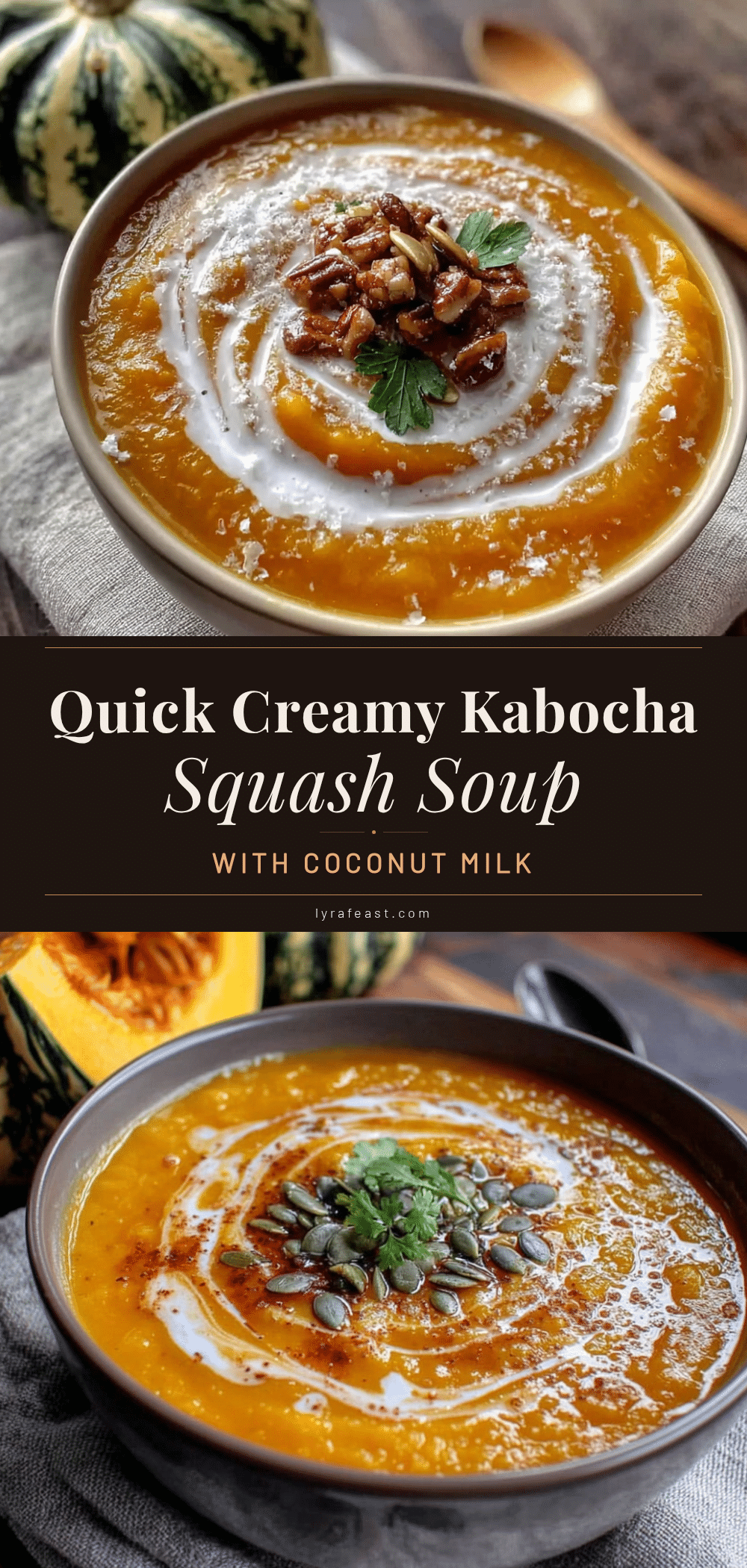
Easy Creamy Kabocha Squash Soup with Coconut Milk

A quick and easy creamy kabocha squash soup made with coconut milk, ready in under 30 minutes. This velvety, comforting soup is perfect for busy weeknights and uses simple ingredients for a delicious, nourishing meal.
- Prep Time: 10 minutes
- Cook Time: 20 minutes
- Total Time: 30 minutes
- Yield: 4 servings 1x
- Category: Soup
- Cuisine: American
Ingredients
- 1 medium kabocha squash (about 2–3 pounds)
- 1 can (13.5 oz or 400 ml) full-fat coconut milk
- 1 medium yellow onion, diced
- 3–4 cloves garlic, minced
- 2 cups (480 ml) vegetable broth
- 1-inch piece fresh ginger, peeled and grated
- 1 teaspoon fine sea salt (or to taste)
- ½ teaspoon freshly ground black pepper
- Optional toppings: toasted pumpkin seeds, coconut cream drizzle, fresh cilantro, red pepper flakes
Instructions
- Wash the kabocha squash well. Cut it in half using a sharp chef’s knife. Scoop out the seeds and stringy bits. Cut each half into 2-3 large chunks. Place chunks in a microwave-safe bowl, add 2 tablespoons of water, and cover with a microwave-safe plate or plastic wrap. Microwave on high for 8-10 minutes, or until fork-tender. Let cool slightly.
- While the squash cooks, heat a large pot or Dutch oven over medium heat. Add a drizzle of olive oil or a splash of water. Add the diced onion and cook for 4-5 minutes until soft and translucent. Add the minced garlic and grated ginger, and cook for 1 minute until fragrant, stirring constantly.
- Once the squash is cool enough to handle, cut it into smaller chunks (skin and all) and add to the pot. Pour in the vegetable broth and coconut milk. Stir to combine. Bring to a gentle simmer over medium-high heat, then reduce heat to low and cook for 5-7 minutes.
- Turn off the heat. Using an immersion blender, blend the soup directly in the pot until completely smooth and velvety. Alternatively, carefully transfer the soup in batches to a regular blender and blend until smooth (remove center cap of lid to let steam escape, cover with a towel). Return blended soup to the pot.
- Taste and add salt and pepper as needed. If the soup is too thick, add more broth or water to reach desired consistency. Ladle into bowls and top with desired toppings.
Notes
The soup will thicken as it sits. When reheating leftovers, add a splash of broth or water to thin it out. The flavor deepens after a day in the fridge. For a thicker soup, use less broth; for a thinner soup, add more. Don’t skip the fresh ginger—it adds brightness. Be careful not to burn the garlic. Kabocha skin is edible and becomes tender when cooked; just wash the squash well before cooking.
Nutrition
- Serving Size: 1 bowl (about 1.5 cu
- Calories: 280
- Sugar: 10
- Sodium: 600
- Fat: 18
- Saturated Fat: 14
- Carbohydrates: 28
- Fiber: 6
- Protein: 5
Keywords: kabocha squash soup, creamy squash soup, coconut milk soup, easy soup recipe, quick soup, vegan soup, gluten-free soup, dairy-free soup, weeknight dinner, comfort food