I wasn’t trying to impress anyone. Honestly, I’d stopped by my neighbor Klaus’s house on a rainy Tuesday to borrow a lug wrench—my car was making that noise again, you know the one—and a smell hit me before I even got past his screen door. It was warm, a little sour, a little smoky, and so deeply comforting that I just stood there for a second, dripping on his doormat. Klaus is a retired machinist who speaks in grunts and fixes everything with duct tape and willpower. He was not the type to fuss over dinner. But there he was, standing at his stove in a stained flannel shirt, casually stirring a cast-iron skillet full of bratwurst and sauerkraut like it was nothing special. He barely looked up. “Grab a plate,” he said. “It’s almost done.”
That moment—the rain on the roof, the hiss of the sausages, his complete lack of ceremony—stayed with me. Because the thing is, that skillet was perfect. The sausages were plump and juicy, the kraut was tangy and mellow, and the whole thing tasted like a hug you didn’t know you needed. I asked him what he did, and he just shrugged. “Nothing. Throw it in a pan.” And that’s the truth of this easy German bratwurst and sauerkraut skillet. It is genuinely nothing fancy. It is one pan, a few ingredients, and about twenty-five minutes of your time. But somehow, the sum is way more than the parts. Maybe you’ve been there—you taste something simple at someone else’s house, and you realize you’ve been overcomplicating dinner for years. That’s what this recipe did for me. I’ve been making it ever since, and it never gets old.
Why You’ll Love This Recipe
Let me tell you, after making this skillet at least three dozen times (I’m not exaggerating), I’ve learned exactly why it works so well. It’s not just about the ingredients—it’s about how they come together with almost no effort on your part.
- Quick & Easy: From fridge to table in under 30 minutes. This is the definition of a weeknight win. No marinating, no complicated steps, just a quick sizzle and a gentle simmer.
- Simple Ingredients: You likely have the pantry staples—oil, caraway seeds, maybe some mustard—already. The rest is just bratwurst and sauerkraut, which are easy to find at any grocery store.
- Perfect for Busy Nights: Honestly, this is my go-to when I’ve had a long day and don’t want to think. It feels like a real meal, but it requires almost no brainpower.
- Crowd-Pleaser: I’ve served this to my picky-eating nephew and my food-snob uncle, and both went back for seconds. It’s just… satisfying.
- Unbelievably Delicious: The magic is in the contrast: the juicy, savory bratwurst against the tangy, tender sauerkraut. It’s comfort food that actually tastes like something.
What makes this recipe different from the rest? It’s the technique. A lot of recipes tell you to just dump everything in a pan and heat it through. That works, but it doesn’t get you that deep, caramelized flavor. I brown the bratwurst first, getting a good sear on them, and then I let the sauerkraut simmer in the same pan with a little broth and apple cider vinegar. That little extra step—letting the kraut cook down with some liquid—softens its sharpness and makes it almost sweet. It’s the difference between a good meal and one you’ll text your friends about.
This recipe is the kind that makes you close your eyes after the first bite. It’s hearty, it’s honest, and it’s exactly what you need on a night when you want something deeply comforting without spending hours in the kitchen.
What Ingredients You Will Need
This recipe uses a handful of simple, hearty ingredients that work together to create a deeply flavorful one-pan meal. Most of these are pantry or fridge staples, and the ones that aren’t are easy to find.
- 4 fresh bratwurst sausages (about 1 lb / 450g) – Look for fresh brats in the meat section, not the pre-cooked kind. I prefer Johnsonville or a brand from a local butcher for the best texture and flavor. If you can only find pre-cooked, they’ll work, but you won’t get the same juicy snap.
- 1 tablespoon olive oil or avocado oil – For browning the sausages. Avocado oil has a higher smoke point, but olive oil works perfectly fine here.
- 1 medium yellow onion, thinly sliced – About 1 cup. The onion softens and sweetens as it cooks, adding a lovely base flavor. You could use a white onion in a pinch.
- 2 cloves garlic, minced – Fresh is best here. Don’t use the jarred stuff; it just doesn’t have the same punch.
- 1 can (14.5 oz / 400g) or jar (24 oz / 680g) sauerkraut, drained but not rinsed – The brine is where the flavor is! I really like the brand Bubbies for its crisp texture and tangy taste, but any good quality sauerkraut in the refrigerated section will do. Avoid the canned stuff on the shelf if you can—it’s often mushy and overly salty.
- 1/2 cup (120 ml) low-sodium chicken broth or beef broth – This helps the sauerkraut cook down and become tender. You can also use beer (a German lager or pilsner) for a more authentic flavor.
- 1 tablespoon apple cider vinegar – Adds a bright note and balances the richness of the sausages. White wine vinegar also works.
- 1 teaspoon caraway seeds (optional, but highly recommended) – These little seeds are the secret to that classic German flavor. They add a subtle anise-like note that pairs perfectly with the kraut. If you don’t have them, you can skip them, but you’ll miss a little magic.
- 1 bay leaf – Adds a subtle herbal depth as it simmers. Remember to fish it out before serving!
- Salt and freshly ground black pepper, to taste – Go easy on the salt at first; the sauerkraut and sausages are already salty.
- Optional garnish: Fresh parsley, chopped, and a dollop of whole-grain mustard for serving.
Equipment Needed
The beauty of this recipe is that you don’t need any fancy equipment. Just a few basics that you probably already own.
- A large, heavy-bottomed skillet or Dutch oven (12-inch / 30 cm is ideal) – Cast iron is my absolute favorite for this. It holds heat beautifully and gives the brats a gorgeous crust. A stainless steel or non-stick skillet will also work well. Just make sure it has a lid.
- Tongs – For turning the bratwurst and handling the sauerkraut. A spatula works too, but tongs give you more control.
- A sharp knife and cutting board – For slicing the onion and mincing the garlic. A good chef’s knife makes this part quick and painless.
- A measuring cup and measuring spoons – For the broth, vinegar, and caraway seeds. I have a set of magnetic measuring spoons that I love—they never get lost in the drawer.
- A lid for your skillet – To trap the steam while the kraut simmers. If your skillet doesn’t have a lid, a piece of aluminum foil works perfectly as a makeshift cover.
If you don’t have a cast-iron skillet, don’t worry. I used a non-stick skillet for years before I got my first cast iron pan at a thrift store for ten bucks. It was a bit rusty, but a good scrub and a little oil brought it back to life. That pan is still my workhorse today.
Preparation Method
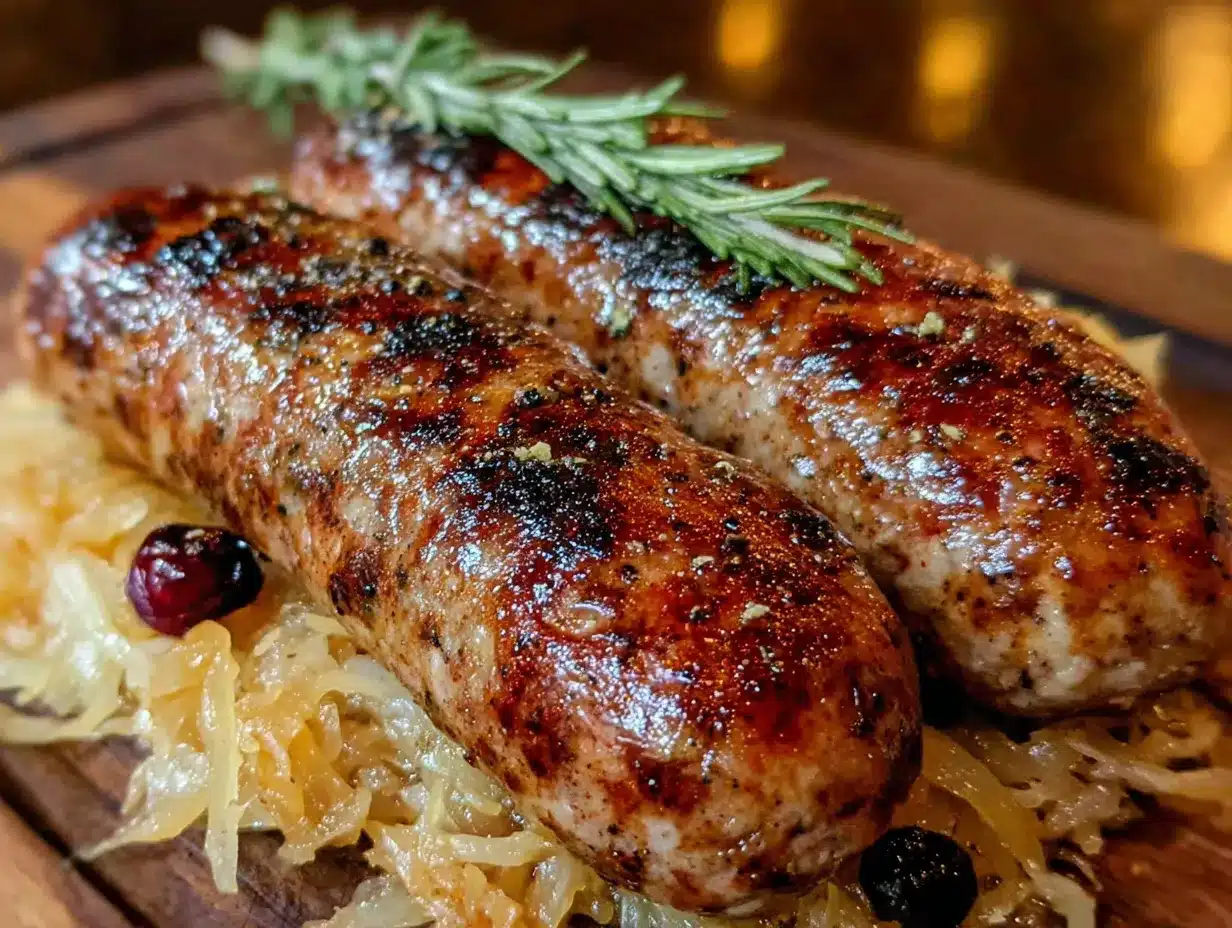
Alright, let’s get cooking. This is a straightforward recipe, but I’ll walk you through every step with the little tips I’ve picked up along the way.
- Prep your ingredients. Before you turn on the heat, slice your onion thinly and mince your garlic. Open your can or jar of sauerkraut and drain it in a colander, but don’t rinse it. You want that brine! Measure out your broth and vinegar. Having everything ready makes the cooking process so much smoother. (I learned this the hard way after burning garlic while frantically searching for a measuring spoon.)
- Brown the bratwurst. Place your skillet over medium-high heat and add the olive oil. Let it get hot—you should see it shimmer. Carefully place the bratwurst in the pan. Don’t crowd them; they need space to get a good sear. Cook for about 4-5 minutes per side, turning with tongs, until they are deeply browned all over. You are not cooking them through at this point—just building flavor and color. The internal temperature should be around 120°F (49°C) after this step. Transfer the browned sausages to a plate and set them aside.
- Sauté the onion and garlic. Reduce the heat to medium. In the same skillet (with all those lovely browned bits still in there), add the sliced onion. Cook for 4-5 minutes, stirring occasionally, until the onion is soft and translucent and starting to turn golden at the edges. Add the minced garlic and cook for another 30 seconds, until it smells amazing. Be careful not to burn the garlic—it turns bitter very quickly.
- Add the sauerkraut and seasonings. Add the drained sauerkraut to the skillet, along with the caraway seeds (if using) and the bay leaf. Stir everything together so the sauerkraut gets coated in the onion mixture. Let it cook for 2-3 minutes, stirring a couple of times.
- Deglaze the pan. Pour in the chicken broth and apple cider vinegar. Use a wooden spoon to scrape up all those browned bits from the bottom of the pan. That’s pure flavor, my friend. Let the liquid come to a gentle simmer.
- Return the bratwurst to the pan. Nestle the browned bratwurst back into the sauerkraut mixture. They should be partially submerged. Bring the liquid to a gentle simmer, then reduce the heat to low. Cover the skillet with a lid or aluminum foil.
- Simmer to perfection. Let everything cook together for 15-20 minutes. This is where the magic happens. The bratwurst will finish cooking through, becoming juicy and tender, while the sauerkraut absorbs all the flavors from the broth, vinegar, and sausage drippings. The liquid should reduce slightly, creating a delicious, slightly brothy kraut. You’ll know it’s done when the bratwurst is cooked through (internal temperature of 160°F / 71°C) and the sauerkraut is tender.
- Rest and serve. Remove the bay leaf and discard it. Let the skillet rest off the heat for about 5 minutes before serving. This allows the juices to settle. Serve the bratwurst with a generous pile of sauerkraut on the side. Garnish with fresh parsley and a dollop of whole-grain mustard if you like.
Cooking Tips & Techniques
I have definitely made some mistakes with this recipe over the years, so let me save you the trouble.
- Don’t skip the browning step. I know it’s tempting to just throw everything in the pan and let it simmer, but that golden-brown crust on the bratwurst is where the deep, savory flavor comes from. It’s non-negotiable in my book.
- Watch your heat. When browning the sausages, medium-high is perfect. If the heat is too low, they’ll steam instead of searing. Too high, and the outside will burn before the inside is done. You want a steady sizzle.
- Don’t rinse the sauerkraut. I made this mistake once, thinking I was reducing the sodium. I ended up with bland, sad kraut. The brine is packed with flavor and helps season the whole dish. Just drain it lightly.
- Use a good quality broth. Since the broth is a key part of the cooking liquid, using a low-quality one can make the dish taste flat. I like using a reduced-sodium chicken broth so I can control the salt level myself. If you use beer, go for a lager or pilsner—nothing too hoppy or bitter.
- Let it rest. I know you’re hungry, but letting the skillet sit for 5 minutes off the heat allows the flavors to meld together beautifully. The sausages also reabsorb some of their juices, making them even more tender.
- One time, I forgot the caraway seeds entirely. The dish was still good, but it was missing that little something. It’s not the end of the world if you don’t have them, but they really do elevate the whole thing.
Variations & Adaptations
This recipe is incredibly forgiving and adaptable. Here are a few ways I’ve tweaked it over the years.
- Beer-Braised Version: Swap the chicken broth for 1/2 cup of a German lager or pilsner. The beer adds a lovely malty depth that pairs beautifully with the sausages. Just let it simmer a minute or two longer to cook off some of the alcohol.
- Add Some Veggies: Toss in a sliced bell pepper or a handful of shredded carrots along with the onion. It adds color, sweetness, and a little extra nutrition. I’ve also added sliced apples (like Granny Smith) for a sweet-tart twist—it’s surprisingly good.
- Make it Spicy: If you like a little heat, add a pinch of red pepper flakes along with the garlic. Or, use spicy bratwurst instead of the regular kind. I once used a jalapeño-cheddar bratwurst, and it was incredible.
- Dietary Adaptations: To make this gluten-free, simply ensure your bratwurst and broth are certified gluten-free (most are, but always check the label). For a lower-carb option, this recipe is already naturally low in carbs—just skip the optional beer and use broth.
- Different Sausages: This technique works beautifully with other sausages too. Try it with Italian sausage (sweet or hot), kielbasa, or even chicken or turkey bratwurst. Just adjust the cooking time slightly if the sausages are thinner or thicker.
Serving & Storage Suggestions
This skillet is a complete meal on its own, but it’s also wonderful with a few simple sides.
- Serving Temperature: Serve it hot, straight from the skillet. The bratwurst should be sizzling and the sauerkraut warm and tender.
- What to Serve With It: A side of crusty rye bread or soft pretzels is perfect for soaking up the juices. A dollop of whole-grain or spicy brown mustard is a must. For a lighter side, a simple green salad with a tangy vinaigrette cuts through the richness beautifully. Mashed potatoes or German potato salad are also classic pairings.
- Beverage Pairings: A cold German beer (like a Hefeweizen or a dunkel) is the obvious choice, and for good reason. A crisp Riesling or a dry Pinot Grigio also works wonderfully.
- Storage Instructions: Store any leftovers in an airtight container in the refrigerator for up to 4 days. The flavors actually get even better as they meld overnight. I love having this for lunch the next day.
- Reheating Tips: The best way to reheat is in a skillet over medium-low heat, with a splash of water or broth to loosen the sauerkraut. Cover and heat for 5-7 minutes, until warmed through. You can also reheat individual portions in the microwave, but the sausages won’t be as snappy.
- Freezer Instructions: This dish freezes surprisingly well. Let it cool completely, then transfer to a freezer-safe container. It will keep for up to 3 months. Thaw overnight in the refrigerator and reheat as directed above.
Nutritional Information & Benefits
This meal is hearty and satisfying, and it also has some surprising nutritional perks. Please note that these values are estimates and will vary based on the specific brands and ingredients you use.
| Nutrient | Amount Per Serving (1 bratwurst + 1/4 of the sauerkraut) |
|---|---|
| Calories | ~450-550 |
| Protein | ~25g |
| Fat | ~35g |
| Carbohydrates | ~10g |
| Fiber | ~4g |
| Sodium | ~1200-1500mg |
Pin This Recipe!
Easy German Bratwurst and Sauerkraut Skillet
A quick and easy one-pan meal featuring juicy bratwurst and tangy sauerkraut, simmered together with onions, garlic, and caraway seeds for a deeply comforting dinner.
- Prep Time: 10 minutes
- Cook Time: 25 minutes
- Total Time: 35 minutes
- Yield: 4 servings 1x
- Category: Main Course
- Cuisine: German
Ingredients
- 4 fresh bratwurst sausages (about 1 lb / 450g)
- 1 tablespoon olive oil or avocado oil
- 1 medium yellow onion, thinly sliced (about 1 cup)
- 2 cloves garlic, minced
- 1 can (14.5 oz / 400g) or jar (24 oz / 680g) sauerkraut, drained but not rinsed
- 1/2 cup (120 ml) low-sodium chicken broth or beef broth
- 1 tablespoon apple cider vinegar
- 1 teaspoon caraway seeds (optional)
- 1 bay leaf
- Salt and freshly ground black pepper, to taste
- Optional garnish: fresh parsley, chopped, and whole-grain mustard for serving
Instructions
- Prep your ingredients: slice onion thinly, mince garlic, drain sauerkraut (do not rinse), measure broth and vinegar.
- Place a large heavy-bottomed skillet or Dutch oven over medium-high heat and add olive oil. Once shimmering, add bratwurst and cook for 4-5 minutes per side until deeply browned all over. Transfer to a plate and set aside.
- Reduce heat to medium. In the same skillet, add sliced onion and cook for 4-5 minutes until soft and translucent. Add minced garlic and cook for 30 seconds until fragrant.
- Add drained sauerkraut, caraway seeds (if using), and bay leaf. Stir and cook for 2-3 minutes.
- Pour in chicken broth and apple cider vinegar. Use a wooden spoon to scrape up browned bits from the bottom of the pan. Bring to a gentle simmer.
- Nestle the browned bratwurst back into the sauerkraut mixture. Cover the skillet with a lid or aluminum foil, reduce heat to low, and simmer for 15-20 minutes until bratwurst is cooked through (internal temperature of 160°F / 71°C) and sauerkraut is tender.
- Remove bay leaf and discard. Let skillet rest off heat for 5 minutes before serving. Serve bratwurst with sauerkraut, garnished with parsley and mustard if desired.
Notes
For best flavor, brown the bratwurst well before simmering. Do not rinse the sauerkraut to retain its brine. Let the dish rest for 5 minutes before serving to allow flavors to meld. Caraway seeds are optional but highly recommended for authentic German flavor.
Nutrition
- Serving Size: 1 bratwurst plus 1/4
- Calories: 500
- Sugar: 3
- Sodium: 1350
- Fat: 35
- Saturated Fat: 12
- Carbohydrates: 10
- Fiber: 4
- Protein: 25
Keywords: bratwurst, sauerkraut, German, one-pan, quick dinner, comfort food, easy skillet