Introduction
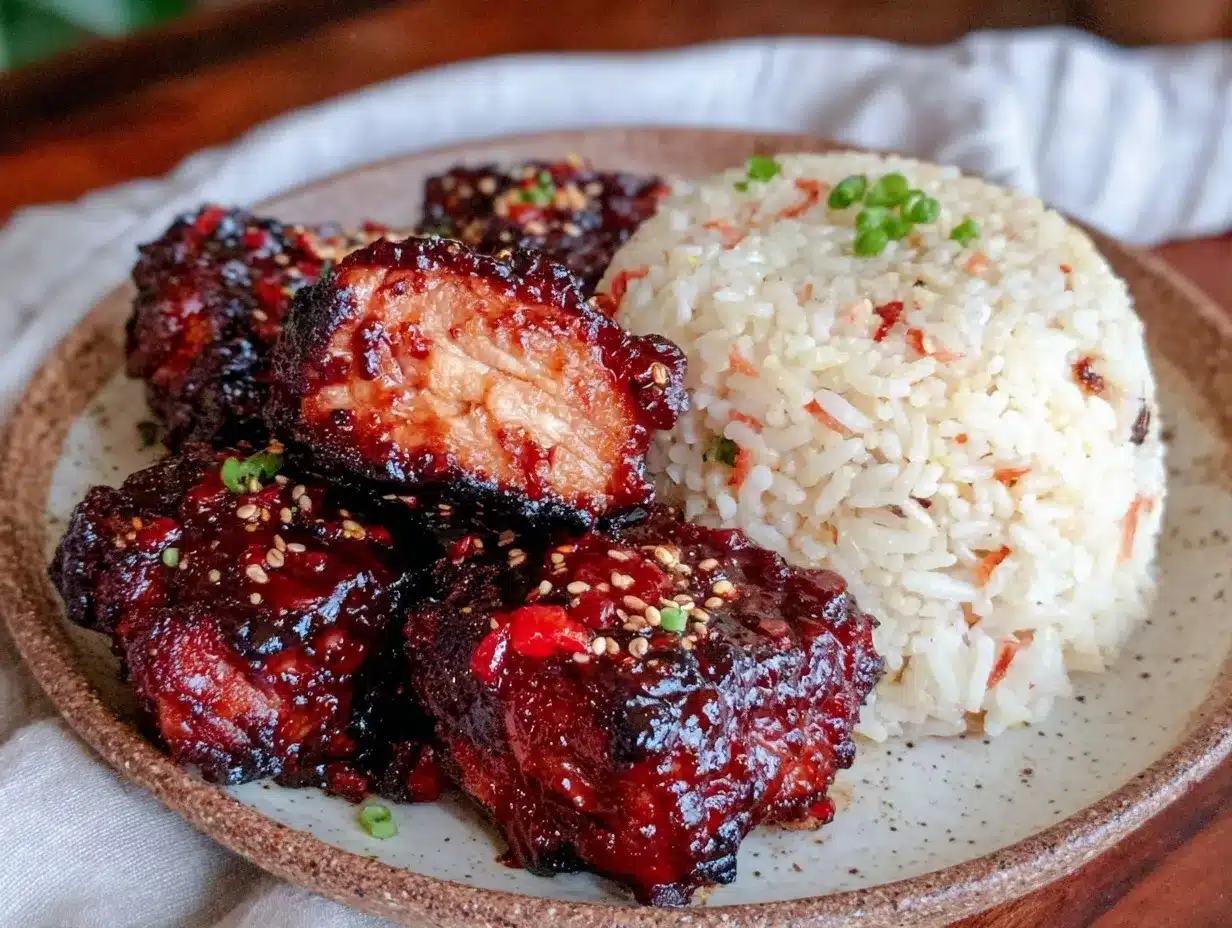
It was 11:37 PM on a quiet Wednesday, and an intense craving for something spicy and sticky had me rummaging through my fridge. I didn’t have the usual soy sauce or mirin a proper Korean chicken recipe would demand, but I did find that jar of fiery red gochujang paste lurking in the back, plus some boneless chicken thighs and leftover rice. Honestly, the late hour makes you throw out the rulebook, right? So I tossed those chicken thighs in a quick marinade of gochujang, honey, and a splash of vinegar, and set the rice sizzling with toasted sesame oil and scallions. The kitchen filled with that addictive sweet-heat aroma, and I swear I could’ve stopped right there and called it a night.
I forgot to grab the garlic from the counter and only realized halfway through cooking, which led to a little dance around the stove trying to salvage the flavor. Maybe you’ve been there—those moments where the kitchen chaos somehow births a new favorite. This recipe stuck with me because it’s just that kind of late-night magic: quick, fiery, and comforting, with a texture that’s sticky and tender but never cloying.
That first bite? Honestly, it was like a little victory after a long day. If you ever need a dish that feels like a hug but with a kick, this version of Korean gochujang chicken thighs with easy sesame fried rice might just become your own late-night secret.
Why You’ll Love This Recipe
- Quick & Easy: Comes together in under 30 minutes, perfect for those nights when you want bold flavors without the wait.
- Simple Ingredients: No exotic shopping trips needed—gochujang paste, chicken thighs, and pantry staples like sesame oil and rice are all you need.
- Perfect for Weeknight Dinners: The combo of sticky chicken and nutty fried rice hits the spot whether you’re cooking solo or feeding friends.
- Crowd-Pleaser: Kids and adults alike love the sweet-spicy balance, and leftovers reheat beautifully.
- Unbelievably Delicious: The sweet, sticky glaze clings to tender chicken thighs, while the sesame fried rice adds a savory crunch.
This isn’t just another gochujang chicken recipe—it’s one where the sauce is balanced just right, with honey rounding out the heat and a splash of vinegar adding a subtle tang that keeps things lively. The sesame fried rice isn’t an afterthought either; it’s pan-fried with scallions and a hint of soy for that irresistible aroma and slightly crispy texture. I’ve tested this recipe multiple times, tweaking the sauce ratio and rice technique to make sure it’s reliably tasty every single time. It’s like comfort food reimagined, with a little Asian street food flair.
Whether you’re impressing guests or just craving a cozy meal that feels special, this recipe ticks all the boxes. Plus, it’s a great way to put leftover rice to work without feeling like you’re eating yesterday’s dinner again.
What Ingredients You Will Need
This recipe uses straightforward, flavorful ingredients that come together to deliver a bold, sticky, and savory result. Most are pantry staples or easy to find at any grocery store with an international aisle.
- Boneless chicken thighs: About 1.5 pounds (680 g), skinless and trimmed. Thighs stay juicy and tender, perfect for absorbing the gochujang glaze.
- Gochujang paste: 3 tablespoons. This Korean chili paste is the star—spicy, sweet, and umami-packed. I like Chung Jung One brand for consistent flavor.
- Honey: 2 tablespoons. Adds that sticky sweetness to balance the heat.
- Rice vinegar: 1 tablespoon. Gives a subtle tang that brightens the sauce.
- Soy sauce: 1 tablespoon (or tamari for gluten-free). Adds depth and saltiness.
- Garlic: 2 cloves, minced. Essential for savory warmth.
- Sesame oil: 2 teaspoons for the sauce, plus 1 tablespoon for frying the rice. Toasted sesame oil brings that nutty aroma and flavor.
- Cooked white rice: 3 cups (about 600 g), day-old rice works best—it’s dryer and fries up nicely without clumping.
- Green onions: 2, thinly sliced. Adds fresh, mild onion flavor and color.
- Eggs: 2 large, beaten. Optional but recommended for the fried rice texture.
- Vegetable oil: For frying chicken and rice.
- Sesame seeds: 1 tablespoon toasted for garnish.
If you’re feeling adventurous, swapping white rice with brown rice works fine but may require a bit more frying time for crispness. For a gluten-free version, use tamari or coconut aminos instead of soy sauce. And in the summer, fresh scallions and even some julienned cucumbers on the side make a refreshing contrast.
Equipment Needed
- Large non-stick or cast-iron skillet for frying chicken and rice. I prefer cast iron because it gives a great sear without sticking.
- Mixing bowls for marinating chicken and prepping eggs.
- Measuring spoons and cups for precise sauce ratios.
- Sharp knife and cutting board for prepping garlic and green onions.
- Spatula or wooden spoon for stirring fried rice without breaking the grains.
- Optional: a small whisk for beating eggs evenly.
Don’t sweat it if you don’t have a cast-iron pan—any heavy-bottomed skillet will do. Just make sure it’s hot enough before adding the chicken to get that sticky glaze to caramelize well. Also, a wok works great for the fried rice if you’ve got one. Keeping your tools simple keeps the focus on the bold flavors here.
Preparation Method
- Marinate the chicken (10 minutes active, ideally 30 minutes total): In a medium bowl, whisk together 3 tablespoons gochujang, 2 tablespoons honey, 1 tablespoon rice vinegar, 1 tablespoon soy sauce, 2 teaspoons sesame oil, and minced garlic. Add the boneless chicken thighs and toss to coat thoroughly. Let sit at room temperature for at least 10 minutes or refrigerate up to 30 minutes if you have time.
- Prepare the fried rice ingredients: While the chicken marinates, beat the eggs lightly and slice the green onions thinly. If your rice is freshly cooked, spread it out on a tray to cool and dry out slightly (day-old rice is best).
- Cook the chicken (15 minutes): Heat 1 tablespoon vegetable oil in a large skillet over medium-high heat. Place the chicken thighs in a single layer, reserving excess marinade. Cook for 6-7 minutes on the first side without moving to get a nice sear. Flip and cook another 5 minutes, then pour in the reserved marinade. Reduce heat to medium-low and cook, spooning the sauce over the chicken until it thickens and becomes sticky—about 2-3 minutes. Chicken should reach an internal temperature of 165°F (74°C).
- Make the sesame fried rice (10 minutes): In another skillet or wok, heat 1 tablespoon sesame oil and 1 tablespoon vegetable oil over medium-high heat. Add the beaten eggs and scramble gently until just set, then add the rice. Stir-fry, breaking up clumps, until the rice is heated through and starting to get lightly toasted—about 5-7 minutes. Stir in sliced green onions and season with a splash of soy sauce. Taste for seasoning and adjust if needed.
- Plate and garnish: Serve the sticky gochujang chicken thighs atop or alongside a generous scoop of sesame fried rice. Sprinkle with toasted sesame seeds and extra green onions if desired.
Pro tip: Keep the heat moderate when adding the reserved marinade to avoid burning the sugars in the honey. You want a glossy, sticky sauce, not charred bits. Also, stirring the rice gently helps keep the grains separate and prevents mushiness.
Cooking Tips & Techniques
One of the trickiest parts of this recipe is getting that signature sticky glaze on the chicken without it burning or drying out. You want medium-high heat to sear, but then lower it when you add the marinade to gently thicken the sauce.
Using boneless, skinless chicken thighs is key—they stay juicy and tender compared to chicken breasts which can dry out quickly. Also, letting the chicken marinate even for just 10 minutes makes a big flavor difference.
For the fried rice, day-old rice is your best friend. Freshly cooked rice is too moist and tends to clump. If you only have fresh rice, spread it on a baking sheet to cool and dry out before frying. And don’t overcrowd the pan when cooking the eggs and rice; work in batches if needed.
I learned the hard way that adding garlic too early to the fried rice can burn it quickly, so add it with the green onions at the end to keep that bright flavor.
Lastly, multitasking is your friend here. While the chicken is searing, prep the rice ingredients to save time and keep things moving smoothly.
Variations & Adaptations
- Spicy Level: If you prefer milder flavors, reduce the gochujang to 2 tablespoons and add a teaspoon of brown sugar for sweetness. For more heat, add a pinch of red pepper flakes or a drizzle of chili oil.
- Protein Swap: This glaze works beautifully on boneless chicken wings or even pork belly slices. Just adjust cooking time accordingly.
- Vegetarian Version: Try marinating thick slices of tofu or tempeh in the same gochujang sauce and pan-frying until crispy. Serve with the sesame fried rice for a hearty plant-based meal.
- Grain Alternatives: Use quinoa or cauliflower rice instead of white rice for a low-carb or gluten-free twist.
- Seasonal Twist: Stir in diced bell peppers or snap peas into the fried rice for extra crunch and color.
Personally, I once swapped honey with maple syrup during a late fall night (because I ran out of honey), and the subtle earthiness added a surprisingly nice depth to the glaze. It’s always fun to experiment with what’s on hand.
Serving & Storage Suggestions
This dish is best served hot, right off the stove, with the chicken glistening in that sticky, spicy-sweet sauce. I like to garnish with extra sesame seeds and thinly sliced green onions for freshness and crunch.
Pair it with a crisp cucumber salad or kimchi for a bright, tangy contrast that cuts through the richness. A cold Asian lager or a lightly sweetened iced tea rounds out the meal nicely.
Leftovers keep well in an airtight container in the fridge for up to 3 days. When reheating, cover the chicken with a damp paper towel and microwave gently to avoid drying it out. For the fried rice, a quick stir-fry in a hot pan with a little sesame oil refreshes the texture and flavor.
Flavors tend to deepen overnight, so sometimes the next-day lunch tastes even better. Just be sure to reheat thoroughly for food safety.
Nutritional Information & Benefits
Per serving (serves 4): Approximately 420 calories, 28g protein, 35g carbohydrates, and 14g fat.
Chicken thighs provide a rich source of protein and iron, while gochujang paste offers capsaicin from chili peppers, which may boost metabolism and aid digestion. Sesame oil and seeds contribute healthy fats and antioxidants.
This recipe is gluten-friendly when using tamari instead of soy sauce and can be adapted for low-carb diets by swapping rice for cauliflower rice. Be mindful of the honey and gochujang sugar content if you’re monitoring sugar intake.
Overall, it’s a balanced meal that combines satisfying protein with flavorful spice and wholesome grains, making it a nourishing choice for busy weeknights.
Conclusion
This flavorful sticky Korean gochujang boneless chicken thighs with sesame fried rice recipe is a keeper for anyone craving a quick, bold, and comforting meal. It’s flexible enough to fit your pantry, adaptable for different diets, and reliably delicious with that perfect balance of sweet, spicy, and savory.
I love it because it reminds me that some of the best dishes come from improvisation and a little kitchen chaos—plus, it’s just so satisfying to eat. Give it a try, tweak it to your taste, and please drop a comment to share your own spin or late-night kitchen stories. Cooking should always be as fun as it is tasty!
Happy cooking and enjoy every sticky bite!
FAQs
What is gochujang and where can I buy it?
Gochujang is a Korean fermented chili paste with a sweet, spicy, and umami flavor. You can find it at most Asian grocery stores or online. Brands like Chung Jung One or CJ are popular choices.
Can I use chicken breasts instead of thighs?
You can, but chicken thighs stay juicier and absorb the sauce better. If using breasts, cook carefully to avoid drying out and consider marinating longer.
Is this recipe gluten-free?
Yes, if you use tamari or gluten-free soy sauce instead of regular soy sauce. Check your gochujang label as some brands may contain wheat.
How do I store leftovers properly?
Keep leftovers in an airtight container in the fridge for up to 3 days. Reheat gently in a pan or microwave to keep chicken moist and rice fluffy.
Can I make this recipe ahead of time?
Absolutely! Marinate the chicken up to 24 hours ahead and keep refrigerated. Cook the chicken and rice just before serving for the best texture and flavor.
Pin This Recipe!
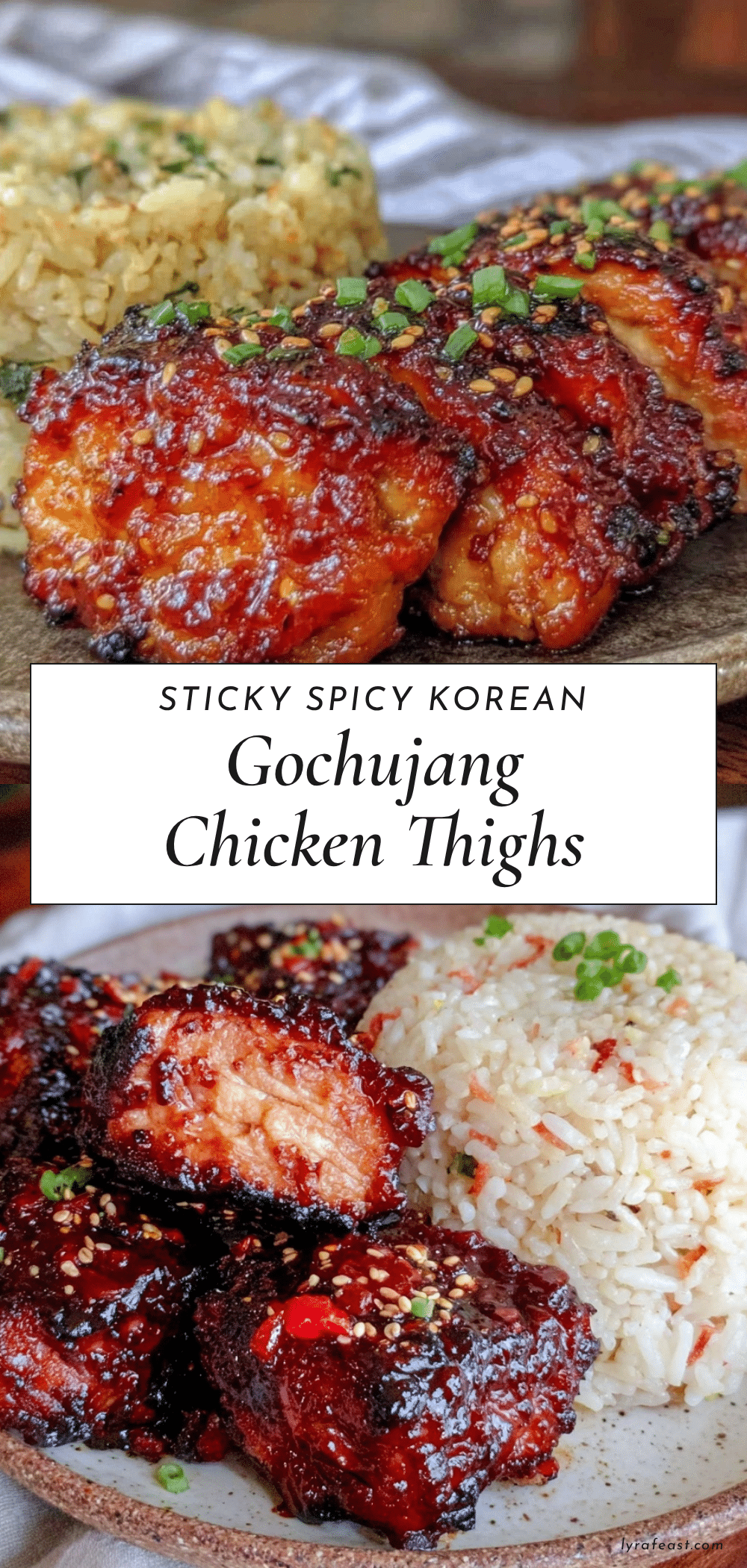
Flavorful Sticky Korean Gochujang Chicken Thighs with Easy Sesame Fried Rice
A quick and easy recipe featuring juicy boneless chicken thighs marinated in a sweet and spicy gochujang glaze, served with savory sesame fried rice. Perfect for weeknight dinners with bold flavors and comforting textures.
- Prep Time: 10 minutes active (30 minutes total if marinating longer)
- Cook Time: 25 minutes
- Total Time: 35 minutes
- Yield: 4 servings 1x
- Category: Main Course
- Cuisine: Korean
Ingredients
- 1.5 pounds boneless, skinless chicken thighs
- 3 tablespoons gochujang paste
- 2 tablespoons honey
- 1 tablespoon rice vinegar
- 1 tablespoon soy sauce or tamari (for gluten-free)
- 2 cloves garlic, minced
- 2 teaspoons sesame oil (for sauce)
- 1 tablespoon sesame oil (for frying rice)
- 3 cups cooked white rice (day-old preferred)
- 2 green onions, thinly sliced
- 2 large eggs, beaten (optional)
- Vegetable oil for frying chicken and rice
- 1 tablespoon toasted sesame seeds for garnish
Instructions
- Marinate the chicken: In a medium bowl, whisk together gochujang, honey, rice vinegar, soy sauce, sesame oil, and minced garlic. Add chicken thighs and toss to coat. Let sit at room temperature for at least 10 minutes or refrigerate up to 30 minutes.
- Prepare fried rice ingredients: Beat eggs lightly and slice green onions. If rice is freshly cooked, spread it out to cool and dry slightly.
- Cook the chicken: Heat 1 tablespoon vegetable oil in a large skillet over medium-high heat. Place chicken in a single layer and cook 6-7 minutes without moving to sear. Flip and cook another 5 minutes. Pour in reserved marinade, reduce heat to medium-low, and cook 2-3 minutes spooning sauce over chicken until thick and sticky. Ensure internal temperature reaches 165°F (74°C).
- Make sesame fried rice: In another skillet or wok, heat 1 tablespoon sesame oil and 1 tablespoon vegetable oil over medium-high heat. Add beaten eggs and scramble gently until just set. Add rice and stir-fry, breaking clumps, for 5-7 minutes until heated through and lightly toasted. Stir in green onions and season with a splash of soy sauce. Adjust seasoning as needed.
- Plate and garnish: Serve chicken thighs atop or alongside sesame fried rice. Sprinkle with toasted sesame seeds and extra green onions if desired.
Notes
Keep heat moderate when adding marinade to avoid burning honey sugars. Use day-old rice for best fried rice texture. Add garlic with green onions at the end to prevent burning. Marinate chicken at least 10 minutes for better flavor. Multitask by prepping rice ingredients while chicken marinates.
Nutrition
- Serving Size: 1 serving (approxima
- Calories: 420
- Sugar: 8
- Sodium: 700
- Fat: 14
- Saturated Fat: 3
- Carbohydrates: 35
- Fiber: 2
- Protein: 28
Keywords: gochujang chicken, Korean chicken thighs, sticky chicken, sesame fried rice, quick dinner, spicy chicken, weeknight meal