Introduction
“You know that sound when eggs hit a hot pan? That gentle sizzle that makes your kitchen feel alive? I remember one lazy Saturday morning when the power flickered and went out just as I was about to whip up breakfast. With no microwave or fancy gadgets, I had to rely on simple ingredients and my instincts. Honestly, that scramble turned out to be the fluffiest, creamiest eggs I’ve ever made. I had forgotten to bring out the butter ahead of time, so I improvised with a splash of cream and a slower heat, and bam! Magic happened. It’s funny how those little kitchen mishaps can become treasured recipes.
Maybe you’ve been there, staring at your pan wondering why your scrambled eggs come out dry or flat. Well, this Fluffy Scrambled Eggs Masterclass is just for you. It’s not about rushing or complicated techniques — it’s about patience, the right tools, and a few kitchen secrets I picked up from breakfast joints and my own experiments. This recipe has stuck with me ever since that powerless morning, and I keep coming back to it whenever I want that perfect, comforting start to my day.
Let me tell you, once you nail this method, you’ll find yourself craving scrambled eggs like never before. It’s the kind of recipe that makes you close your eyes on the first bite and smile. So, let’s get cracking and make breakfast feel a little more special, even on the busiest or the most unexpected mornings.
Why You’ll Love This Recipe
After trying countless scrambled egg recipes, this one stands out because it’s truly foolproof and gives consistently perfect results. I’ve been through the trial-and-error phase, burning eggs or ending up with rubbery textures, and this method nails it every time.
- Quick & Easy: Ready in under 10 minutes, making it ideal for rushed mornings or casual brunches.
- Simple Ingredients: Uses everyday kitchen staples — no need for fancy or hard-to-find items.
- Perfect for Any Occasion: Whether it’s a weekday breakfast, a lazy weekend brunch, or a cozy holiday morning, these eggs fit right in.
- Crowd-Pleaser: Kids, picky eaters, and egg lovers alike always ask for seconds.
- Unbelievably Delicious: The eggs come out creamy, tender, and fluffy — a texture combo that’s hard to beat.
What makes this recipe different? It’s the slow, gentle cooking combined with a few smart tricks — like adding a splash of cream and stirring constantly at just the right pace. It’s not just scrambled eggs; it’s a breakfast experience that feels like you’re at a cozy café, not your home kitchen. Honestly, it’s the recipe I recommend when friends say they can’t get their eggs right.
This is comfort food that feels special but isn’t high maintenance. Plus, you don’t need a fancy pan or expensive ingredients — just the right technique. Trust me, you’ll want to make this your go-to recipe for perfect scrambled eggs.
What Ingredients You Will Need
This recipe uses simple, wholesome ingredients to deliver that fluffy, creamy texture without fuss. Most of these are pantry staples, but I’ll share a few tips to make your eggs stand out.
- Large eggs (4 eggs): Fresh, preferably organic or free-range for the best flavor and texture.
- Unsalted butter (1 tablespoon): Adds richness and helps prevent sticking. I like using Plugrá for its creamy melt.
- Heavy cream (2 tablespoons): This is key for that silky fluffiness. You can swap with whole milk if needed, but cream makes a noticeable difference.
- Salt (a pinch): Enhances the natural egg flavor. Add it just before cooking to avoid watery eggs.
- Freshly ground black pepper (to taste): Adds a subtle kick and warmth.
- Fresh chives or parsley (optional, chopped): For a bright, fresh finish and a bit of color.
If you want a dairy-free option, use olive oil or a vegan butter substitute instead of regular butter, and swap cream with coconut milk. For a twist, a pinch of smoked paprika or a little grated cheese stirred in at the end can be fantastic.
Equipment Needed
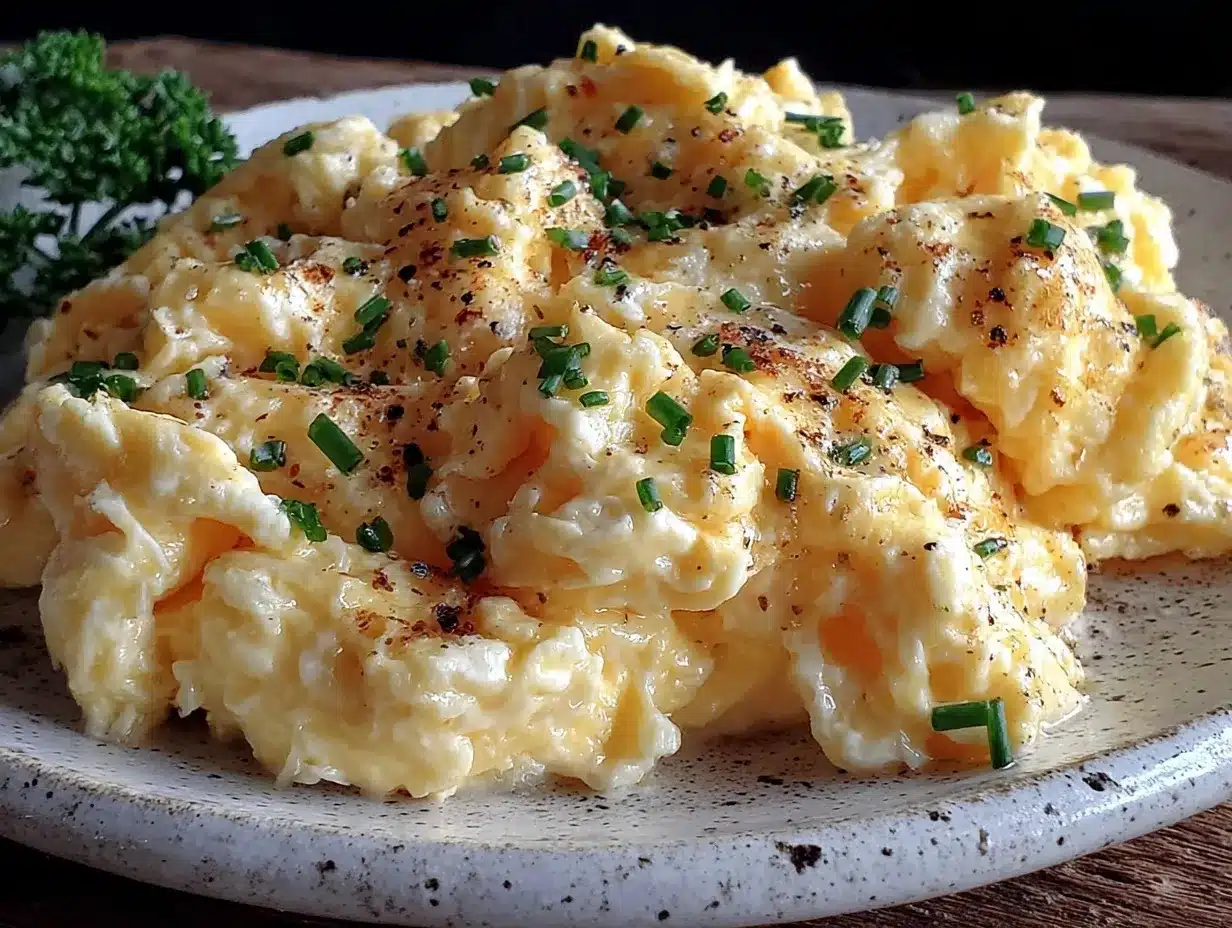
- Non-stick skillet or frying pan: A good-quality, medium-sized pan (8 to 10 inches) works best to cook the eggs gently without sticking. I personally prefer my Tefal non-stick pan — it’s budget-friendly and easy to clean.
- Silicone spatula: Perfect for gentle stirring and scraping the pan without damaging your cookware.
- Mixing bowl: For whisking eggs thoroughly before cooking.
- Whisk or fork: To beat the eggs and incorporate air for fluffiness.
- Measuring spoons: For precise cream and butter amounts.
If you don’t have a non-stick pan, an enamel or well-seasoned cast iron skillet can work, but watch your heat carefully to avoid sticking. And remember: a dull spatula or metal spoon can scratch your pan, so silicone or wooden tools are best.
Preparation Method
- Crack the eggs into a mixing bowl. Add a pinch of salt but hold off on pepper for now. Use a whisk or fork to beat the eggs vigorously for about 30 seconds until the yolks and whites are fully combined and slightly frothy. This step traps air to build that fluffiness.
- Add the heavy cream. Pour in 2 tablespoons of cream and whisk gently just to combine. This adds moisture and richness, making the eggs tender rather than rubbery.
- Heat your non-stick skillet over low heat. Add 1 tablespoon of unsalted butter and let it melt slowly. You want the pan warm but not hot — think of the butter foaming gently without browning.
- Pour the egg mixture into the pan. The eggs should start to set around the edges after about 10-15 seconds. Begin stirring slowly and continuously with your silicone spatula, scraping the bottom and sides.
- Cook gently, stirring often. Keep the eggs moving but don’t rush. The key is low heat and patience — it takes about 5 to 7 minutes to get that creamy, fluffy consistency. If your stove runs hot, lower the heat or briefly remove the pan from heat and return to it as needed.
- When the eggs are mostly cooked but still slightly wet and shiny, remove the pan from heat. The residual heat will finish cooking the eggs without drying them out.
- Season with freshly ground black pepper and adjust salt if needed. Fold in chopped chives or parsley if using.
- Serve immediately. Fluffy scrambled eggs wait for no one!
Pro tip: If your eggs start to look dry or crumbly, lower the heat and add a splash more cream or a little butter to bring back moisture. Don’t worry if your first few tries feel slow — it’s all about getting a feel for your stove and pan.
Cooking Tips & Techniques
Getting scrambled eggs just right is all about control and timing. Here are a few tips I’ve learned after many mornings in the kitchen:
- Low and slow is king. High heat cooks eggs too fast, leading to dryness and toughness. Patience creates that luscious texture.
- Use fresh eggs. They whisk up better and taste richer.
- Whisk thoroughly before cooking. Incorporating air ensures fluffiness.
- Add cream or milk. It might sound odd, but it really keeps eggs soft and creamy.
- Don’t overcook. Remove eggs from heat when they’re still a bit underdone — they’ll finish cooking off the stove.
- Keep stirring gently. Constant movement prevents sticking and creates small, tender curds.
One time, I accidentally left eggs unattended for a minute — total scramble disaster. But that taught me never to take my eyes off the pan during cooking. Also, seasoning timing matters: salt before cooking can make eggs watery; better to add salt just before or after cooking.
Variations & Adaptations
Scrambled eggs are endlessly adaptable! Here are some ways to customize this masterclass:
- Herb & Cheese: Stir in grated cheddar, feta, or goat cheese and fresh herbs like dill, basil, or tarragon at the end for an indulgent twist.
- Veggie Boost: Add sautéed mushrooms, spinach, or tomatoes just before eggs finish cooking for a nutritious upgrade.
- Dairy-Free: Swap butter for olive oil or vegan margarine, and use coconut milk or almond milk instead of cream.
- Spicy Kick: Mix in a pinch of cayenne pepper or hot sauce to wake up your taste buds.
- Slow Cooker Style: For a hands-off approach, whisk eggs with cream and pour into a greased slow cooker on low heat, stirring every 20 minutes until fluffy.
I personally like to add a little smoked salmon and chives for weekend brunches — feels fancy but is crazy easy to pull together.
Serving & Storage Suggestions
Serve your fluffy scrambled eggs hot, straight from the pan, ideally on warm plates to keep them cozy. They pair beautifully with crispy toast, sautéed greens, or a side of fresh fruit. For drinks, a cup of freshly brewed coffee or a glass of orange juice complements the meal perfectly.
If you have leftovers (rare, but it happens!), store them in an airtight container in the refrigerator for up to 2 days. Reheat gently in a non-stick pan over low heat, stirring frequently to prevent overcooking. Microwave reheating is possible but often leads to rubbery texture.
Flavors tend to mellow and develop if you add fresh herbs or cheese just before serving rather than during storage. So keep garnishes fresh and add them last minute for the best taste.
Nutritional Information & Benefits
This fluffy scrambled eggs recipe packs a nutritious punch with protein, healthy fats, and essential vitamins. On average, one serving (2 eggs with cream and butter) contains about:
| Nutrient | Amount |
|---|---|
| Calories | 250 kcal |
| Protein | 14 g |
| Fat | 20 g |
| Carbohydrates | 2 g |
| Cholesterol | 370 mg |
Eggs are rich in choline, vital for brain health, and contain antioxidants like lutein and zeaxanthin, which support eye health. Using cream and butter adds satiating fats that help you feel fuller longer. If you’re watching cholesterol, moderating portion sizes and balancing this recipe with fiber-rich sides is a smart idea.
Conclusion
Fluffy scrambled eggs aren’t just breakfast—they’re a little morning celebration you can make any day. This recipe is simple, reliable, and downright delicious, making it perfect for anyone who’s ever struggled with dry or rubbery eggs. I love how adaptable it is, letting you tailor it to your taste or dietary needs without fuss.
Give it a try, tweak it your way, and don’t be shy to experiment with add-ins or cooking methods. Your perfect scrambled eggs might just be a pan away. I’d love to hear how your attempts turn out or any special twists you come up with—drop a comment and share your experiences.
Here’s to many cozy breakfast moments filled with fluffy, creamy eggs that make the day start just right!
FAQs
How do I make scrambled eggs fluffy and not rubbery?
Cook eggs on low heat while stirring gently and constantly. Adding a splash of cream and removing them from heat when slightly underdone helps keep them tender and fluffy.
Can I make scrambled eggs ahead of time?
You can prepare scrambled eggs in advance and store them in the refrigerator for up to 2 days. Reheat gently on low heat to avoid drying out.
What’s the best pan for scrambled eggs?
A non-stick skillet is ideal because it allows gentle cooking without sticking. A well-seasoned cast iron pan works too but requires careful heat control.
Can I freeze scrambled eggs?
Freezing scrambled eggs isn’t recommended as it can affect texture and make them watery or rubbery upon thawing.
Is it better to whisk eggs with milk or cream?
Cream adds richness and a silkier texture, but milk works if you want a lighter option. Water is sometimes used, but cream is best for fluffiness.
Pin This Recipe!
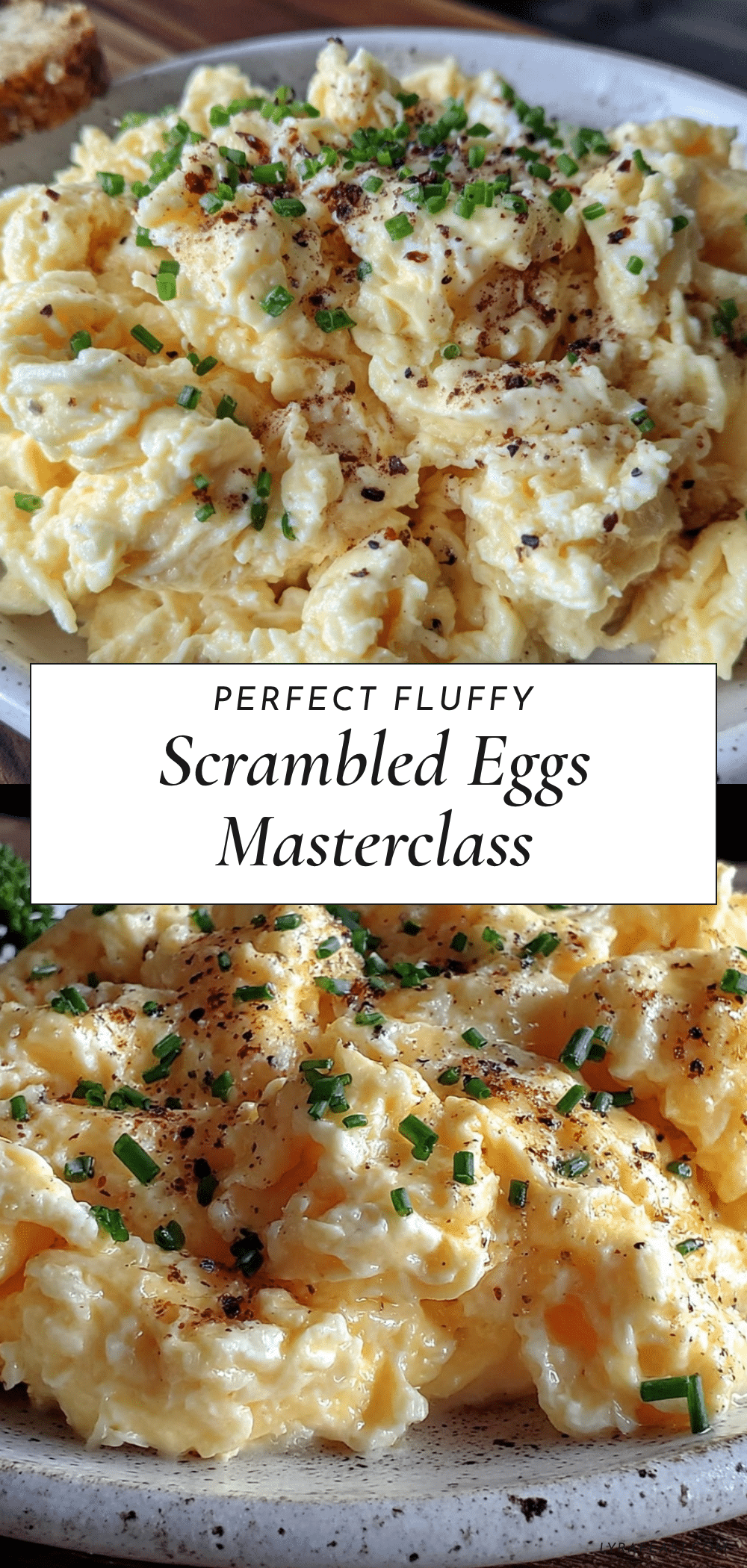
Fluffy Scrambled Eggs Recipe Easy Step-by-Step for Perfect Breakfast

This recipe delivers creamy, tender, and fluffy scrambled eggs using simple ingredients and a slow, gentle cooking method. Perfect for a comforting breakfast any day.
- Prep Time: 5 minutes
- Cook Time: 7 minutes
- Total Time: 12 minutes
- Yield: 2 servings 1x
- Category: Breakfast
- Cuisine: American
Ingredients
- 4 large eggs (preferably organic or free-range)
- 1 tablespoon unsalted butter
- 2 tablespoons heavy cream
- Pinch of salt
- Freshly ground black pepper to taste
- Optional: chopped fresh chives or parsley
Instructions
- Crack the eggs into a mixing bowl. Add a pinch of salt but hold off on pepper. Whisk vigorously for about 30 seconds until yolks and whites are fully combined and slightly frothy.
- Add 2 tablespoons of heavy cream and whisk gently just to combine.
- Heat a non-stick skillet over low heat. Add 1 tablespoon of unsalted butter and let it melt slowly without browning.
- Pour the egg mixture into the pan. After 10-15 seconds, begin stirring slowly and continuously with a silicone spatula, scraping the bottom and sides.
- Cook gently on low heat, stirring often, for about 5 to 7 minutes until eggs are creamy and fluffy. Adjust heat as needed to avoid overcooking.
- When eggs are mostly cooked but still slightly wet and shiny, remove the pan from heat to finish cooking with residual heat.
- Season with freshly ground black pepper and adjust salt if needed. Fold in chopped chives or parsley if using.
- Serve immediately.
Notes
Cook eggs on low heat while stirring gently and constantly to avoid dryness and rubbery texture. Add cream for silkiness. Remove from heat when slightly underdone to finish cooking with residual heat. Use fresh eggs for best results. For dairy-free, substitute butter with olive oil or vegan margarine and cream with coconut or almond milk.
Nutrition
- Serving Size: 1 serving (2 eggs wi
- Calories: 250
- Sugar: 1
- Sodium: 150
- Fat: 20
- Saturated Fat: 12
- Carbohydrates: 2
- Protein: 14
Keywords: scrambled eggs, fluffy eggs, creamy eggs, easy breakfast, simple scrambled eggs, breakfast recipe