“You’ve got to try this,” said the elderly vendor, handing me a small plate stacked with colorful bites at the bustling Sunday farmer’s market. I wasn’t expecting much beyond the usual produce, but that day, between the chatter of neighbors and the scent of fresh basil and olives, I stumbled upon what I now call my go-to fresh antipasto plate recipe. Honestly, it was a little messier than I planned—I dropped a cherry tomato on the pavement—but it was also a moment that changed my snacking game forever.
The vendor, a spirited Italian nonna, didn’t just sell me a plate; she shared stories of her childhood in Sicily, where antipasto was less a dish and more a lively ritual. It wasn’t about fancy cooking; it was about fresh, simple ingredients coming together to create something joyful and effortless. I mean, maybe you’ve been there—walking through a market, overwhelmed by options, and suddenly you taste something that feels like an instant celebration.
Since that day, this fresh antipasto plate has become my favorite for everything from spontaneous get-togethers to quiet evenings on the porch. It’s the kind of snack that welcomes conversation, invites creativity, and, let me tell you, never gets old. Whether you’re new to antipasto or a seasoned fan, this recipe brings a little bit of that Italian market magic right into your kitchen.
Why You’ll Love This Fresh Antipasto Plate Recipe
After countless trials and a few kitchen slip-ups (who knew balancing all those flavors could be tricky?), I can confidently say this antipasto plate recipe is a winner. It’s been tested across different seasons, shared with family and friends, and refined to hit just the right notes every time. Here’s why it might become your go-to Italian snacking idea:
- Quick & Easy: Ready in under 20 minutes, ideal for last-minute parties or casual snacking.
- Simple Ingredients: No need for obscure items—mostly pantry staples and fresh produce.
- Perfect for Parties: Creates a colorful, inviting spread that suits any gathering.
- Crowd-Pleaser: Balances salty, tangy, and fresh flavors that kids and adults rave about.
- Unbelievably Delicious: The mix of textures—from crunchy veggies to silky cheeses—keeps every bite interesting.
What makes this recipe stand out is the thoughtful layering of ingredients. For example, I gently marinate the olives and artichokes to bring out their best flavor without overpowering the fresh veggies. Plus, the addition of a drizzle of high-quality extra virgin olive oil and a sprinkle of fresh herbs gives the plate a subtle, authentic Italian touch that feels both classic and fresh. This isn’t just another antipasto plate—it’s the one that makes you pause and smile after the first bite.
What Ingredients You Will Need
This fresh antipasto plate recipe relies on a handful of wholesome ingredients to deliver bold flavors and satisfying textures without any fuss. Most are pantry staples or easily found at your local grocery store or farmer’s market.
- Italian Meats: Thinly sliced prosciutto, salami, and soppressata (look for high-quality, nitrate-free options for the best taste).
- Cheeses: Fresh mozzarella balls (bocconcini), aged provolone slices, and a wedge of Parmigiano-Reggiano (adds a sharp, nutty flavor).
- Fresh Vegetables: Cherry tomatoes (preferably vine-ripened), crisp cucumber slices, and roasted red peppers (jarred or homemade).
- Marinated Items: Artichoke hearts (in olive oil), Kalamata olives (pitted), and pepperoncini peppers (adds a gentle tangy heat).
- Bread: Crispy Italian bread or focaccia, sliced into bite-sized pieces (toasted if you prefer a crunchier texture).
- Herbs & Extras: Fresh basil leaves, oregano, and a drizzle of extra virgin olive oil (I love Colavita for its fruity notes).
- Optional: Sun-dried tomatoes (packed in oil), marcona almonds for added crunch, or a small bowl of balsamic glaze for dipping.
Feel free to swap out the meats for more vegetarian-friendly options like grilled zucchini ribbons or roasted eggplant if you like. If you want a gluten-free version, just leave out the bread or use gluten-free crackers. The key is fresh, quality ingredients that speak for themselves.
Equipment Needed
- A large serving platter or wooden board: It helps to spread everything out nicely and makes the antipasto look inviting.
- Sharp knives: For slicing meats and cheeses cleanly without tearing.
- Small bowls or ramekins: To separate marinated items like olives or artichokes and keep flavors distinct.
- Tongs or small forks: Useful for guests to pick up items easily without mixing everything.
- Optional: Cheese knife set if you want to serve a variety of cheese textures professionally.
I’ve found that a rustic wooden board adds charm, but a simple ceramic platter works just as well. No fancy gadgets required here—just the basics you likely have on hand. And if you’re like me, sometimes the platter doubles as a cutting board, which makes cleanup quicker (honestly, multitasking is key in my kitchen!).
Preparation Method
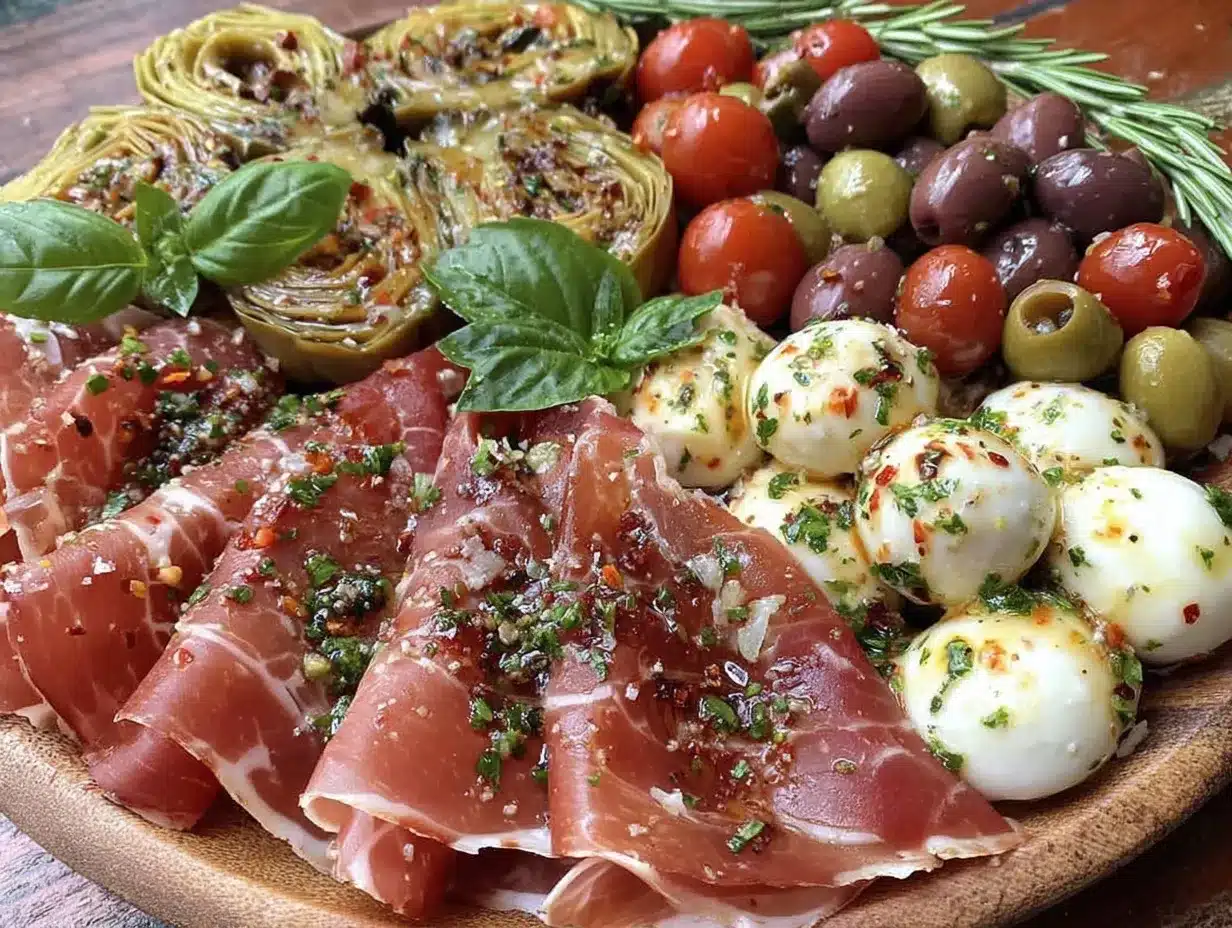
- Prep the Vegetables (10 minutes): Rinse cherry tomatoes and cucumber slices under cold water. Pat dry with a paper towel. Slice the cucumber into thin rounds or half-moons for easy snacking. Drain jarred roasted red peppers and artichokes, reserving a little of the oil for drizzling.
- Arrange the Meats and Cheeses (5 minutes): Lay out thin slices of prosciutto, salami, and soppressata on one side of your serving platter. Tear fresh mozzarella balls in half to expose the creamy center and place near the meats. Cut provolone into bite-sized pieces and crumble or shave Parmigiano-Reggiano for variety.
- Prepare Marinated Items (5 minutes): Place Kalamata olives, artichoke hearts, and pepperoncini peppers in small bowls or ramekins. Drizzle with reserved oil and sprinkle with fresh oregano if you like. This keeps flavors concentrated and easy to grab.
- Build the Fresh Veggie Section (5 minutes): Scatter cherry tomatoes, cucumber slices, and roasted red peppers across the platter, interspersed with fresh basil leaves. The goal is a colorful, inviting mix that balances the salty meats and cheeses.
- Add Bread and Extras (3 minutes): Arrange toasted bread or focaccia slices around the edges. If using, scatter marcona almonds and sun-dried tomatoes to fill gaps and add texture.
- Final Touches (2 minutes): Drizzle the entire plate lightly with extra virgin olive oil and a sprinkle of flaky sea salt and cracked black pepper. You can also add a small bowl of balsamic glaze for dipping if desired.
Keep the antipasto plate at room temperature for about 15 minutes before serving to let flavors mingle. If you’re worried about freshness, prepare up to 2 hours ahead and cover lightly with plastic wrap.
Cooking Tips & Techniques
One of the trickiest parts of making a fresh antipasto plate is balancing the flavors so nothing overpowers the other. I’ve learned that less is often more—especially when it comes to seasoning. Here are a few tips that helped me nail it:
- Choose quality over quantity: A few high-quality meats and cheeses beat a cluttered platter every time.
- Mind the salt: Since cured meats and olives are salty, avoid adding too much salt elsewhere.
- Fresh herbs matter: Basil and oregano bring brightness that cuts through richer flavors.
- Keep it fresh: Prepare just before serving to maintain the crunch of vegetables and freshness of herbs.
- Play with textures: Combining creamy cheeses, crisp veggies, and crunchy bread keeps the palate interested.
- Don’t overcrowd: Spread everything with some breathing room so each ingredient shines.
Once, I mistakenly used an overly briny olive brand, and the whole plate tasted too sharp—lesson learned! Now, I stick with milder Kalamata or Castelvetrano olives. Also, warming the plate slightly before serving helps those flavors open up nicely—just don’t let it get too hot or the cheese will melt.
Variations & Adaptations
This fresh antipasto plate recipe is wonderfully versatile. Here are a few ways you can switch it up depending on your mood or dietary needs:
- Vegetarian Version: Skip the meats and add grilled vegetables like zucchini, eggplant, and mushrooms. Also, consider adding marinated tofu cubes for protein.
- Seasonal Twist: In summer, include fresh figs or peach slices for a sweet contrast. In fall, roasted butternut squash cubes work beautifully.
- Low-Carb Option: Omit the bread and load up on more meats, cheeses, and crunchy veggies like radishes or celery sticks.
- Kid-Friendly: Use milder cheeses and swap pepperoncini for sweet mini peppers to avoid too much heat.
- My Personal Favorite: Adding a handful of fresh arugula tossed in lemon juice right before serving gives a peppery freshness that cuts through the richness.
Adapting the antipasto plate to fit your taste is part of the fun. You’ll find yourself experimenting with different cheeses or local specialties as you go.
Serving & Storage Suggestions
Serve this antipasto plate at room temperature to bring out the full range of flavors. Present it on a large wooden board or platter so guests can graze freely. Pair it with a crisp white wine like Pinot Grigio or a light red like Chianti for a true Italian vibe.
If you have leftovers (though they rarely last long!), cover and refrigerate the plate. The bread is best stored separately to avoid sogginess. To reheat, gently toast bread slices and let the other components come back to room temperature before serving again. Flavors often deepen after a few hours, so if you prepare it a bit ahead, you might notice tastier bites.
Nutritional Information & Benefits
This antipasto plate offers a balanced mix of protein, healthy fats, and fresh vegetables. The cured meats provide iron and B vitamins, while the cheeses contribute calcium and protein. Fresh veggies add fiber and antioxidants. Using extra virgin olive oil adds heart-healthy monounsaturated fats, making this not just tasty but nourishing.
It’s naturally gluten-free if you skip the bread, and low-carb options are easy to create. Just watch sodium intake if you’re sensitive, as cured meats and olives can be salty.
Personally, I appreciate how this dish feels indulgent without being heavy—perfect for a light lunch or appetizer that keeps you energized.
Conclusion
This fresh antipasto plate recipe is a simple yet stunning way to bring authentic Italian snacking delights to your table. Its blend of fresh, marinated, and cured ingredients creates a flavor party that’s as easy to make as it is to enjoy. I love how adaptable it is—you can tailor it for a quick solo snack or a lavish party spread.
Give it a try and make it your own. Maybe add your favorite local cheese or a new herb. I’d love to hear how you customize your antipasto plate or any stories you have from your own foodie adventures. So, drop a comment below or share your version. Remember, great food is meant to be shared and savored. Buon appetito!
FAQs About Fresh Antipasto Plate with Italian Snacking Delights
What is the best way to store leftover antipasto?
Keep leftover meats and cheeses covered in airtight containers in the fridge. Store bread separately and toast before serving again. Marinated veggies also keep well refrigerated for 2-3 days.
Can I make this antipasto plate vegan?
Absolutely! Replace meats and cheeses with marinated tofu, grilled veggies, and vegan cheese alternatives. Add nuts and fresh herbs for flavor and texture.
How long does the antipasto plate stay fresh at room temperature?
It’s best enjoyed within 2 hours at room temperature. After that, refrigerate leftovers promptly to maintain freshness and food safety.
What wines pair well with an antipasto plate?
Light whites like Pinot Grigio or Sauvignon Blanc and light reds such as Chianti or Barbera complement the variety of flavors without overpowering them.
Can I prepare the antipasto plate in advance?
You can prep most components a few hours ahead and assemble just before serving to keep everything fresh and vibrant. Just keep the bread separate until serving time.
Pin This Recipe!
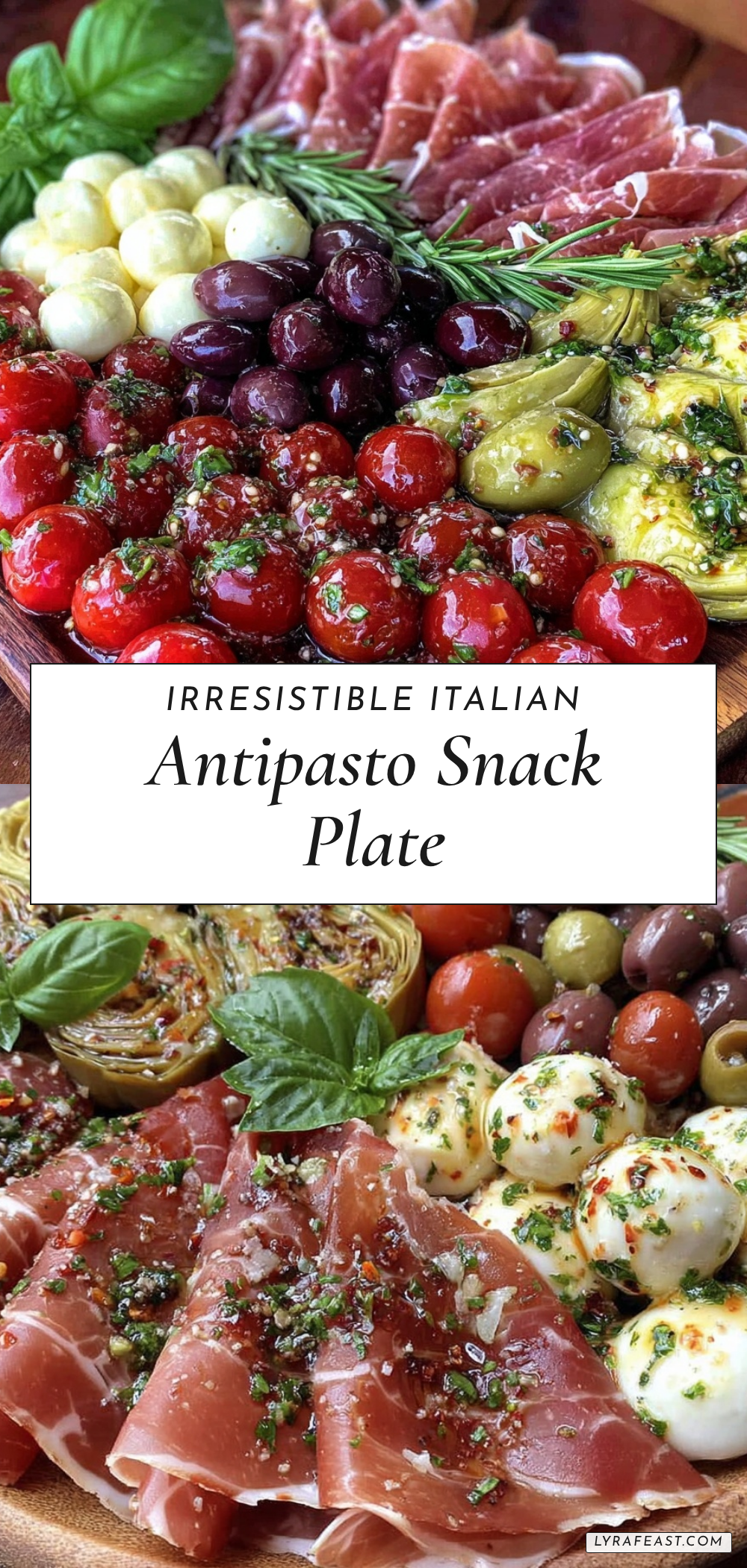
Fresh Antipasto Plate Recipe Easy Italian Snacking Ideas for Parties
A simple and colorful antipasto plate featuring fresh Italian meats, cheeses, vegetables, and marinated items, perfect for quick snacking or parties.
- Prep Time: 15 minutes
- Cook Time: 0 minutes
- Total Time: 15 minutes
- Yield: 4 servings
- Category: Appetizer
- Cuisine: Italian
Ingredients
- Thinly sliced prosciutto, salami, and soppressata (nitrate-free if possible)
- Fresh mozzarella balls (bocconcini)
- Aged provolone slices
- Parmigiano-Reggiano wedge
- Cherry tomatoes (preferably vine-ripened)
- Crisp cucumber slices
- Roasted red peppers (jarred or homemade)
- Artichoke hearts (in olive oil)
- Kalamata olives (pitted)
- Pepperoncini peppers
- Crispy Italian bread or focaccia, sliced into bite-sized pieces (toasted if preferred)
- Fresh basil leaves
- Oregano
- Extra virgin olive oil (e.g., Colavita)
- Optional: Sun-dried tomatoes (packed in oil)
- Optional: Marcona almonds
- Optional: Balsamic glaze for dipping
Instructions
- Rinse cherry tomatoes and cucumber slices under cold water. Pat dry with a paper towel. Slice cucumber into thin rounds or half-moons. Drain jarred roasted red peppers and artichokes, reserving a little of the oil for drizzling.
- Lay out thin slices of prosciutto, salami, and soppressata on one side of your serving platter. Tear fresh mozzarella balls in half and place near the meats. Cut provolone into bite-sized pieces and crumble or shave Parmigiano-Reggiano.
- Place Kalamata olives, artichoke hearts, and pepperoncini peppers in small bowls or ramekins. Drizzle with reserved oil and sprinkle with fresh oregano.
- Scatter cherry tomatoes, cucumber slices, and roasted red peppers across the platter, interspersed with fresh basil leaves.
- Arrange toasted bread or focaccia slices around the edges. If using, scatter marcona almonds and sun-dried tomatoes to fill gaps and add texture.
- Drizzle the entire plate lightly with extra virgin olive oil and sprinkle flaky sea salt and cracked black pepper. Optionally, add a small bowl of balsamic glaze for dipping.
- Let the antipasto plate sit at room temperature for about 15 minutes before serving to allow flavors to mingle.
Notes
Prepare most components a few hours ahead and assemble just before serving to keep everything fresh. Keep bread separate until serving to avoid sogginess. Use milder olives like Kalamata or Castelvetrano to avoid overly sharp flavors. Serve at room temperature for best flavor. For gluten-free, omit bread or use gluten-free crackers. For vegetarian, omit meats and add grilled vegetables or marinated tofu.
Nutrition
- Serving Size: Approximately 1/4 of
- Calories: 350
- Sugar: 4
- Sodium: 700
- Fat: 25
- Saturated Fat: 8
- Carbohydrates: 10
- Fiber: 2
- Protein: 15
Keywords: antipasto, Italian appetizer, party snack, fresh antipasto plate, easy Italian recipe, Italian snacking, prosciutto, mozzarella, antipasto platter